Your tongue won’t leave it alone
Even a small jagged spot can feel enormous. Before anything is smoothed, the dentist checks how deep the chip goes and what shape the edge would take, so that polishing it does not trade one problem for a new one.


Bit into something hard and felt a piece give way? Chipped-tooth repair in Milton starts with a proper look at the tooth, then a repair sized to the damage rather than to a habit.
It often happens at the table. An olive pit, a popcorn kernel or a crust of toast meets a tooth at the wrong angle, and afterwards your tongue keeps returning to a spot that used to be smooth. A chip means part of the outer surface is gone, usually from an edge or a corner.
How to fix it depends on more than what you can see. The size and depth of the missing piece, where the tooth sits and how your bite lands on it all shape the plan. A faint roughness calls for a different response than a corner that is clearly missing or a break that reaches a more sensitive layer underneath.
For people here in Milton, an assessment at our Bronte Street practice looks at the chipped area and at the tooth as a whole. Let us know what you were eating, or whether the edge seemed to wear away over time instead. How you would like the tooth to look is part of the conversation, though its health and function lead the decision.
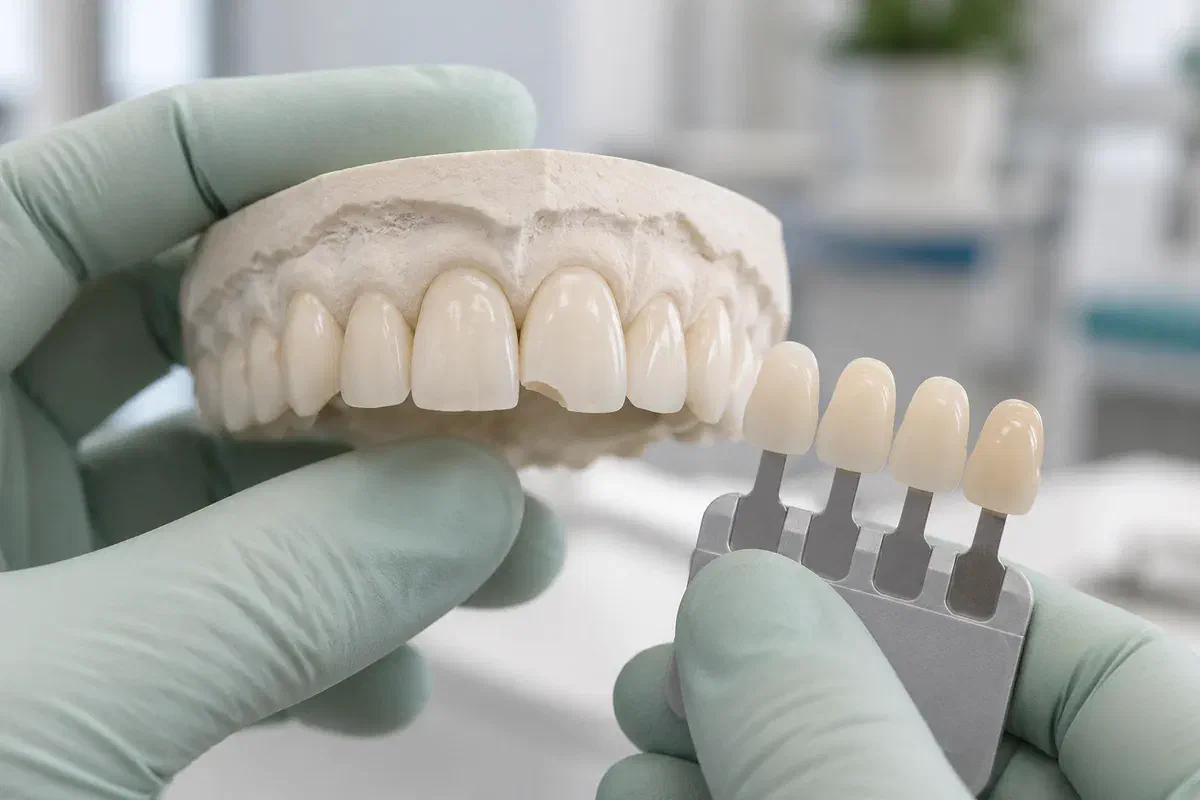
Some chips stop at the enamel. Others are the visible sign of decay, a deeper crack or an injury to the tooth. A careful examination sorts the simple surface defect from the problem that needs a different plan.
Even a small jagged spot can feel enormous. Before anything is smoothed, the dentist checks how deep the chip goes and what shape the edge would take, so that polishing it does not trade one problem for a new one.
A front tooth that loses a corner can look shorter or uneven. Describe what changed, and if you have an older photo that shows how the tooth used to look, bring it along to help with planning.
When the same area keeps breaking, it is worth looking at how the teeth meet, any habits, wear and older fillings nearby. Patching the edge again without finding the source of the stress may lead to a repeat.
If the chip came from a knock or fall, tell us about any loosening, bleeding or change in how your teeth come together. An injury may need checking beyond the chipped spot itself.
With a limited chip, the aim may simply be to make the edge comfortable again or to replace a small piece of lost structure. Composite bonding is one option when the tooth, the surface available for bonding and the forces of your bite make it a reasonable choice.
Tooth-coloured material has limits worth knowing up front. Shade, surface texture and strength all need thought, and a repaired edge may stain or chip again in the years ahead. Expect the dentist to describe what is realistic for your tooth, not a flawless match or a fix that lasts forever.
Patient information: NHS — chipped, broken or cracked teeth
Treating a sharp or uneven edge can stop the constant catching on your lip or tongue, as long as whatever caused the chip is understood and addressed too.
You can talk through how much length or curve to rebuild. Even a small change is judged against the teeth beside it and the natural look of your smile.
A careful assessment can keep a minor chip from turning into major work. If a larger restoration is suggested, ask which findings rule out the smaller repair.
A small chip can sometimes be handled in one straightforward visit, though the exam decides that. Leave time in the appointment to hear the findings and to describe the result you have in mind.
The dentist examines the chipped surface, how much tooth remains and the gums around it. Your account of the injury and any symptoms help decide whether X-rays or other tests come before treatment.
Smoothing, reattaching a fragment, bonding or another approach may be discussed. Ask how each one changes the tooth and what to expect for shape, colour, durability and upkeep.
A suitable edge may be gently smoothed, or the missing part rebuilt. When composite is used, the shade and shape are chosen to suit the tooth, then the material is hardened and finished.
Your bite and the polished surface are checked, and you can say how the tooth feels. A follow-up may be suggested if the chip came from an injury or if symptoms need watching.
What you should do afterwards depends on whether the tooth was smoothed, bonded or restored in another way. Ask about any short-term precautions, and keep following the home-care advice given for your mouth.
Tearing tape, biting nails or gripping pens between your teeth puts focused pressure on an edge. Think about which habits might have played a part in the first chip and what could replace them.
Brush twice a day with a fluoride toothpaste and clean between your teeth daily. If floss snags or the repaired edge feels rough, tell the team rather than trying to buff it with a gritty product.
Let us know about new chipping or a change in how the tooth meets the one opposite. If you grind your teeth or play a contact sport, ask whether a protective appliance belongs in your plan.
Looks, comfort and how long a repair lasts tend to matter together when a tooth chips. These answers can help you prepare for the conversation.
Come to our Bronte Street practice to talk about a jagged edge, a missing corner or a tooth that keeps chipping. Milton neighbours can expect us to check the tooth, lay out suitable choices and weigh shape, comfort and function together before anything is decided.
Phone us right away about a recent blow to the mouth, a loose tooth, strong pain or swelling so we can talk about how urgently it should be seen.
