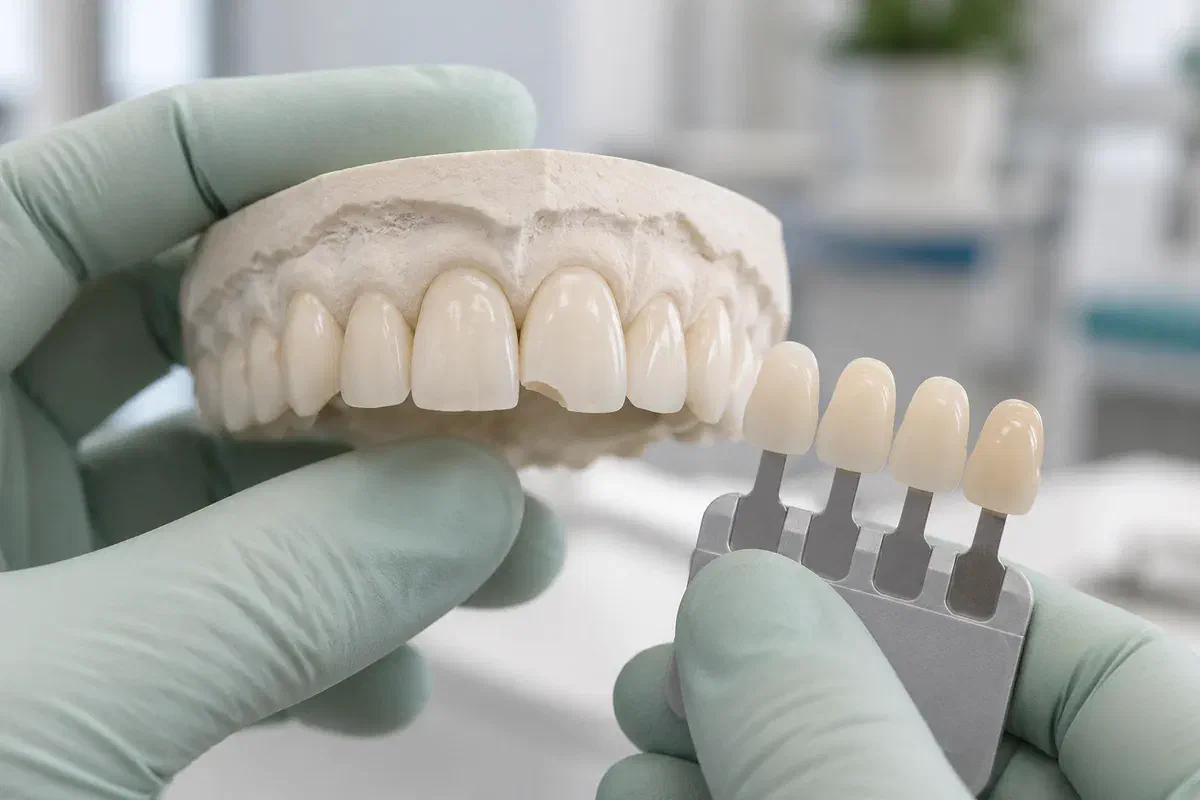
Illustrative consultation about the appearance and comfort of a chipped tooth
Restorative Dentistry

Chipped Tooth Repair in Old Milton

Teeth that have served you for decades can chip along worn edges or beside older fillings. In Old Milton, our team checks the cause first and then suggests a repair in keeping with the tooth.

Long-serving teeth, new rough spots

A worn edge finally gave way.

Plenty of chips are not dramatic. After years of chewing, an edge thins, an old filling leaves a margin that is easier to break, and one ordinary bite takes a small flake away. You might spot it while shaving or putting on lipstick, or simply feel a new ridge when you close your teeth.

Whatever led to it, a chip is lost tooth surface, and the right response depends on its size, its depth, the tooth involved and how your teeth meet. A sliver of roughness on a worn edge is not the same as a missing corner, and neither is the same as a break that opens onto a more sensitive layer.

From the historic streets of Old Milton, our Bronte Street practice is close at hand for a proper look. Mention whether the chip happened suddenly or crept up, and whether it sits next to earlier dental work. Your wishes for how the tooth looks are welcome; the tooth’s health and bite still set the direction.

Arrange a chip assessment
A front-tooth study model with a small chipped corner beside a shade guide
Reading the signs around a chip

What sits beneath the broken edge?

Some chips involve only enamel. Others reveal decay at the edge of an old filling, a fracture that runs further, or the effects of an earlier knock. Assessment tells these apart before any repair is chosen.

A ridge you feel every time you close

Small irregularities can be very noticeable. The dentist gauges how deep the chip runs and what shape remains, then decides whether gentle smoothing is enough or would take away more than it should.


A front tooth that looks a little shorter

Worn or chipped front edges can make a smile look older or uneven. Explain what you have noticed, and a photograph from a few years back can show how the tooth used to sit.

A chip beside earlier dental work

Breakage near a filling, or on a tooth that has chipped before, prompts a review of contacts, grinding, wear and the condition of that older restoration. Rebuilding without that review risks the same failure.

Had a fall or a bump to the face? Tell us about any loosening, bleeding or a bite that now feels off. Injuries can involve more than the piece that broke away.

Realistic goals for the repair

Comfort first, then a natural shape.

When damage is limited, treatment can be as modest as making an edge feel comfortable again or replacing a small amount of missing structure. Composite bonding may suit a chip when the tooth, the surface available and the forces on it allow a lasting result.

On teeth with a long history, those limits deserve a frank discussion. Shade, texture and strength all matter, and composite on a worn or heavily used edge may stain or chip later. A good explanation covers what is achievable for your particular tooth, without promising an exact match or a permanent outcome.

Patient information: NHS — chipped, broken or cracked teeth

An edge you stop noticing

Taking care of a rough or uneven spot can end the small daily irritation of a tooth that snags your lip, provided the reason for the chip is also understood.

Length chosen to suit your smile

You can discuss how much to rebuild. On worn teeth, a small change is judged against the neighbours and your bite rather than against a younger version of the tooth.

Treatment that fits the damage

An assessment can keep a minor chip from leading to more extensive work than it needs. If a bigger restoration is advised, ask what makes the simpler option unsuitable.

What happens at the visit

Assess, plan, repair and review

Many small chips can be managed in a single, simple appointment, but only once the exam shows what is going on. Expect time to talk about the findings and about the look you would like.

  1. Assess the chip and its surroundings

    The dentist checks the broken area, the tooth that remains, any nearby filling and the gum tissue. Your history and symptoms decide whether X-rays or further testing should come first.

  2. Talk through the choices

    Smoothing, reattachment, bonding or replacing an old restoration may be on the table. Ask how each would change the tooth and what to expect about colour, wear and future upkeep.

  3. Complete the agreed repair

    A suitable edge may be refined, or the missing portion rebuilt. With composite, the shade and contour are matched to your tooth before the material is set and polished.

  4. Review how it all fits

    Your bite and the finished surface are checked, and you can say how the tooth feels and looks. Monitoring may be suggested after an injury or if symptoms need watching.

Keeping the repair in good shape

Habits matter more than ever.

Care afterwards depends on whether the tooth was smoothed, bonded or restored another way. Ask about any precautions for the first day or two, and keep up the cleaning routine suggested for you.

Spare the edge from hard jobs

Cracking nuts, snapping thread or holding pins in your teeth loads one small area heavily. Think about which habits may have played a part in the chip and what you could do differently.

Keep the area clean and fluoride-protected

Brush with a fluoride toothpaste and clean between teeth each day, paying attention to the margins of older fillings. If floss shreds or the repair feels rough, let us know instead of reaching for an abrasive paste.

Keep an eye on the pattern

Report any fresh chipping or a change in how the tooth meets its partner. If you clench or grind, ask whether a night guard or other protective appliance should be part of your care.

Three levels of repair

From a light polish to a fuller restoration

A chip does not automatically need a crown or veneer, even on an older tooth. Ask what each option would alter, how much natural tooth it uses and why it suits the depth and position of the damage.

For a slight surface irregularity

Smoothing and polishing

A small rough edge can sometimes be refined, provided this will not remove too much healthy tooth or leave an odd shape. The depth of the chip is still checked before anything is changed.

When a limited area needs rebuilding

Bonding or reattachment

A saved fragment may sometimes be reused, or composite can restore a missing corner. The bonding surface and the forces on that edge help determine whether this is suitable.

When the chip reflects wider damage

A more extensive restoration

Breakage that keeps recurring, structure lost deep into the tooth or a large old filling may point toward a different plan. With a diagnosis in hand, the dentist will talk through when a crown, veneer or other restoration earns its place.

Asked about chips on older teeth

Your questions about worn and chipped edges

When a long-serving tooth chips, people often want to know why it happened now and what will hold up best. These answers can help you prepare for your appointment.

(905) 876-4488
Why would a tooth chip after decades without trouble?
Edges can thin gradually with wear, grinding or acid exposure, and older fillings can leave areas that are less supported. Eventually an everyday bite is enough to break a small piece. The dentist looks for the contributing factors rather than treating the chip in isolation.
My chip is right next to an old filling. Does the filling need replacing?
Not necessarily. The dentist checks whether the filling is still sealed and whether there is decay at its edge. Sometimes only the chipped area is repaired; other times replacing or extending the restoration makes more sense. Ask what the examination shows before deciding.
Is it worth repairing a chip on a worn tooth, or should I wait?
A small chip without symptoms is not usually an emergency, but leaving a sharp or weakened edge can let it break further or trap food. An assessment lets you decide with the full picture rather than guessing how stable the tooth is.
Can bonding make a worn front tooth look longer again?
Composite can sometimes restore a little length to a chipped or worn edge, if the bite allows it and there is a suitable surface to bond to. Too much added length may chip easily, so the dentist balances appearance with the forces on that edge.
Will a bonded repair match teeth that have darkened with age?
The shade is chosen to suit your current teeth, though an exact match is not guaranteed. If you are thinking about whitening, raise it before the repair, because composite does not lighten the way natural enamel can and timing affects shade choice.
How do I describe the chip when I call to book?
Mention which tooth it is, when you noticed it, whether it followed an injury and whether you have pain, sensitivity or swelling. That information helps the team decide how soon you should be seen and how long to set aside for the visit.
Chipped teeth, Old Milton

Close by when an edge breaks

Our Bronte Street practice is a short way from Old Milton’s downtown. Bring in a rough spot, a missing corner or a tooth that keeps chipping, and we will examine it, explain the realistic choices and consider shape, comfort and function before you decide.

If the chip came from a recent knock, or a tooth feels loose, very painful or swollen, please call rather than booking online so we can judge how soon to see you.

Visit Milton Dental Clinic
Unit 1, 342 Bronte St. S, Milton, ON L9T 5B7
Get directions Clinic hours
Monday–Thursday
11am–7pm
Friday–Sunday
By appointment only

Areas we serve

  • Milton
  • Oakville
  • Mississauga
  • Georgetown
  • Halton Hills
  • Acton
  • Campbellville
  • Brampton
  • Burlington
  • Puslinch
  • Rockwood
  • Erin
  • Caledon
  • Etobicoke
  • Old Milton
  • Bronte Meadows
  • Timberlea
  • Dorset Park
  • Dempsey
  • Clarke
  • Beaty
  • Coates
  • Harrison
  • Scott
  • Willmott
  • Ford
  • Bowes
  • Cobden
  • Walker
  • Mountain View
  • Milton Heights
  • Hawthorne Village
  • Valley View
  • Fallingbrook
  • Nassagaweya
  • Trafalgar
  • Esquesing
  • Nelson
  • Brookville
  • Moffat
  • Glen Williams
  • Norval
  • Limehouse
  • Stewarttown
  • Ashgrove
  • Hornby
  • Silver Creek
  • Speyside
  • Scotch Block
  • North Oakville
  • River Oaks
  • Glen Abbey
  • West Oak Trails
  • Palermo
  • Bronte Creek
  • College Park
  • Joshua Creek
  • Uptown Core
  • Preserve
  • Iroquois Ridge
  • Lisgar
  • Meadowvale
  • Meadowvale Village
  • Churchill Meadows
  • Erin Mills
  • Central Erin Mills
  • Streetsville
  • East Credit
  • Creditview
  • Heartland
  • Sheridan
  • Mount Pleasant
  • Credit Valley
  • Huttonville
  • Churchville
  • Springbrook
  • Northwest Brampton
  • Bram West
  • Fletcher's Meadow
  • Fletcher's Creek South
  • Alton Village
  • Orchard
  • Millcroft
  • Headon Forest
  • Tansley
  • Brant Hills
  • Tyandaga
  • Kilbride
  • Lowville
  • Aberfoyle
  • Morriston
  • Arkell
  • Hillsburgh
  • Freelton
  • Carlisle
  • Waterdown
  • Flamborough
  • Mountsberg

How can we help?

Milton Dental Clinic

Have a question about your smile? Choose the option that works best for you.

For urgent dental concerns, please call.
Messages are reviewed during clinic hours.