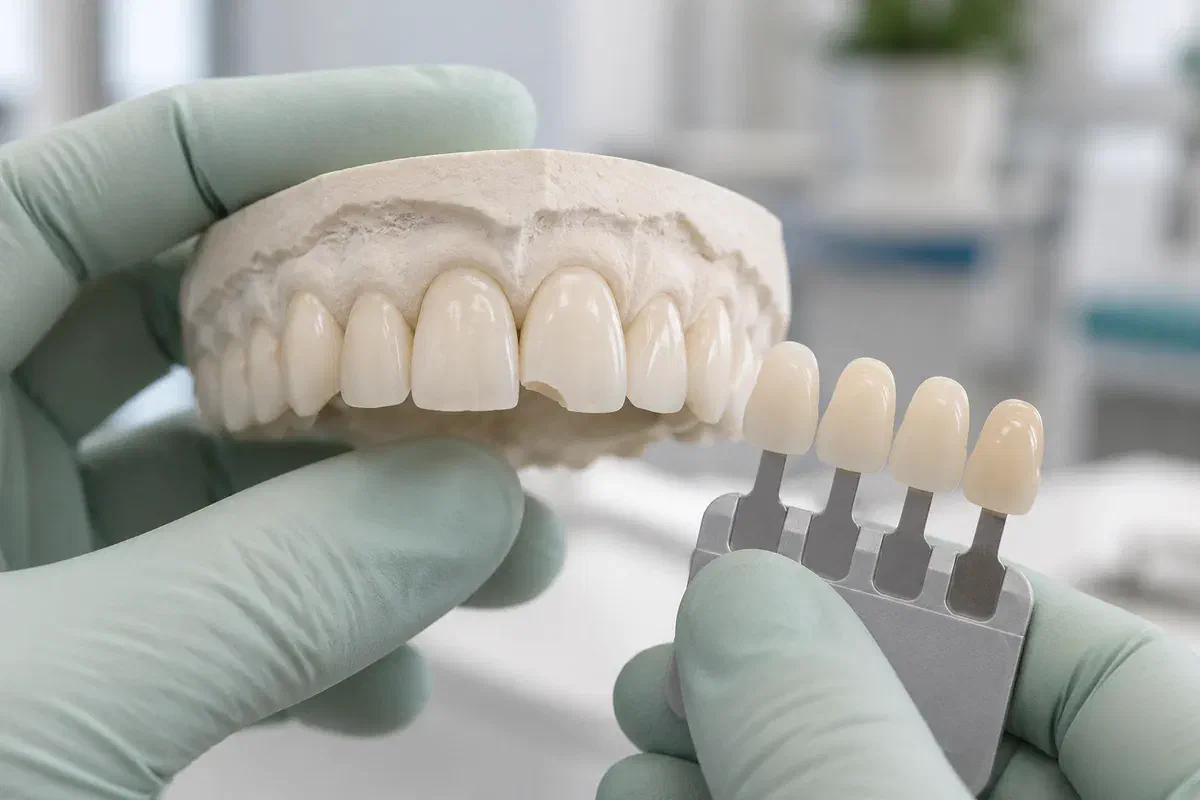
A rough line where the piece broke
The broken surface can feel jagged. The dentist examines its depth and outline to see whether the fragment would fit back neatly, or whether smoothing or a different repair makes more sense.

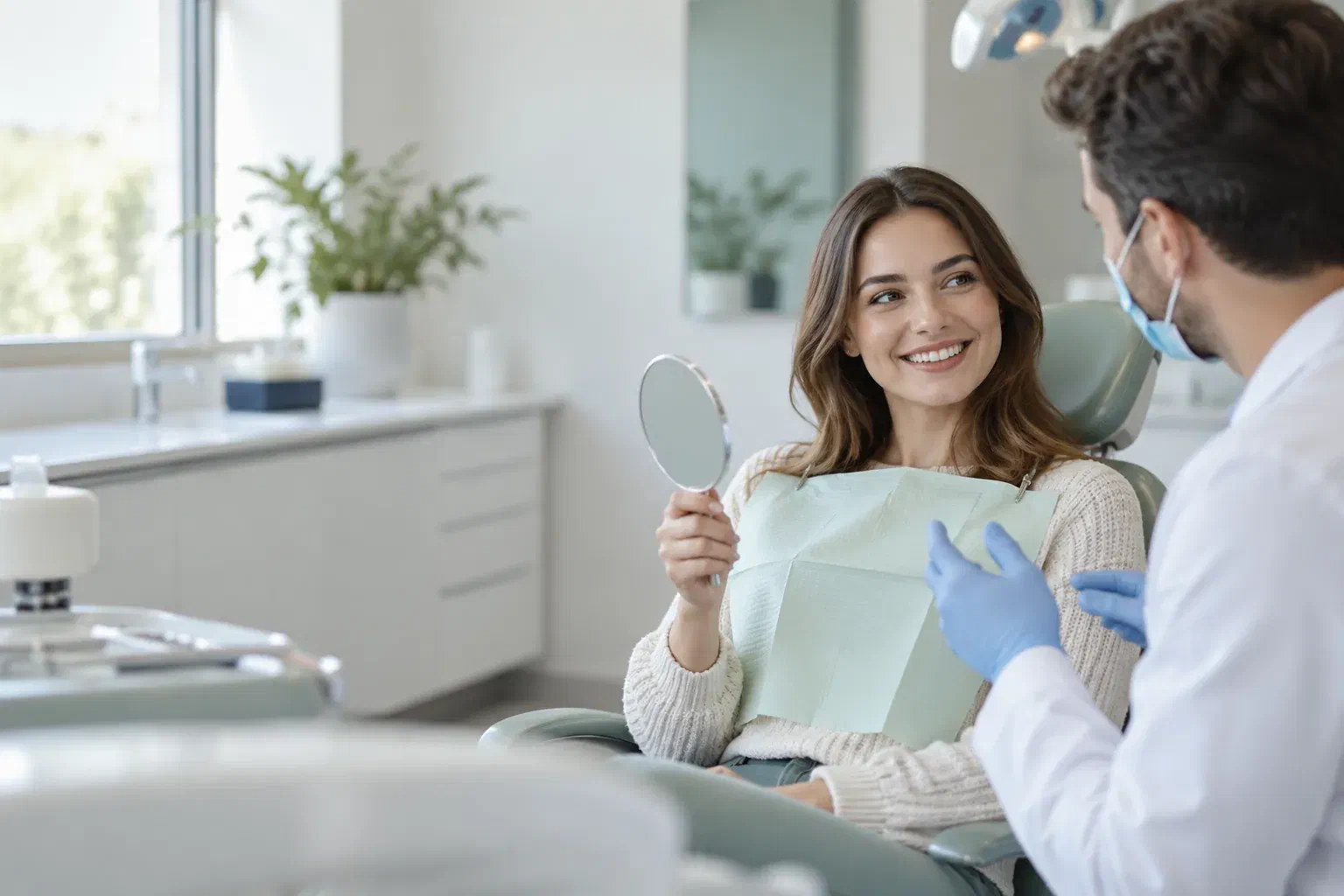
Found the piece that broke off? Keep it moist and bring it with you from Rockwood. We will check the tooth, see whether the fragment can be reused and explain other repairs if it cannot.
Many people instinctively spit out the bit of tooth and throw it away. If you managed to find and keep it, put it in a small container covered with milk or your own saliva. A broken fragment can sometimes be bonded back onto the tooth, using your own enamel to restore the shape. Sometimes it cannot, and that is fine too.
Whether reattachment is possible depends on the fragment and on the tooth. How big the piece is, how cleanly it broke, how deep the break reaches and how your bite meets that edge all matter. A shallow chip may be better smoothed, and a deep break that reaches a sensitive layer may need other care first.
Bring the fragment to our Bronte Street practice when you come in from Rockwood. Tell us how the tooth broke, when, and whether it hurts, bled or feels loose. Share any thoughts on how you want the tooth to look; the decision rests on what is healthiest and most functional for the tooth.
A clean enamel break is one thing. A chip that hides decay, a crack that travels further or an injury to the tooth’s nerve or gum is another. The tooth is assessed before anyone decides what to do with the fragment.
The broken surface can feel jagged. The dentist examines its depth and outline to see whether the fragment would fit back neatly, or whether smoothing or a different repair makes more sense.
When a fragment comes from a front tooth, restoring it can help preserve the natural look. A photo of the tooth from before can still be useful for planning.
If the same edge has chipped previously, the dentist reviews your bite, habits, grinding and older repairs. Reattaching the piece without addressing the cause may leave it vulnerable.
After an impact, mention loosening, bleeding, swelling or a change in your bite. Injury assessment may go beyond the chip, and can be more urgent than the repair itself.
When the fragment is in good condition and the tooth is suitable, reattaching it can restore the original shape with your own enamel. If not, composite bonding may rebuild the missing section, provided there is enough sound surface and the bite will not overload the repair.
Either approach has limits. A reattached fragment may look slightly different from the rest of the tooth at first, and both fragments and composite can come loose or chip again in time. The dentist should explain these trade-offs openly, without promising a perfect match or a lifelong result.
Patient information: NHS — chipped, broken or cracked teeth
Where reattachment works, the tooth may keep much of its original shape and surface, though the bond line still needs care and occasional review.
Should the piece prove unsuitable, composite can often restore the corner. You can discuss the shape and length you would like as part of that choice.
Assessing the tooth helps avoid more treatment than the chip needs. If a larger restoration is recommended, ask why neither the fragment nor composite would be enough.
A clean break with a good fragment can sometimes be handled in one appointment. An injured tooth may need checks first. The dentist will explain the plan once the tooth has been examined.
The dentist checks the break, the remaining tooth, the gums and the fragment itself. An X-ray or other test may be recommended if the injury or symptoms suggest deeper damage.
If the piece fits and the tooth is healthy, bonding it back may be offered. Otherwise smoothing, composite or another approach may be discussed, with the pros and cons of each.
The fragment is cleaned and bonded into place, or composite is built up and shaped to match. The joint is then smoothed and polished.
Your bite and the edge are checked before you leave. After an injury, a follow-up is often advised to see how the tooth responds over the coming weeks.
Care afterwards depends on whether a fragment was reattached, composite was used or the edge was smoothed. Ask how cautious to be with that tooth in the first days.
For a while, cut apples, crusty bread and similar foods into smaller pieces, and avoid using the tooth to open or hold things. Ask how long that caution should last.
Brush with fluoride toothpaste and clean between teeth daily. If floss catches at the bond line or the edge feels rough, mention it at a visit rather than scrubbing it.
Report a fragment that feels loose, a tooth that darkens or a new chip. If sport or grinding is a risk, ask whether a protective appliance would help.
Saving the fragment raises practical questions. These answers may help before your visit from Rockwood.
Visit our Bronte Street practice with your fragment, or without one, to discuss a chip, a missing corner or a tooth that keeps breaking. We will examine it, explain whether reattachment or another repair suits, and weigh appearance, comfort and function.
For a recent blow, a loosened tooth, severe pain or swelling, please call straight away so the urgency can be discussed.
