Teeth that may not be worth saving
If you have been told the last teeth in an arch are failing, ask which might reasonably be kept and the reasons for removing the rest. A move to a full denture should follow a careful look at each tooth.


Need a full denture plan that fits around shifts, commutes and a working week? Coming from Brampton, you can talk through each stage with us, from the first exam to adjustments, and book visits at hours that suit.
When chewing a sandwich in the break room takes careful planning, or you hold back during meetings because a denture shifts, the problem has crept into your working life. That is a good moment to look at what a well-fitted full denture could change, and what it could not.
Put simply, this appliance replaces all of the teeth along one jaw and can be taken out. It relies on the gums and bony ridge for support and must work in harmony with your tongue, cheeks and lips. Fit, bite and ease of handling all matter as much as the colour of the teeth.
From Brampton, the first appointment at our Bronte Street practice is an examination plus a conversation about your priorities and your calendar. The dentist looks at your gums, any teeth you still have and a sensible order of treatment, then explains the visits and follow-up before you choose.
List the concerns that affect your day, even ones that feel minor or awkward. A consultation should look at function and comfort as well as how the new teeth may appear.
If you have been told the last teeth in an arch are failing, ask which might reasonably be kept and the reasons for removing the rest. A move to a full denture should follow a careful look at each tooth.
Lifting while you speak, repeated sore patches or a bite that feels off all call for a review. Bring the appliance itself, because its condition is best judged against the gums it rests on.
Worried about clients or colleagues noticing? Say so. Photos from a few years back, or a description of the smile you prefer, help shape decisions about tooth shape and display while they can still be changed.
A sore that does not heal, a lump or an unexplained change anywhere in your mouth should be examined. It is not safe to assume a denture is behind every sore spot.
A suitable full denture restores a row of teeth across the arch, giving you a surface to bite and speak with. Its contour fills out the lips and affects how your face looks in conversation. Good planning reflects your mouth, your habits and the demands of your day.
Being realistic helps. Dentures that come out can also move, and most need adjustment and practice before they feel routine. Knowing that from the start helps you compare approaches and recognize the difference between normal adaptation and a problem worth reporting.
Where teeth sit, how the top and bottom close and the shape of the base are worked out together. Attention stays on how the finished arch performs rather than on single teeth.
Because the denture is removable, you can clean it and your gums properly at home. Ask for a quick demonstration, and mention grip, vision or dexterity issues so the routine is practical.
The fitting starts a short period of fine-tuning. Knowing how to request an adjustment quickly, and what to tell the team, can keep those first weeks from disrupting work, especially for a first denture.
The order depends on healing, whether teeth need removing and whether an existing denture is being replaced. Ask how many appointments to expect and which ones involve choices about appearance and bite, so you can plan time away from work.
Your gums, ridges and any remaining teeth are examined, your health history is reviewed and you describe what has and has not worked. Bring your current dentures and a short list of questions.
Impressions or scans, together with a record of how your jaws close, give the shape the new denture must follow. The dentist explains how the upper and lower teeth are designed to meet.
For a conventional denture, a wax trial often lets you see the teeth and test the bite before the final version is made. Ask what can be fine-tuned then, and how an immediate denture differs.
The denture is fitted and checked, and you are shown how to insert, remove and look after it. Follow-up visits deal with pressure spots and any other issues, with longer-term changes discussed when the time comes.
Your new denture will feel unfamiliar for a while. Ask the team what adapting usually looks like and how their advice changes if you have just had teeth removed. Discomfort that continues should be checked.
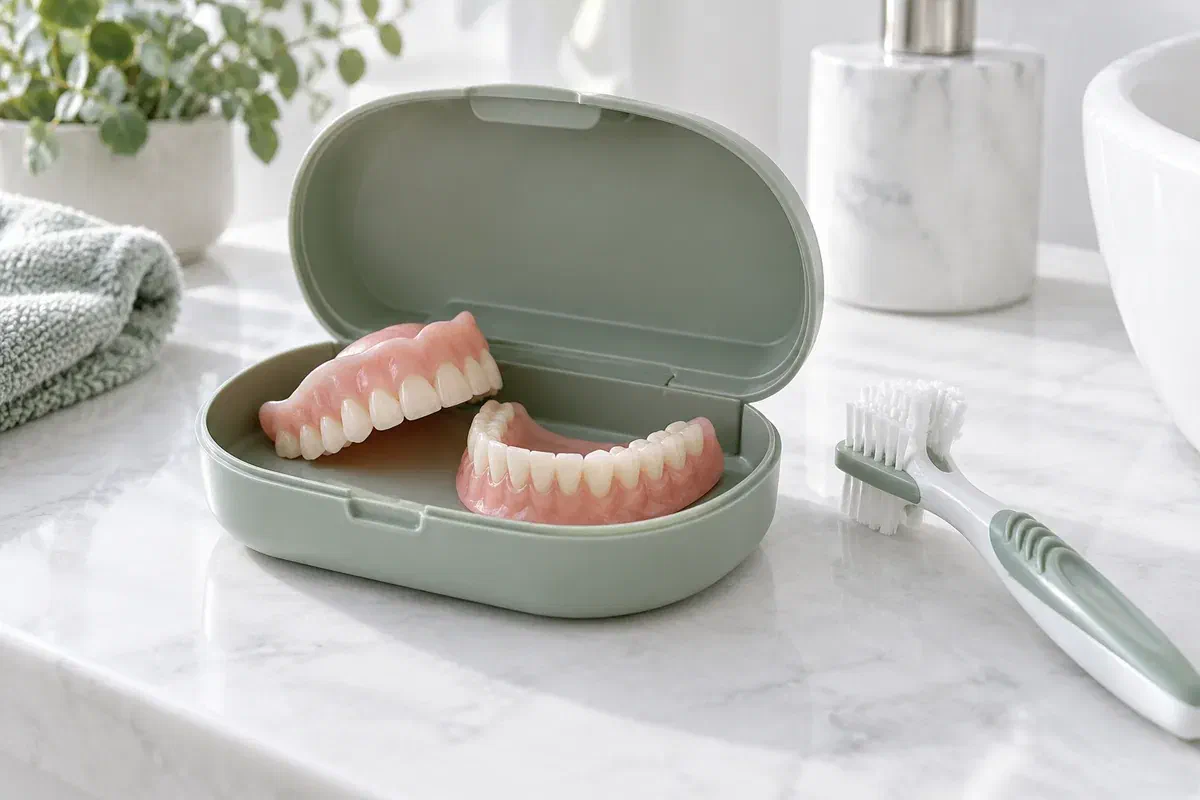
Use the cleaner and brush your dentist suggests for this denture, and keep caring for your gums and tongue. Ask where to keep the denture when it is out and whether the advice changes right after extractions.
Start with softer foods and follow the healing guidance you were given. Practise reading aloud or rehearsing a phone call. Note any trouble for your next review instead of trying to adjust the denture yourself.
Tell the team where it presses and when it shifts, for example while chewing or talking quickly. The tissues under a denture keep changing, so reviews stay useful well after you have settled in.
Patient information: ADA MouthHealthy — dentures
A denture decision continues long after delivery day. Ask about the transition, daily care and what to do if something needs attention on a busy week.
Bring your present denture, your work schedule and your questions. At our Bronte Street practice, Dr. Anjum can examine your mouth, explain the options and help you plan visits so comfort, appearance, handling and aftercare are covered.
If your denture has broken or a sore spot is getting worse, mention that when you call so time can be set aside for it.
