

Illustrative conversation between a patient and dentist about complete dentures
Restorative Dentistry

Complete Dentures in Caledon

Managing a health condition or several medications while planning a full denture? From Bolton or elsewhere in Caledon, bring your health details along. We will consider them alongside your mouth, your goals and each stage of treatment.

Caledon · health history first

Your medication list belongs in your denture plan.

A denture plan is not only about teeth. Conditions such as diabetes, medicines that affect bleeding or saliva, and past treatments can all influence how extractions and healing are planned. Bringing a complete, up-to-date list to the first appointment is one of the most helpful things you can do.

The appliance itself is a removable replacement for every tooth along one jaw. It is supported by the gums and ridge and has to sit comfortably with your tongue, cheeks and lips while you eat and speak. Healthy, well-healed tissue gives it the best foundation.

Coming from Caledon, your first appointment at our Bronte Street practice combines an examination with a careful review of your medical background. The dentist looks at your gums and any remaining teeth, discusses your goals and explains the likely sequence, visits and follow-up, including any coordination with your physician, before you decide.

Start with a denture assessment
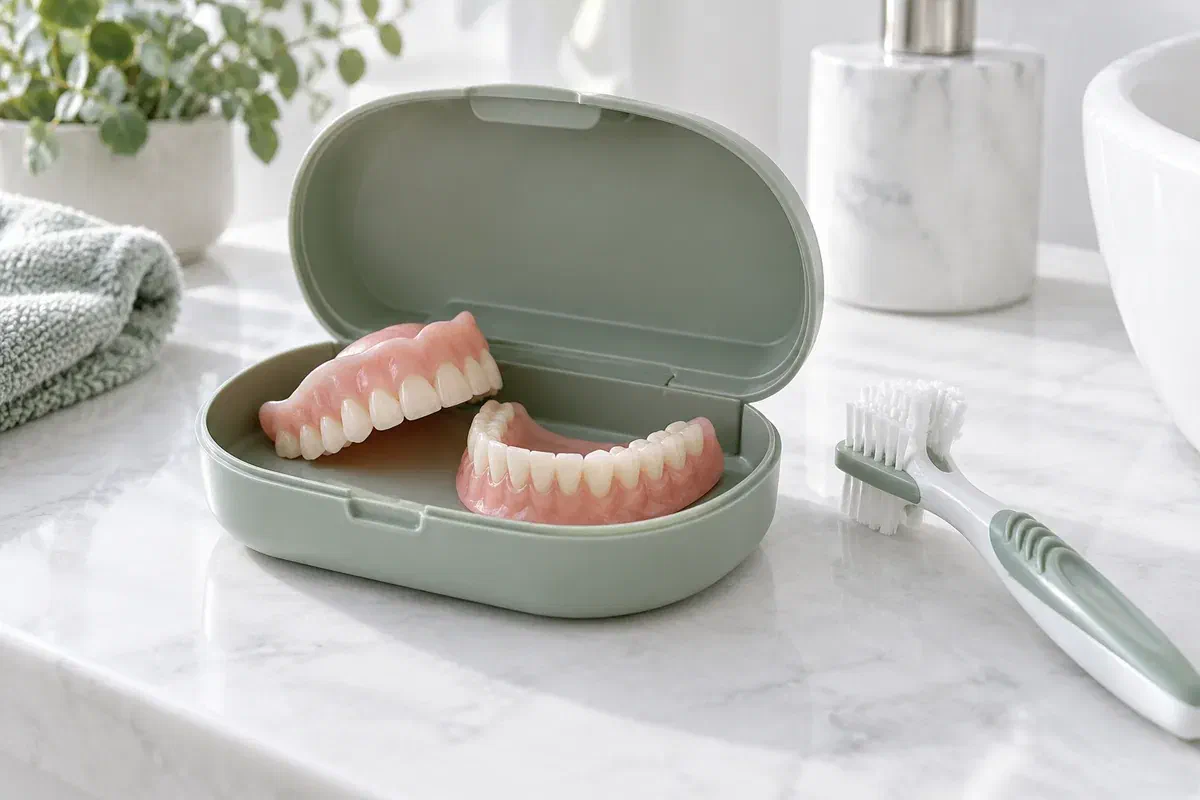
Complete denture appliances displayed as an educational example
Common reasons for a consultation

What made you start thinking about a full denture?

Share it, along with health matters that might seem unrelated. A thoughtful consultation covers comfort and function as well as how replacement teeth would look.

Remaining teeth with a limited future

If you have been advised that the last teeth in an arch may need to come out, ask which could reasonably be retained and why the others cannot. A complete denture should follow a tooth-by-tooth assessment, taking your health into account.

A denture that has become uncomfortable

Looseness, sore patches that recur or a change in how your teeth meet are worth reviewing. Bring your current denture, since its condition and fit are best understood alongside the tissues underneath.

Concerns about appearance or speaking

Particular wishes about tooth shape or display, or worries about speech, are best raised at the beginning. A photograph from earlier years can help guide the conversation while the design is flexible.

Ulcers that do not heal, lumps and other unexplained changes in the mouth need an examination. Don’t assume a sore spot is simply denture irritation, especially if your health has recently changed.

The purpose of a full denture

Comfortable function and a familiar smile, planned with your health in view

A suitable complete denture gives you teeth across the whole arch for chewing and speaking, and it supports the lips and cheeks, which shapes your appearance. Taking your health and medications into account helps the plan suit your mouth and your circumstances, not a generic case.

Like any removable appliance, a denture has limits. It can move, usually needs some adjustment and takes practice. Some health conditions and medications can also affect comfort or healing. Understanding this early helps you weigh choices and know when to call.

One plan for the whole arch

Tooth position, how your jaws close and the outline of the base are decided together, so attention stays on how the full arch functions rather than on each tooth individually.

Removable for thorough cleaning

You can take the denture out to clean it and care for the gums below, which matters for overall mouth health. Ask for a demonstration and mention any trouble with grip, vision or handling small objects.

Follow-up that adapts to you

The fitting starts a period of adjustment. Knowing how to request a review and what to report, including changes in your health or medications, makes the early weeks easier to manage.

Each stage, explained

From health review to final fitting

The order depends on healing, planned extractions and whether you are replacing a denture. Ask which appointments to expect, whether medical coordination is needed, and when appearance and bite will be checked.

  1. Health and mouth review

    The dentist examines your gums, ridges and any natural teeth and goes through your medical history and medications in detail. Bring your current dentures, a printed medication list and your questions.

  2. Impressions and bite registration

    Moulds or scans and a record of how your jaws meet capture the information needed to design the denture. Ask how the replacement teeth are arranged to close together and how the appliance is made.

  3. Trial stage, if available

    For a conventional denture, a wax try-in can let you see the tooth arrangement and test the bite before completion. An immediate denture allows less preview. Ask what can still be changed at this point.

  4. Fitting and reviews

    The finished denture is placed and checked, and you are shown how to wear and clean it. Review visits address sore spots and other concerns, and longer-term changes are discussed when needed.

Settling in safely

Give it time, and keep the team informed.

A new denture can feel strange for a while. Ask what adapting usually involves, and how instructions change after extractions or with your health conditions. Ongoing discomfort should be reviewed.

Daily cleaning and storage

Ask which cleaner and brush suit your denture, and keep caring for your gums and tongue. Check how to store the denture when it is out, and follow any special instructions given after extractions.

A gradual start with food and speech

Begin with soft foods and follow the healing guidance you received. Read aloud to practise speech. If something bothers you, write it down for your review rather than altering the denture at home.

Regular reviews, and updates about your health

Report pressure points and any movement, and tell the team about new medications or diagnoses. The mouth keeps changing, so continued reviews remain valuable even with no natural teeth in that arch.

Patient information: ADA MouthHealthy — dentures

Approaches to consider

Your health can shape which option fits.

Options vary in appointments, costs, maintenance and suitability. Ask which are realistic given your mouth and medical history, and what the transition would look like with each.

Conventional denture

After the gums have fully healed

A conventional denture is made once healing is complete. If extractions are needed first, ask how long healing may take for you and how eating and appearance would be managed in the meantime.

Immediate denture

Placed when teeth are removed

An immediate denture is prepared before extractions and inserted on the same day. As the gums heal, it may need adjusting, relining or replacing. Ask how those stages are included in your plan.

If additional support is suitable

Implant-supported designs

Implants can support certain removable or fixed full-arch designs. Because surgery and healing are involved, your health and medications matter, along with cleaning access and maintenance. Implant support is not right for everyone.

Health and denture questions

Medical history, medications and your new teeth

Treatment reaches well beyond the day of fitting. Bring questions about the transition, daily care and how your health may affect treatment and follow-up.

(905) 876-4488
Why does the dentist need my full medication list before extractions?
Some medications can affect bleeding, healing or saliva. A complete list helps the dentist plan treatment safely and decide whether to consult your physician.
Should I stop taking blood thinners before having teeth removed?
Do not stop any medication unless your prescribing doctor advises it. Tell the dentist what you take; they can coordinate with your physician if changes need to be considered.
Can a health condition affect how my gums heal under a denture?
Some conditions and medications can affect healing or comfort. Discuss your health openly at the assessment so the dentist can explain what it may mean for your plan.
What if I have a strong gag reflex?
Let the team know before impressions are taken and when discussing the denture design. They can explain how the appointment will be approached and what options may help.
What if poor eyesight makes cleaning a denture difficult?
Mention it before treatment. Ask for a hands-on demonstration and tips that rely more on touch, and consider whether a family member or caregiver should learn the routine too.
If I’m travelling from Caledon, what should I bring to the first appointment?
Bring any dentures you wear, a complete medication list, details of medical conditions and your questions. Having everything ready helps make the most of the trip.
Complete dentures for Caledon

Health details in hand, questions ready

Bring your current denture, an up-to-date medication list and anything your doctor has told you that might matter. Dr. Anjum can examine your mouth and explain a plan that considers comfort, appearance, handling, your health and follow-up.

If your denture is broken or causing a sore area, mention it when you book so the visit can include it.

Visit Milton Dental Clinic
Unit 1, 342 Bronte St. S, Milton, ON L9T 5B7
Get directions Clinic hours
Monday–Thursday
11am–7pm
Friday–Sunday
By appointment only

Areas we serve

  • Milton
  • Oakville
  • Mississauga
  • Georgetown
  • Halton Hills
  • Acton
  • Campbellville
  • Brampton
  • Burlington
  • Puslinch
  • Rockwood
  • Erin
  • Caledon
  • Etobicoke
  • Old Milton
  • Bronte Meadows
  • Timberlea
  • Dorset Park
  • Dempsey
  • Clarke
  • Beaty
  • Coates
  • Harrison
  • Scott
  • Willmott
  • Ford
  • Bowes
  • Cobden
  • Walker
  • Mountain View
  • Milton Heights
  • Hawthorne Village
  • Valley View
  • Fallingbrook
  • Nassagaweya
  • Trafalgar
  • Esquesing
  • Nelson
  • Brookville
  • Moffat
  • Glen Williams
  • Norval
  • Limehouse
  • Stewarttown
  • Ashgrove
  • Hornby
  • Silver Creek
  • Speyside
  • Scotch Block
  • North Oakville
  • River Oaks
  • Glen Abbey
  • West Oak Trails
  • Palermo
  • Bronte Creek
  • College Park
  • Joshua Creek
  • Uptown Core
  • Preserve
  • Iroquois Ridge
  • Lisgar
  • Meadowvale
  • Meadowvale Village
  • Churchill Meadows
  • Erin Mills
  • Central Erin Mills
  • Streetsville
  • East Credit
  • Creditview
  • Heartland
  • Sheridan
  • Mount Pleasant
  • Credit Valley
  • Huttonville
  • Churchville
  • Springbrook
  • Northwest Brampton
  • Bram West
  • Fletcher's Meadow
  • Fletcher's Creek South
  • Alton Village
  • Orchard
  • Millcroft
  • Headon Forest
  • Tansley
  • Brant Hills
  • Tyandaga
  • Kilbride
  • Lowville
  • Aberfoyle
  • Morriston
  • Arkell
  • Hillsburgh
  • Freelton
  • Carlisle
  • Waterdown
  • Flamborough
  • Mountsberg

How can we help?

Milton Dental Clinic

Have a question about your smile? Choose the option that works best for you.

For urgent dental concerns, please call.
Messages are reviewed during clinic hours.