

Illustrative conversation between a patient and dentist about complete dentures
Restorative Dentistry

Complete Dentures in Georgetown

Missing the foods you used to enjoy? If you are travelling from Georgetown, a complete denture consultation starts with how you chew today, then looks at fit, bite and appearance, and at what eating with a full denture realistically involves.

Chewing, comfort and the dinner plate

Corn on the cob, a crisp apple, a good steak

Most people can name the food they gave up first. For some it was raw vegetables; for others, anything that needed a firm bite at the front. Starting with what you miss at the table gives the dentist a practical picture of how your mouth is working right now.

A complete denture replaces every tooth in an upper or lower arch with a removable appliance that rests on your gums. The way the teeth are positioned and the way the upper and lower arches close together strongly influence how it behaves when you chew, so bite planning gets a lot of attention.

From Georgetown, your first visit to our Bronte Street practice is a thorough examination and an open discussion about what you want from treatment. The dentist considers your gums, any natural teeth that remain and a sensible sequence, and talks through the appointments and follow-up before you make a decision.

Discuss eating with a full denture
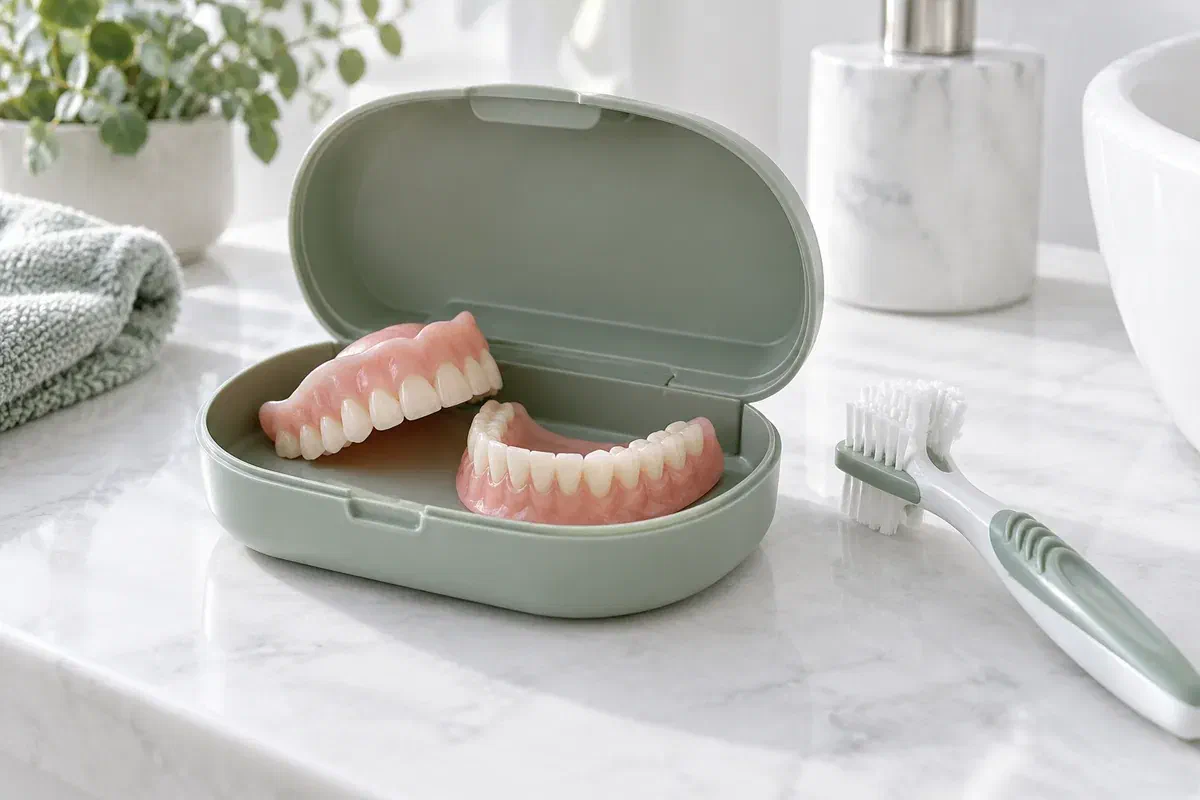
Complete denture appliances displayed as an educational example
What has changed at mealtimes?

Tell us what you have stopped eating.

Then add the concerns that are harder to put into words. A good denture consultation pays attention to function and comfort, not only to the appearance of the finished teeth.

Remaining teeth that make chewing painful

Sore, loose or broken teeth may push you toward softer food. Ask which teeth could reasonably be kept and why others are being considered for removal. A full denture should come after a considered look at each one.

A denture that slides when you bite

If your current denture tips forward on a sandwich, catches food underneath or leaves sore patches after meals, it deserves a review. Bring it with you so its fit and wear can be compared with the gums it sits on.

Wondering how it will look and sound

A favourite photograph or a few words about the smile you remember can help. Raise questions about tooth shape, how much shows and how you speak early, so they can shape the design.

A lasting ulcer, a lump or any unexplained change in your mouth needs to be examined. Not every sore spot comes from wearing a denture.

What a full denture can offer at the table

A working bite, realistically planned

A suitable complete denture restores a full row of teeth so you have something to chew and speak with across the arch. It also supports the lips and cheeks, which influences your facial appearance. The goal is an appliance that suits your mouth, your diet and your habits.

There is an honest caveat. Chewing with a removable denture is different from chewing with natural teeth. The denture can move, may need adjustment and asks for new techniques at the table. Expecting that from the start helps you compare options and recognize when a change needs attention.

Bite and teeth designed together

The position of the teeth, how the upper and lower arches meet and the contour of the base are decided as a set. A balanced bite matters for stability, so the design considers how the whole arch works.

Removable for a proper clean after meals

Being able to take the denture out means food trapped underneath can be rinsed away and the gums cared for. Ask to be shown the routine and mention any difficulty with grip or eyesight.

Fine-tuning as you start eating

Once you begin using the denture for real meals, small adjustments are common. Knowing how to request one and what to report can make the early weeks more comfortable, especially with a first denture.

Georgetown · from first visit to first meal

How the bite gets built

The sequence depends on healing time, any extractions and whether you are replacing an older appliance. Ask which visits to expect and at what point you will be able to check the bite and appearance.

  1. A look at your mouth and your diet

    The dentist checks your gums, ridges and any teeth you still have, goes over your medical history and asks which foods are giving you trouble. Bring any denture you wear and your list of questions.

  2. Measuring how your jaws close

    Impressions or scans record the shape of your mouth, and bite records capture how your jaws relate when you close. This information guides where the replacement teeth are placed so they can meet evenly.

  3. Testing the arrangement

    In many conventional plans, a wax trial lets you see the teeth and test the bite before the denture is finished. This preview is more limited with an immediate denture, so ask what can be checked beforehand.

  4. Fitting, then review after real meals

    The completed denture is fitted and you are shown how to wear and clean it. Follow-up visits, ideally after you have eaten with it for a while, address pressure spots and other concerns.

Eating your way in

Small bites first, and a call if something hurts

A new denture can feel bulky and unpredictable at the start. The team should explain what adapting involves and how advice changes after extractions. Soreness that persists is a reason to come in.

Rinse after eating, clean every day

Use the cleaning products your dentist recommends for the denture material, and look after your gums and tongue too. Ask how to store the denture when it is out, and whether special care applies after extractions.

Work up from soft foods

Start with soft foods cut into small pieces, chew slowly and follow any healing advice. Add firmer textures gradually. Make a note of foods that cause trouble rather than altering the denture yourself.

Keep your review appointments

Tell the team where it presses and which foods make it move. The ridges under a denture change over time, so periodic reviews remain helpful long after the first weeks.

Patient information: ADA MouthHealthy — dentures

Comparing approaches

Different routes, different experiences at the table

Each option has its own appointments, costs, upkeep and suitability requirements. Ask which are realistic for your mouth and what eating would be like during the transition with each.

Conventional complete denture

Made once healing is done

A conventional denture is made after the gums have healed. If extractions come first, ask how long the wait may be and how you would manage meals and appearance in the meantime.

Immediate denture

Placed at the extraction appointment

An immediate denture is prepared in advance and placed as soon as the teeth are removed. Healing reshapes the gums, so it may later need adjustment, relining or replacement. Ask how those stages fit your plan.

If more support is suitable

Stabilized with implants

For some people, implants can help hold a removable denture or support a fixed arch. Surgery, healing, cleaning access and maintenance all need assessment first, and an implant option is not right for everyone.

Questions about eating with dentures

From the dinner table to the dentist’s chair

Living with a denture involves more than the day it is fitted. Bring questions about the transition, everyday care and where to get help if the appliance needs attention.

(905) 876-4488
Which foods are hardest to manage with a full denture?
Many wearers find very hard, sticky or tough foods the most challenging, along with biting into whole items with the front teeth. Cutting food into small pieces often helps. Ask which foods to avoid early on.
Does it help to chew on both sides at once?
Spreading food across both sides can help a denture stay steadier while you chew. The dentist can explain techniques suited to your appliance at the fitting and review visits.
Should I be careful with hot drinks when wearing a new denture?
Yes. A denture covering the gums can make it harder to judge temperature, so take care with hot drinks and soups. Test the temperature before taking a full mouthful.
What if I keep biting my cheek or tongue?
This can happen while you adapt, but it is worth reporting if it continues. The dentist can check the tooth position and bite and see whether an adjustment would help.
Can a photo from when I was younger guide how the teeth are chosen?
A clear photograph can help explain tooth shape and the smile you remember. It guides the discussion rather than guaranteeing a match, because the arrangement must also suit your mouth today.
How do I know if a denture needs replacing rather than adjusting?
The dentist assesses the denture’s wear, fit and condition along with your gums and bite. Sometimes an adjustment or reline is enough; sometimes a new denture is more sensible. Ask for the reasoning.
Full dentures, planned with Georgetown in mind

Back to the foods you enjoy, step by step

Bring the denture you wear now, a note of the foods you struggle with and your questions. At our Bronte Street practice, Dr. Anjum can assess your mouth and set out a plan that balances comfort, bite, appearance, handling and follow-up care.

If your denture is broken or rubbing a sore spot, mention it when you book so the problem can be checked at your visit.

Visit Milton Dental Clinic
Unit 1, 342 Bronte St. S, Milton, ON L9T 5B7
Get directions Clinic hours
Monday–Thursday
11am–7pm
Friday–Sunday
By appointment only

Areas we serve

  • Milton
  • Oakville
  • Mississauga
  • Georgetown
  • Halton Hills
  • Acton
  • Campbellville
  • Brampton
  • Burlington
  • Puslinch
  • Rockwood
  • Erin
  • Caledon
  • Etobicoke
  • Old Milton
  • Bronte Meadows
  • Timberlea
  • Dorset Park
  • Dempsey
  • Clarke
  • Beaty
  • Coates
  • Harrison
  • Scott
  • Willmott
  • Ford
  • Bowes
  • Cobden
  • Walker
  • Mountain View
  • Milton Heights
  • Hawthorne Village
  • Valley View
  • Fallingbrook
  • Nassagaweya
  • Trafalgar
  • Esquesing
  • Nelson
  • Brookville
  • Moffat
  • Glen Williams
  • Norval
  • Limehouse
  • Stewarttown
  • Ashgrove
  • Hornby
  • Silver Creek
  • Speyside
  • Scotch Block
  • North Oakville
  • River Oaks
  • Glen Abbey
  • West Oak Trails
  • Palermo
  • Bronte Creek
  • College Park
  • Joshua Creek
  • Uptown Core
  • Preserve
  • Iroquois Ridge
  • Lisgar
  • Meadowvale
  • Meadowvale Village
  • Churchill Meadows
  • Erin Mills
  • Central Erin Mills
  • Streetsville
  • East Credit
  • Creditview
  • Heartland
  • Sheridan
  • Mount Pleasant
  • Credit Valley
  • Huttonville
  • Churchville
  • Springbrook
  • Northwest Brampton
  • Bram West
  • Fletcher's Meadow
  • Fletcher's Creek South
  • Alton Village
  • Orchard
  • Millcroft
  • Headon Forest
  • Tansley
  • Brant Hills
  • Tyandaga
  • Kilbride
  • Lowville
  • Aberfoyle
  • Morriston
  • Arkell
  • Hillsburgh
  • Freelton
  • Carlisle
  • Waterdown
  • Flamborough
  • Mountsberg

How can we help?

Milton Dental Clinic

Have a question about your smile? Choose the option that works best for you.

For urgent dental concerns, please call.
Messages are reviewed during clinic hours.