

Illustrative conversation between a patient and dentist about complete dentures
Restorative Dentistry

Complete Dentures in Halton Hills

Facing your first full denture can feel like a big step. If you are coming from Halton Hills, start with a calm, unhurried conversation about what will change, what may feel strange at first and how each stage of treatment unfolds.

Halton Hills · your first full denture

Nervous? That is a reasonable place to begin.

Hearing that you may need a full denture can bring up a lot of feelings, from relief that a painful tooth problem might end to worry about how you will look in the mirror. Both reactions are normal, and both deserve time in the conversation with your dentist.

Here is what the term means. A complete denture is a removable set of teeth for an entire upper or lower arch, held against the gums and ridge and shaped to fit around your tongue, lips and cheeks. Choosing the tooth colour is the easy part; fit, bite and handling take most of the planning.

From Georgetown, Acton, Glen Williams or the hamlets in between, the first visit to our Bronte Street practice is mostly listening and examining. The dentist reviews your gums, remaining teeth and health history and suggests a sensible order of treatment, explaining every appointment and the follow-up before you decide.

Ask about a first denture
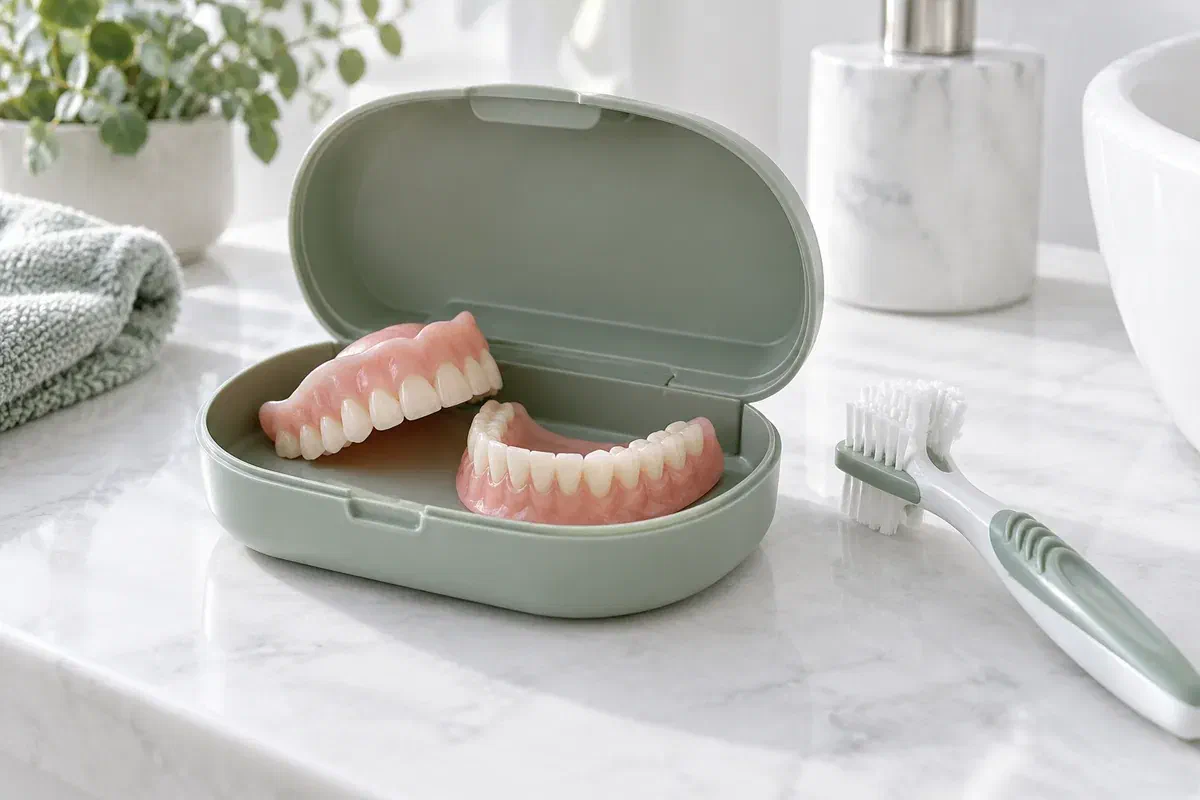
Complete denture appliances displayed as an educational example
How first-time wearers get here

Usually, it is one of these

Mention anything on your mind, even if it feels embarrassing or hard to explain. The consultation covers how your mouth works day to day as well as what the finished teeth might look like.

Natural teeth that can no longer cope

When several teeth have a poor long-term outlook, it is worth asking which might still be saved and why others are being recommended for extraction. A first full denture should follow that individual assessment, not a blanket decision.

A partial that is no longer enough

Perhaps a partial denture now loosens, rubs or no longer meets the opposite teeth properly as more teeth have been lost. Bring it in; its fit and condition help the dentist understand what has changed in the gums and bite.

Worry about your face and voice

Many first-timers fear looking older or sounding different. Say so early. A photograph or a description of your natural smile helps the dentist discuss tooth shape, display and speech while the design is still open.

Any ulcer that does not heal, a lump or any change in the mouth you cannot explain needs to be examined. Don’t write off every sore area as a denture problem.

What a first denture can do

Practical teeth, a familiar smile, a routine you can manage

A well-suited full denture replaces the missing teeth across one arch so you can chew and speak again with a complete row. Its shape gives support to the lips and cheeks, which affects your facial appearance. The design is made for your mouth, not copied from a pattern.

It also helps to set expectations kindly but honestly. A removable denture is different from natural teeth. It may move, it nearly always needs a few adjustments, and learning to use it takes time. Knowing that from the beginning makes the early weeks less discouraging.

Teeth and bite planned as one unit

The dentist works out tooth position, how your jaws meet and the contour of the base together. Planning the complete arch avoids judging individual teeth in isolation.

Easy to take out and clean

A removable appliance means you can clean it properly and care for the gums underneath. Ask to be shown how, and mention any difficulty with grip, eyesight or handling small objects.

Help while you learn

The fitting is the start of the learning period. Knowing how to request an adjustment and what to report can make a real difference for someone wearing a denture for the very first time.

Step by step

No step happens without an explanation first.

The order depends on how your gums heal, whether teeth need removing and whether you have worn any appliance before. Ask which appointments to expect and at which point you will see and approve the look and bite.

  1. Getting to know your mouth

    The dentist examines your gums and any remaining teeth, reviews your health history and asks about your worries and goals. Bring any partial denture you wear, a list of medications and your questions.

  2. Taking records

    Impressions or scans and bite measurements show the shape of your mouth and how the jaws relate. The dentist describes how the replacement teeth should come together and how the denture is made.

  3. Seeing a preview, where possible

    In a conventional plan, a wax version of the teeth can often be tried in so you can see the arrangement and check the bite. With an immediate denture this preview is limited; ask what can be judged ahead of time.

  4. Fitting and early follow-up

    The finished denture is placed and checked, and you are shown how to put it in, take it out and keep it clean. Follow-up visits sort out pressure spots and other concerns, and longer-term changes are explained when relevant.

The first few weeks

Strange is normal. Painful is not.

Expect your new denture to feel large and unfamiliar. The team should explain what adapting involves and how advice changes if teeth have just come out. Discomfort that does not settle should be reviewed.

Learn one cleaning routine and stick to it

Ask which cleaner and soft brush suit your denture material, and keep brushing your gums and tongue gently too. Find out where to store the denture when it is out and whether special steps apply after extractions.

Start small with food and words

Choose soft foods in small pieces and follow your healing instructions. Reading aloud helps you get used to new sounds. If something feels wrong, write it down for your review instead of trying to change the denture.

Keep every review appointment

Show the team where it presses and describe when it moves, for example when you bite or yawn. The mouth keeps changing after teeth are lost, so ongoing reviews are part of wearing a denture well.

Patient information: ADA MouthHealthy — dentures

The main approaches

Which kind of full denture fits your situation?

Each approach means different appointments, costs, maintenance and suitability. Ask which are realistic for you and what the in-between stage would look like with each.

Conventional

Once your gums have healed

This kind is made after healing has finished. If extractions come first, discuss how long that might take and how you would handle meals and appearance while the final denture is being prepared.

Immediate

The same day teeth are removed

Made before your remaining teeth come out, this denture is inserted straight after extractions. Gums change as they heal, so you can expect adjustments or a reline, and possibly a replacement. Ask how those steps are planned.

If extra stability suits you

With implant support

Implants may support some removable or fixed designs for a full arch. Your health, the surgery and healing involved, how you would clean it and long-term upkeep all need assessment; implants do not suit everyone.

First-denture questions

Things first-time wearers often wonder

There is more to a denture than the day it is fitted. Use the consultation to ask about the changeover, daily care and the support available if the appliance needs attention.

(905) 876-4488
Is it normal to feel anxious about getting a first denture?
Yes, very. Tell the team how you feel. Understanding each step, asking questions and taking time to decide can make the process feel more manageable.
Will my face look different once a full arch is replaced?
A denture supports the lips and cheeks, which can affect your appearance. Discuss what you would like with the dentist; a try-in stage, when available, lets you see the arrangement before completion.
Why does my mouth seem to make more saliva with a new denture?
Many people notice extra saliva at first as the mouth reacts to something new. It often settles with time. Mention it at a review if it continues or bothers you.
How do I take a full denture out the first time?
The dentist or team will show you at the fitting and let you practise. Ask them to watch you do it yourself, and say if grip or coordination is difficult.
What does an immediate denture actually involve?
It is made before extractions and placed straight after, so you have teeth during healing. Because the gums change, it usually needs adjusting or relining, and sometimes a later replacement.
Can several people in our household book on the same day?
Ask when you call. For households in Halton Hills making the trip together, the team can see what scheduling is possible, though each person’s treatment plan sets its own timing.
Complete dentures for Halton Hills

Take the first step at your own pace.

Bring any partial denture you wear, your medication list and every question, big or small. At our Bronte Street practice, Dr. Anjum will examine your mouth and explain a plan that covers comfort, appearance, handling and follow-up, so nothing comes as a surprise.

If a partial denture has broken or a sore spot is bothering you, mention it when booking so it can be included in your visit.

Visit Milton Dental Clinic
Unit 1, 342 Bronte St. S, Milton, ON L9T 5B7
Get directions Clinic hours
Monday–Thursday
11am–7pm
Friday–Sunday
By appointment only

Areas we serve

  • Milton
  • Oakville
  • Mississauga
  • Georgetown
  • Halton Hills
  • Acton
  • Campbellville
  • Brampton
  • Burlington
  • Puslinch
  • Rockwood
  • Erin
  • Caledon
  • Etobicoke
  • Old Milton
  • Bronte Meadows
  • Timberlea
  • Dorset Park
  • Dempsey
  • Clarke
  • Beaty
  • Coates
  • Harrison
  • Scott
  • Willmott
  • Ford
  • Bowes
  • Cobden
  • Walker
  • Mountain View
  • Milton Heights
  • Hawthorne Village
  • Valley View
  • Fallingbrook
  • Nassagaweya
  • Trafalgar
  • Esquesing
  • Nelson
  • Brookville
  • Moffat
  • Glen Williams
  • Norval
  • Limehouse
  • Stewarttown
  • Ashgrove
  • Hornby
  • Silver Creek
  • Speyside
  • Scotch Block
  • North Oakville
  • River Oaks
  • Glen Abbey
  • West Oak Trails
  • Palermo
  • Bronte Creek
  • College Park
  • Joshua Creek
  • Uptown Core
  • Preserve
  • Iroquois Ridge
  • Lisgar
  • Meadowvale
  • Meadowvale Village
  • Churchill Meadows
  • Erin Mills
  • Central Erin Mills
  • Streetsville
  • East Credit
  • Creditview
  • Heartland
  • Sheridan
  • Mount Pleasant
  • Credit Valley
  • Huttonville
  • Churchville
  • Springbrook
  • Northwest Brampton
  • Bram West
  • Fletcher's Meadow
  • Fletcher's Creek South
  • Alton Village
  • Orchard
  • Millcroft
  • Headon Forest
  • Tansley
  • Brant Hills
  • Tyandaga
  • Kilbride
  • Lowville
  • Aberfoyle
  • Morriston
  • Arkell
  • Hillsburgh
  • Freelton
  • Carlisle
  • Waterdown
  • Flamborough
  • Mountsberg

How can we help?

Milton Dental Clinic

Have a question about your smile? Choose the option that works best for you.

For urgent dental concerns, please call.
Messages are reviewed during clinic hours.