

Illustrative conversation between a patient and dentist about complete dentures
Restorative Dentistry

Complete Dentures in Old Milton

Has a denture you have worn for years started to slip, click or rub? For Old Milton households, a full denture review begins with how the current one behaves, what you would change, and which replacement steps make sense.

Old Milton · replacing a familiar denture

Your old denture has a story to tell.

Plenty of people near Milton’s historic downtown have worn the same full denture for a long time. It may have been comfortable once. Now it lifts when you laugh, catches on certain words, or leaves the gums tender by evening. Those clues are useful, so keep track of them.

A complete denture replaces all the teeth in the upper or lower arch. It sits on the gums and has to cooperate with your tongue, cheeks and lips every time you eat or speak. Because the tissues beneath it slowly change, a denture that once fitted well can drift out of step with your mouth.

At our Bronte Street practice, close to Old Milton, the first appointment is mainly about looking and listening. The dentist examines the gums and ridges, reviews your health history and asks what you would keep or change. You will hear the likely sequence and follow-up before making any decision.

Arrange a denture review
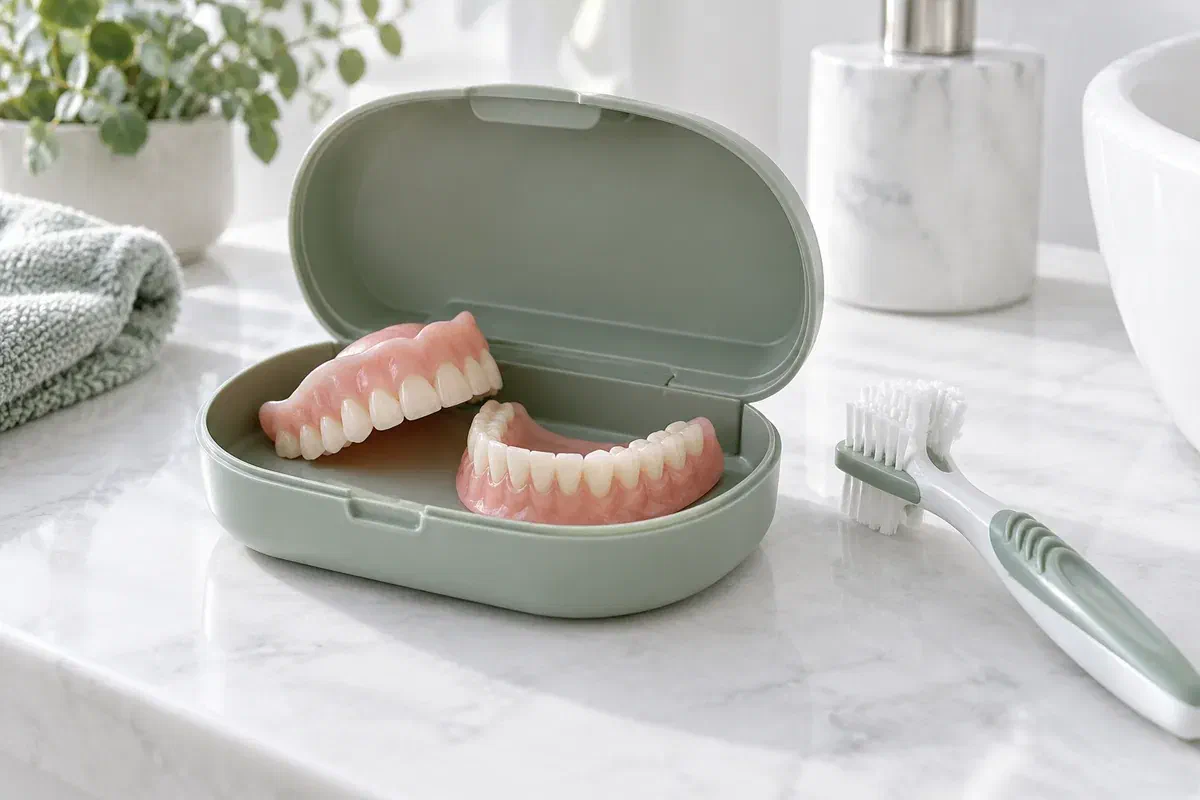
Complete denture appliances displayed as an educational example
Signs worth mentioning

What has your denture been telling you?

Small annoyances often point to something specific. Describe them as plainly as you can, including the ones that feel minor. The aim is to understand both how the denture works and how it looks.

The last few natural teeth are struggling

If you still have some teeth but they are loose, broken or repeatedly infected, ask which ones could be kept and what the reasoning is for removing others. Moving to a full denture should follow a tooth-by-tooth assessment, not a default decision.

Looseness, rubbing or a bite that has shifted

A denture that rocks, rubs the same place again and again, or meets the opposite teeth differently than it used to deserves attention. Bring it with you, because its wear and fit are best judged alongside the gums it rests on.

A smile or voice that no longer feels like yours

Lips that look thinner, teeth that hardly show, or a new whistle on certain sounds are worth raising early. An old photo or a description of what you liked about past teeth can guide the design discussion.

Any sore that lasts, a new lump or an unexplained patch in the mouth should be examined promptly. Wearing a denture does not explain every sore area.

Why a fresh look can help

Better balance between fit, appearance and daily handling

A new complete denture designed around your current mouth can restore a full row of teeth for chewing and talking. The way it is shaped also influences lip support and how your face looks at rest. The point is an appliance that suits the mouth you have today, not the one you had years ago.

Honesty about limits matters here. A removable denture moves more than natural teeth, often needs fine-tuning, and asks you to learn new habits. Starting with realistic expectations helps you weigh the choices and know when a change deserves a phone call.

Teeth, bite and base designed together

Rather than judging each tooth on its own, the dentist considers where the teeth sit, how the arches meet and how the base is shaped. Planning the arch as a unit tends to make for a more coherent result.

Out of the mouth for proper cleaning

Taking the denture out lets you clean it thoroughly and care for the gums underneath. Ask for a hands-on demonstration, and mention arthritis, shaky hands or poor eyesight so the routine can suit you.

Room for adjustment after delivery

Fitting day starts a settling-in period. Knowing how to request a quick adjustment, and which symptoms to report, can make the first weeks much easier, even for someone who has worn a denture for decades.

Old Milton · the appointment path

Assess, record, try, fit

How many visits you need depends on healing, whether any teeth are coming out and whether an existing denture is being replaced. Ask what each appointment covers and when you will get to judge appearance and fit.

  1. Look at the mouth and the current denture

    The dentist checks the gums, ridges and any natural teeth, goes through your medical history and asks how your present denture has behaved. Bring every denture you own, even ones you have stopped wearing, plus your questions.

  2. Capture shape and bite

    Impressions, measurements or other records describe the shape of your mouth and the relationship between your jaws. You will hear how the new teeth are meant to come together and how the appliance is produced.

  3. Preview the new teeth if the sequence allows

    A try-in stage, when it is part of the plan, lets you see the tooth arrangement and check the bite before the denture is finished. Ask what can still change at that point and what an immediate denture cannot preview.

  4. Deliver, explain and review

    The finished denture is fitted and you are shown how to put it in, take it out and keep it clean. Review visits deal with pressure areas or other concerns, and longer-term changes are discussed when they become relevant.

Settling in again

Even experienced wearers need a learning period.

A replacement can feel surprisingly different from the denture you knew. Ask what adapting usually involves, and how the advice changes if teeth were removed recently. Pain that persists should be seen, not put up with.

Clean and store it the recommended way

Follow the cleaning advice for your denture’s material, and look after your gums and tongue as well. Ask how and where to keep the denture when it is out, and whether special rules apply in the days after an extraction.

Give chewing and speech some practice

Choose softer, simple foods at first and follow the guidance for your stage of healing. Reading a newspaper article aloud can highlight words that feel awkward. Write down anything that bothers you rather than reshaping the denture at home.

Keep coming back for checks

Tell the team where it presses and when it lifts, for instance while biting into bread or speaking quickly. The mouth keeps changing after all natural teeth are gone, so occasional reviews continue to be worthwhile.

Patient information: ADA MouthHealthy — dentures

Routes to a new full arch

Healed, immediate or implant-supported?

Each approach differs in the number of visits, cost, maintenance and who it suits. Ask which are genuinely open to you and what living with each one would be like during the changeover.

The conventional route

Made after healing is complete

A conventional denture is built for gums that have healed. If extractions come first, ask how long healing may take and how you would manage eating and appearance in the meantime.

Bridging the gap

Placed on the day of extraction

An immediate denture is made ahead of time and inserted when the last teeth come out. Healing changes the shape of the gums, so it may later need adjustment, a reline or replacement. Ask how those steps are built into the plan.

If added stability is suitable

Supported by implants

Dental implants can hold some removable or fixed full-arch designs. Whether they suit you depends on an assessment of surgery, healing, cleaning access and maintenance; they are not the right answer for every mouth.

Old Milton · your questions

Things long-time denture wearers ask

Replacing a denture raises questions that go well beyond the fitting appointment. Bring them to your consultation, along with any worries about daily care or what happens if a problem appears later.

(905) 876-4488
How often does a complete denture need relining or replacing?
There is no single schedule. The gums and bone change at different rates for different people, and dentures wear. Regular reviews help the dentist suggest when a reline, adjustment or new denture may be worth considering.
Can a new denture be modelled on the one I already wear?
Features you like in your current denture can be discussed and sometimes used as a reference. The new design still needs to suit your mouth as it is now, so it may not match the old one exactly.
What should I do with my old denture after the new one is fitted?
Ask the dentist. Some people keep an older appliance as a spare, but a poorly fitting spare should not be relied on for long periods. Store it clean and dry or as advised.
Why does my lower denture seem to move more than my upper one?
Lower dentures often have less surface to rest on and have to work around the tongue, so many wearers notice more movement. Describe when it happens. The dentist can check the fit and discuss whether other options might help.
Do I need a check-up if my denture feels fine?
Yes, periodic reviews are still useful. The mouth can change without obvious symptoms, and an examination also looks at the gums, tongue and other soft tissues, not only the denture.
Can a family member come with me to the appointment?
Yes. A relative or caregiver can help remember instructions, especially about handling and cleaning. Let the team know when you book so there is time to include them in the explanation.
Complete dentures for Old Milton

Bring the denture you know. We will start from there.

Come with your present denture, the things you would like to be different and any questions about what happens next. At our Bronte Street practice, the dentist will examine your mouth and outline a plan that considers comfort, appearance, handling and aftercare.

If your denture has cracked or is rubbing a painful spot, mention it when you call so the problem can be part of the appointment.

Visit Milton Dental Clinic
Unit 1, 342 Bronte St. S, Milton, ON L9T 5B7
Get directions Clinic hours
Monday–Thursday
11am–7pm
Friday–Sunday
By appointment only

Areas we serve

  • Milton
  • Oakville
  • Mississauga
  • Georgetown
  • Halton Hills
  • Acton
  • Campbellville
  • Brampton
  • Burlington
  • Puslinch
  • Rockwood
  • Erin
  • Caledon
  • Etobicoke
  • Old Milton
  • Bronte Meadows
  • Timberlea
  • Dorset Park
  • Dempsey
  • Clarke
  • Beaty
  • Coates
  • Harrison
  • Scott
  • Willmott
  • Ford
  • Bowes
  • Cobden
  • Walker
  • Mountain View
  • Milton Heights
  • Hawthorne Village
  • Valley View
  • Fallingbrook
  • Nassagaweya
  • Trafalgar
  • Esquesing
  • Nelson
  • Brookville
  • Moffat
  • Glen Williams
  • Norval
  • Limehouse
  • Stewarttown
  • Ashgrove
  • Hornby
  • Silver Creek
  • Speyside
  • Scotch Block
  • North Oakville
  • River Oaks
  • Glen Abbey
  • West Oak Trails
  • Palermo
  • Bronte Creek
  • College Park
  • Joshua Creek
  • Uptown Core
  • Preserve
  • Iroquois Ridge
  • Lisgar
  • Meadowvale
  • Meadowvale Village
  • Churchill Meadows
  • Erin Mills
  • Central Erin Mills
  • Streetsville
  • East Credit
  • Creditview
  • Heartland
  • Sheridan
  • Mount Pleasant
  • Credit Valley
  • Huttonville
  • Churchville
  • Springbrook
  • Northwest Brampton
  • Bram West
  • Fletcher's Meadow
  • Fletcher's Creek South
  • Alton Village
  • Orchard
  • Millcroft
  • Headon Forest
  • Tansley
  • Brant Hills
  • Tyandaga
  • Kilbride
  • Lowville
  • Aberfoyle
  • Morriston
  • Arkell
  • Hillsburgh
  • Freelton
  • Carlisle
  • Waterdown
  • Flamborough
  • Mountsberg

How can we help?

Milton Dental Clinic

Have a question about your smile? Choose the option that works best for you.

For urgent dental concerns, please call.
Messages are reviewed during clinic hours.