

Illustrative conversation between a patient and dentist about complete dentures
Restorative Dentistry

Complete Dentures in Puslinch

Before you agree to a full denture, you deserve a plan you can read and compare. For households in Puslinch, we can examine your mouth, explain each stage in plain language and set out in writing what the treatment and its upkeep involve.

Puslinch · decisions with the full picture

Read the plan before you sign it.

Replacing a whole arch of teeth is a significant decision, and it often arrives with a page of treatment codes and appointment estimates. It is completely reasonable to take that page home, read it slowly and come back with questions about what each line means for your mouth, your time and your budget.

The appliance being proposed replaces all the teeth in your upper or lower jaw. It is removable, rests on the gums and needs to fit well with your lips, cheeks and tongue. Planning covers the bite, the base and how easily you can handle it, not only the colour of the teeth.

When you come in from Puslinch, the first appointment at our Bronte Street practice is an examination and a clear explanation of the options that suit you. The dentist reviews your gums, any natural teeth and the order treatment might follow, then describes the visits and follow-up before you commit.

Request a denture consultation
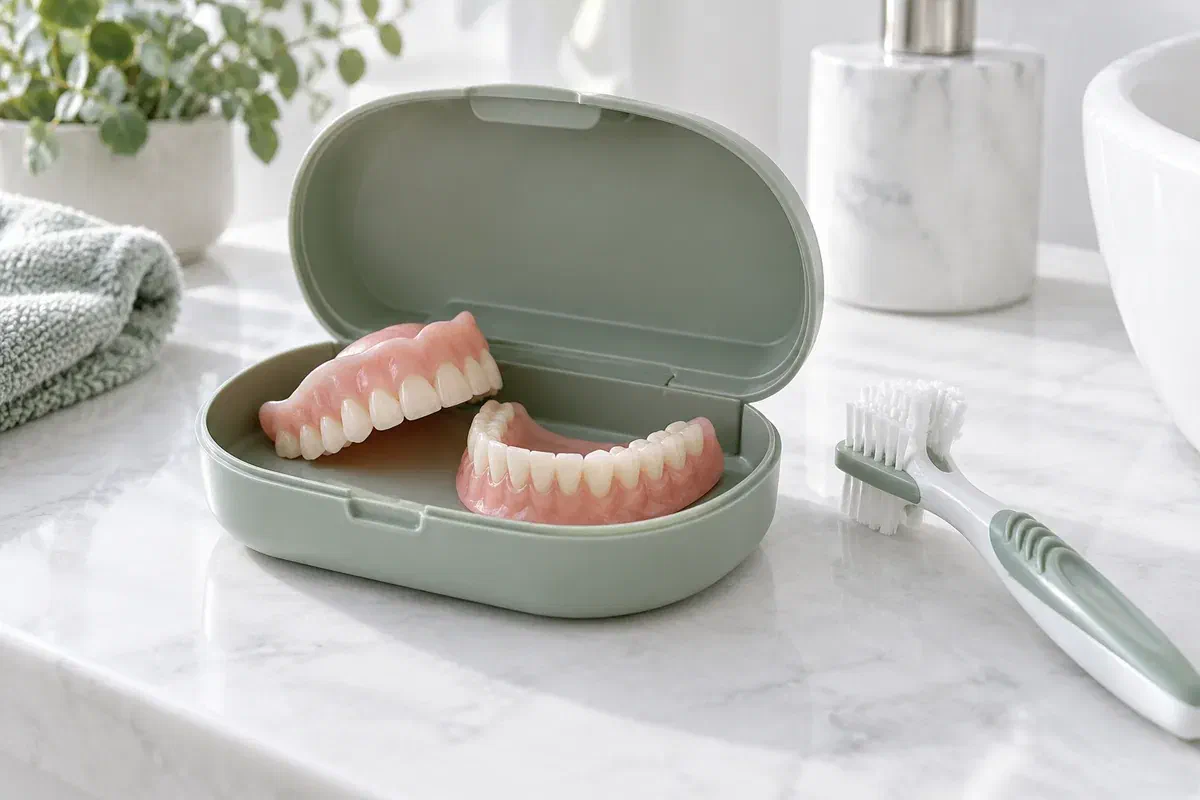
Complete denture appliances displayed as an educational example
What usually prompts the conversation

Something has stopped working, and you want to understand why.

Describe the problem in your own words, along with any questions about the plan itself. A thorough consultation considers how the mouth functions as well as how the replacement teeth might look.

A recommendation to remove the remaining teeth

Ask the dentist to go through each tooth and explain why it can or cannot reasonably be kept. A complete denture should be the outcome of that individual review, not the starting point of the discussion.

A denture that has worn out or loosened

Slipping, recurring sore areas or a bite that has shifted are reasons for a review. Bring the appliance so its condition and fit can be judged against the gums and ridge it rests on.

Uncertainty about the finished look

If you are unsure how the teeth will look or how speech might change, raise it early. A photo or a description of what feels natural to you helps the dentist discuss shape, colour and display.

Any ulcer that does not heal, a lump or an unexplained change in the mouth needs to be examined. Don’t assume every sore area comes from a denture.

What you are paying for

A denture designed for daily life, with support afterwards

A suitable complete denture restores teeth across the whole arch so you can chew and speak, and it supports the lips and cheeks, which affects your appearance. The aim is a practical appliance designed for your mouth, together with the adjustments that help it settle.

It is also worth knowing what a denture cannot do. A removable appliance may move, will likely need adjusting and takes practice to use well. Over the years the gums change, so relines or replacement may eventually be needed. Factoring that in makes comparisons fairer.

A whole-arch design

Tooth position, the bite and the contour of the base are considered together, so the plan addresses how the entire arch functions rather than treating each replacement tooth separately.

Removable for cleaning

Taking the denture out allows thorough cleaning of the appliance and gums. Ask to be shown the routine, and mention any difficulty with grip, vision or handling small objects.

Adjustments as part of the plan

Ask how many adjustment visits are typically included and how to arrange them. Understanding this before fitting helps the early weeks feel manageable, especially with a first denture.

What each visit covers

Assessment, records, trial and fitting, explained in advance

The sequence depends on healing, planned extractions and whether you already wear a denture. Ask for a list of the expected appointments and which ones involve decisions about appearance and fit.

  1. Examination and options

    The dentist checks your gums, ridges and any natural teeth, goes through your health history and explains the options that fit your situation. Bring current dentures, any previous estimate and your questions.

  2. Records for the design

    Impressions or scans and bite measurements capture your mouth’s shape and how your jaws close. You will hear how the replacement teeth are designed to meet and how the denture is made.

  3. A preview where the plan allows

    With conventional treatment, a wax try-in often lets you see the teeth and check the bite before completion. Immediate dentures allow less of this. Ask what can be changed at that point and what cannot.

  4. Fitting and follow-up

    The finished denture is placed, checked and explained, including cleaning. Follow-up visits deal with pressure spots and other concerns, and future relines or changes are discussed when they become relevant.

Protecting your investment

Care for it well and report problems early.

Any new denture feels unfamiliar at first. The team should explain what adapting involves and how instructions differ after extractions. Ongoing discomfort deserves a review, not patience alone.

Clean it gently, every day

Use the cleaner and soft brush recommended for the material, since harsh products can scratch some dentures. Care for your gums and tongue too, and ask about storage when the denture is out and after extractions.

Practise eating and speaking

Begin with softer foods in small pieces and follow your healing advice. Reading aloud helps with speech. Keep track of problems for your next visit instead of altering the denture yourself.

Keep up with reviews

Describe any pressure point and any moment the denture loosens, whether during a meal or a long chat. Regular checks can catch fit changes early, examine the soft tissues of the mouth, and help you plan for relines or replacement rather than being caught off guard.

Patient information: ADA MouthHealthy — dentures

Weighing the options

Compare visits, upkeep and suitability, not just the price.

Approaches differ in appointments, costs, maintenance and who they suit. Ask which are realistic for you, and what each would involve during the transition and in the years after.

Conventional

A denture for a healed mouth

This is made once your gums have healed. If extractions are needed first, there will be a gap of some weeks or longer; ask what that interval means for eating, appearance and any temporary appliance listed on the plan.

Immediate

A denture at the time of extraction

Prepared in advance and placed when the teeth are removed, an immediate denture often needs adjustment or relining as healing progresses, and sometimes replacement. Ask whether those later steps appear in your estimate.

When added support suits

Implant-assisted options

In suitable mouths, implants may anchor a removable overdenture or carry a fixed bridge of teeth. They involve surgery, a healing period, specific cleaning and ongoing maintenance visits, all of which need careful assessment and belong in the estimate. They are not automatically suitable for everyone.

Questions about the plan

Understanding what you are agreeing to

Getting a full arch replaced involves more than one appointment and one fee. These are the questions worth putting on paper before your visit, so the changeover, the upkeep and the help on offer later are all clear.

(905) 876-4488
Why does a denture estimate list several separate items?
Treatment can include examinations, extractions, temporary or immediate dentures, the final appliance and adjustments. Listing them separately helps you see what is included. Ask about any line you do not understand.
Are relines and future replacements part of the original fee?
This varies, so ask directly. Find out which follow-up visits are included and which later services, such as relines or a replacement, would be separate.
Can I take time to think before agreeing to extractions?
Usually, yes. Ask whether any tooth needs prompt treatment for pain or infection, since that may not be able to wait. For the rest of the decision, it is reasonable to take the plan home, talk it over and return with questions.
How does upkeep differ between a conventional and an implant-supported option?
A conventional denture needs daily cleaning and periodic review, and may need relining. Implant designs add cleaning around the implants and their own maintenance checks. Ask for details of each.
Can I get the full treatment plan in writing?
Yes. A written outline of the proposed appliance, appointments and separate items helps you compare options and discuss them with family before deciding.
Can I share my insurance details before travelling in from Puslinch?
You can provide them when you book. The team can explain what information can be prepared for your insurer, though what is covered is decided by your plan.
Complete dentures for Puslinch

A clear plan, in writing, before any treatment begins

Bring your current denture, any previous estimate and the questions on your list. Dr. Anjum can examine your mouth and walk you through options that weigh comfort, appearance, handling, upkeep and follow-up.

If your denture is cracked or causing a sore spot, mention it when you call so time can be set aside to look at it.

Visit Milton Dental Clinic
Unit 1, 342 Bronte St. S, Milton, ON L9T 5B7
Get directions Clinic hours
Monday–Thursday
11am–7pm
Friday–Sunday
By appointment only

Areas we serve

  • Milton
  • Oakville
  • Mississauga
  • Georgetown
  • Halton Hills
  • Acton
  • Campbellville
  • Brampton
  • Burlington
  • Puslinch
  • Rockwood
  • Erin
  • Caledon
  • Etobicoke
  • Old Milton
  • Bronte Meadows
  • Timberlea
  • Dorset Park
  • Dempsey
  • Clarke
  • Beaty
  • Coates
  • Harrison
  • Scott
  • Willmott
  • Ford
  • Bowes
  • Cobden
  • Walker
  • Mountain View
  • Milton Heights
  • Hawthorne Village
  • Valley View
  • Fallingbrook
  • Nassagaweya
  • Trafalgar
  • Esquesing
  • Nelson
  • Brookville
  • Moffat
  • Glen Williams
  • Norval
  • Limehouse
  • Stewarttown
  • Ashgrove
  • Hornby
  • Silver Creek
  • Speyside
  • Scotch Block
  • North Oakville
  • River Oaks
  • Glen Abbey
  • West Oak Trails
  • Palermo
  • Bronte Creek
  • College Park
  • Joshua Creek
  • Uptown Core
  • Preserve
  • Iroquois Ridge
  • Lisgar
  • Meadowvale
  • Meadowvale Village
  • Churchill Meadows
  • Erin Mills
  • Central Erin Mills
  • Streetsville
  • East Credit
  • Creditview
  • Heartland
  • Sheridan
  • Mount Pleasant
  • Credit Valley
  • Huttonville
  • Churchville
  • Springbrook
  • Northwest Brampton
  • Bram West
  • Fletcher's Meadow
  • Fletcher's Creek South
  • Alton Village
  • Orchard
  • Millcroft
  • Headon Forest
  • Tansley
  • Brant Hills
  • Tyandaga
  • Kilbride
  • Lowville
  • Aberfoyle
  • Morriston
  • Arkell
  • Hillsburgh
  • Freelton
  • Carlisle
  • Waterdown
  • Flamborough
  • Mountsberg

How can we help?

Milton Dental Clinic

Have a question about your smile? Choose the option that works best for you.

For urgent dental concerns, please call.
Messages are reviewed during clinic hours.