Illustrative dental consultation with a patient discussing her care
Restorative Dentistry

Composite Fillings in Acton

Your molars do the heavy lifting at every meal. For a back-tooth cavity, people from Acton can find out whether composite suits the size of the repair and the forces of their bite, or whether a sturdier option makes more sense.

Back teeth, real forces

Will it hold up when you chew?

Molars grind steak, crack nuts and absorb the pressure of clenching. So when one needs a repair, a sensible first question is whether a tooth-coloured filling can take that kind of work.

For many small and medium cavities, it can. Composite resin is bonded to the prepared tooth in layers and shaped to recreate the chewing surface, giving a restoration close in colour to enamel. The answer changes, though, when the cavity is very wide, the tooth has lost a cusp, or the bite puts unusual strain on it. Then another filling material, an onlay or a crown may serve better.

When you come in from Acton, we look at the tooth, your bite and any signs of grinding before suggesting anything.

Ask about a molar repair
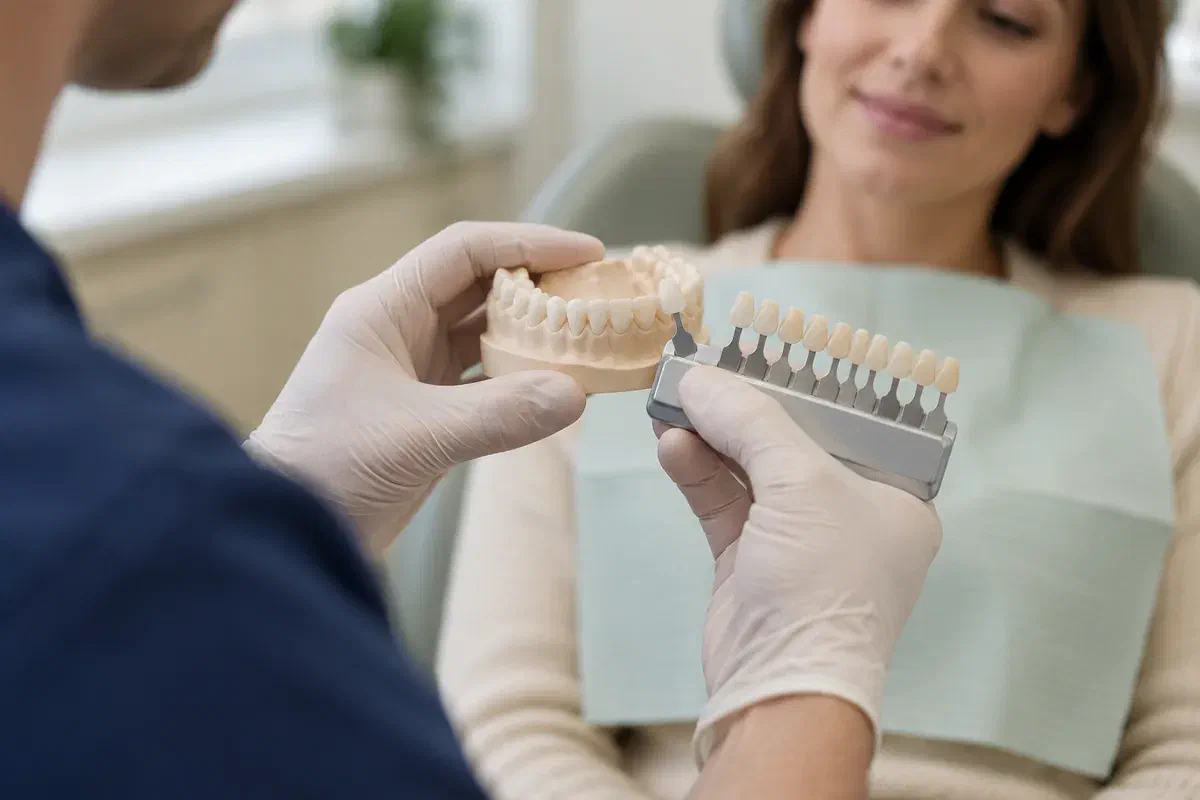
A dental model and shade guide illustrating tooth-colour selection
Trouble at the back

Problems that show up on molars

Back teeth face their own risks. An exam establishes what caused the damage, how far it extends, and whether there is enough sound tooth for a bonded filling to cope with chewing.

Decay in the biting grooves

The pits and fissures of molars hold on to food and plaque. A cavity there can grow before it is felt, and once treatment is needed, the decay is removed and rebuilt.


A cusp that has cracked off

A pointed corner of a molar can break under pressure. A small loss may suit composite; a larger one, or a crack heading toward the root, may need more coverage.

A worn back-tooth filling

Older fillings on molars face constant load and can wear or chip at the margins. The dentist checks whether it needs repair, replacement or just monitoring.

A molar that aches when you bite may have a crack rather than a cavity. Describe the moment the pain appears and how long it hangs on.

Composite on back teeth

Strength where it’s suitable

Composite is best known for blending in on front teeth, but it is also used for suitable cavities on premolars and molars. Here the dentist pays particular attention to how big the restoration will be and how much force it will carry.

Placement needs a dry tooth, which can be harder to achieve right at the back of the mouth. A wide repair or a tooth under heavy load may last better with a different restoration. The best choice depends on the tooth in front of us.

Patient information: ADA — tooth-coloured fillings · FDA — filling materials

Tooth-coloured, even at the back

A shade is chosen to match the molar, so the repair is less obvious when you laugh or yawn.

Bonded to keep structure

Bonding may let the dentist preserve more of the healthy tooth, when its condition supports that.

Usually one appointment

Many direct back-tooth fillings are placed in a single treatment visit, although the exam or other care may be separate.

Step through it

A molar filling, start to finish

Knowing the sequence helps the time pass, especially on a day you have set aside to come from Acton. Raise a hand if you need a break, and ask whatever comes to mind.

  1. Check the tooth and bite

    We talk about your concern and assess the tooth, including how your teeth meet. X-rays may be suggested if they would reveal decay between teeth or around the root. Before treatment, the repair, other options and estimated fee are explained.

  2. Numb and isolate

    Local anaesthetic may numb the area. After damaged tooth is removed, the site is kept clean and dry, which is essential for bonding at the back of the mouth.

  3. Rebuild the chewing surface

    Composite is layered in and cured with a light. The dentist shapes cusps and grooves and restores a firm contact with the next tooth so food is less likely to pack in.

  4. Test and polish

    Your bite is checked with marking paper and adjusted where needed, then the filling is polished. You can ask about chewing, cleaning, or how the tooth should feel later on.

Afterwards

Easy does it on that side

Use the instructions you were given. If anything feels wrong with the molar, call us rather than waiting for a routine appointment.

Let the numbness wear off

Chewing while numb can lead to a bitten cheek or tongue. Take care with hot drinks until normal feeling has returned.

Pay attention to pressure

Brief sensitivity to biting or cold can occur. Phone if pain is worsening, sensitivity does not settle, or the filled tooth feels high when you close.

Clean those back surfaces

Brush twice a day with a fluoride toothpaste, paying attention to the back teeth, and clean between them daily. Fillings can still develop decay at their margins.

Patient information: Cleveland Clinic — dental fillings

Comparing molar repairs

Filling, onlay or crown?

Ask what each recommendation is designed to do and what the alternatives would mean. The decision should follow the condition of the tooth and the demands of your bite.

For a moderate direct repair

Composite or another filling material

Moisture control, cavity size, the tooth’s position and chewing forces all shape the material choice. Ask how each would perform on this particular molar.

When cusps are weak or missing

Onlay or crown

If much of the molar is gone or cracked, a restoration that covers the biting surface may be advised, giving the remaining tooth protection a filling cannot offer.

When decay is deep

Treatment for the pulp

If infection has reached the pulp, a filling is not enough. Depending on what is found, root canal therapy followed by a protective restoration may be considered.

Patient information: ADA — crowns · ADA — root canals

Back-tooth questions

Questions people ask about molars

Ask anything about the repair. If you are not sure which tooth it is, tell us where you feel it and when.

(905) 876-4488
Will composite stand up to chewing on a molar?
In a lot of cases, yes, particularly when the cavity is small to moderate. Very large repairs or teeth that take heavy forces may do better with another material or a covering restoration. The dentist will explain why one is recommended.
Does grinding my teeth affect a filling?
It can. Clenching and grinding put extra stress on teeth and restorations, which may lead to wear or chipping. Mention it, as the dentist may discuss protection such as a night guard.
Why does food keep packing between two back teeth?
A gap between teeth, a broken edge, decay or a filling with a poor contact can all trap food. The exam shows the cause and whether a filling would help.
Can a deep cavity be filled without a root canal?
Often, if the pulp is healthy. If it is inflamed beyond recovery or infected, root canal treatment may be needed before a final restoration. X-rays and symptoms help the dentist decide.
How visible will a back-tooth filling be?
Composite is shaded to match the tooth, so it is usually discreet. Most people will not notice it unless they are looking closely at your back teeth.
What should I ask before agreeing to treatment?
Ask what the repair will achieve, what the alternatives are, how many visits it involves and the estimated fee. If you have benefits, check what your plan covers before proceeding.

Patient information: CDA — tooth-coloured fillings · FDA — existing amalgam fillings

Composite fillings, Acton

Give that molar a proper check.

Visit our Bronte Street practice with a back-tooth cavity, a broken cusp or a worn filling. We assess the tooth and your bite first, then explain which repair would suit it.

Please call for significant pain or swelling. Online requests suit non-urgent concerns.

Visit Milton Dental Clinic
Unit 1, 342 Bronte St. S, Milton, ON L9T 5B7
Get directions Clinic hours
Monday–Thursday
11am–7pm
Friday–Sunday
By appointment only

Areas we serve

  • Milton
  • Oakville
  • Mississauga
  • Georgetown
  • Halton Hills
  • Acton
  • Campbellville
  • Brampton
  • Burlington
  • Puslinch
  • Rockwood
  • Erin
  • Caledon
  • Etobicoke
  • Old Milton
  • Bronte Meadows
  • Timberlea
  • Dorset Park
  • Dempsey
  • Clarke
  • Beaty
  • Coates
  • Harrison
  • Scott
  • Willmott
  • Ford
  • Bowes
  • Cobden
  • Walker
  • Mountain View
  • Milton Heights
  • Hawthorne Village
  • Valley View
  • Fallingbrook
  • Nassagaweya
  • Trafalgar
  • Esquesing
  • Nelson
  • Brookville
  • Moffat
  • Glen Williams
  • Norval
  • Limehouse
  • Stewarttown
  • Ashgrove
  • Hornby
  • Silver Creek
  • Speyside
  • Scotch Block
  • North Oakville
  • River Oaks
  • Glen Abbey
  • West Oak Trails
  • Palermo
  • Bronte Creek
  • College Park
  • Joshua Creek
  • Uptown Core
  • Preserve
  • Iroquois Ridge
  • Lisgar
  • Meadowvale
  • Meadowvale Village
  • Churchill Meadows
  • Erin Mills
  • Central Erin Mills
  • Streetsville
  • East Credit
  • Creditview
  • Heartland
  • Sheridan
  • Mount Pleasant
  • Credit Valley
  • Huttonville
  • Churchville
  • Springbrook
  • Northwest Brampton
  • Bram West
  • Fletcher's Meadow
  • Fletcher's Creek South
  • Alton Village
  • Orchard
  • Millcroft
  • Headon Forest
  • Tansley
  • Brant Hills
  • Tyandaga
  • Kilbride
  • Lowville
  • Aberfoyle
  • Morriston
  • Arkell
  • Hillsburgh
  • Freelton
  • Carlisle
  • Waterdown
  • Flamborough
  • Mountsberg

How can we help?

Milton Dental Clinic

Have a question about your smile? Choose the option that works best for you.

For urgent dental concerns, please call.
Messages are reviewed during clinic hours.