Structures the plan works around
Nerves, the sinus and the roots of nearby teeth may sit close to the gap. The clinician selects records that are justified and explains how they affect the position, or why another approach could be safer.

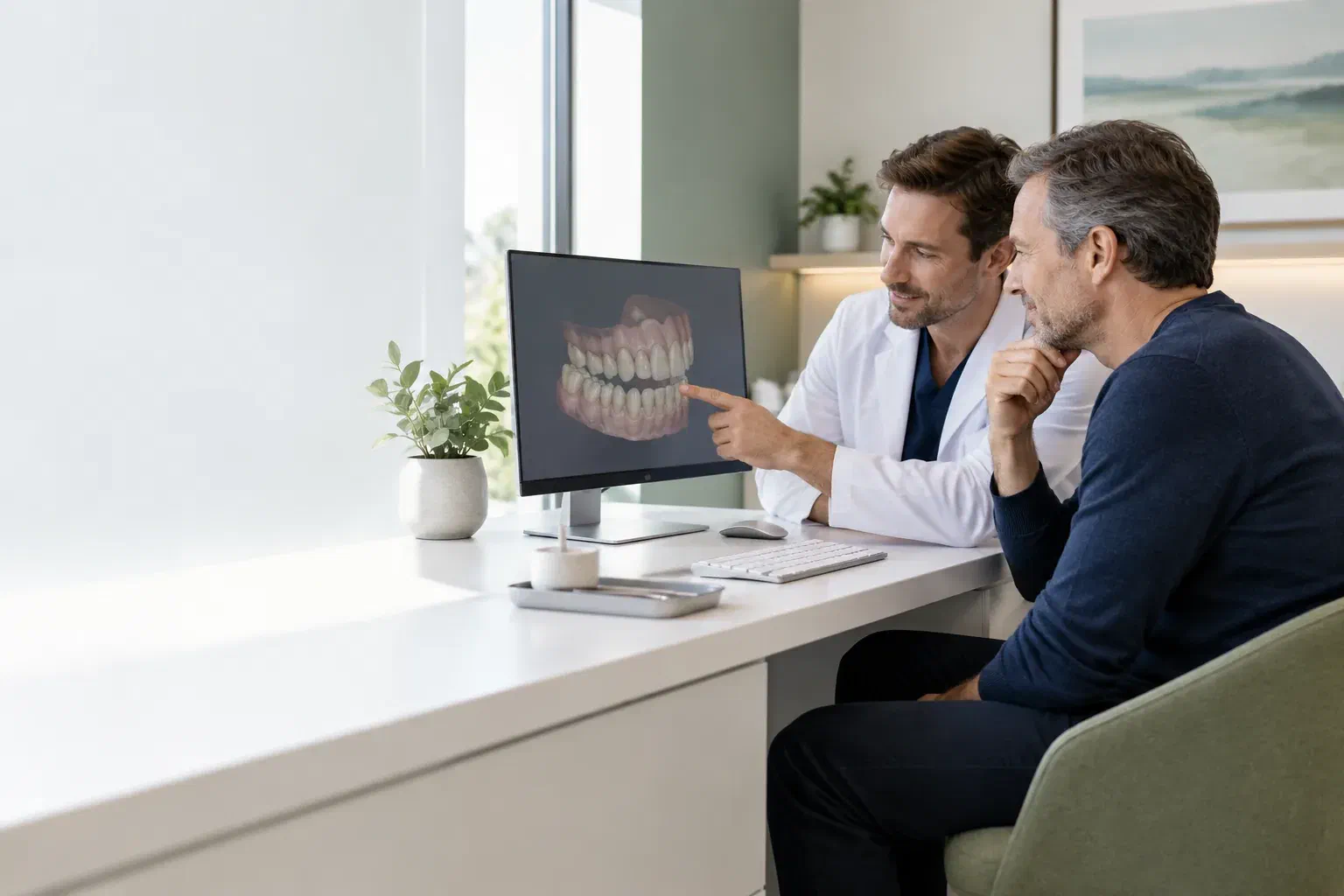
Feeling uneasy about implant surgery is common, and knowing what to expect helps. From Bolton or elsewhere in Caledon, book a consultation to see how a digital plan is made and what happens on the day it is used.
For many people, the hardest part of an implant is the not knowing. What will they see on the screen? What happens in the chair? A computer-planned approach means the clinician studies digital records ahead of time to decide where an implant should sit, judged against the crown it will hold, your bone, nearby nerves and roots, and your ability to keep it clean. Seeing that plan can make the process feel less mysterious, though it is never the whole assessment.
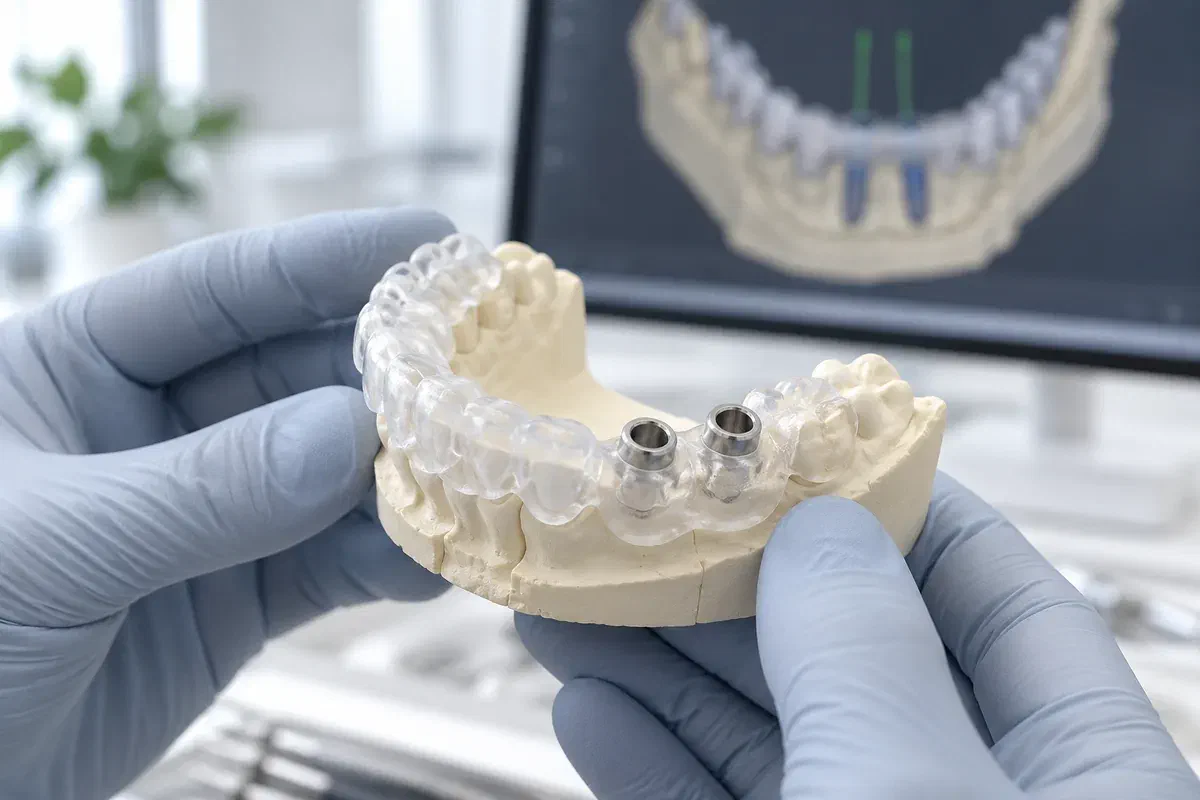
Scans, planning software and surgical guides are distinct. A scan gathers information; software helps test a position; a guide is a device that may help carry that position into surgery. Your case may use some, all or none of them, so ask what is proposed and who does each part.
From Bolton and the smaller villages of Caledon, the first visit is a conversation about the gap, your worries and the options that suit you. We confirm whether an implant is appropriate before discussing technique. Then imaging, any referral, surgery and restorative steps are explained in plain language, at a pace that works for you.
Your implant supports a tooth you will rely on daily. Planning links your mouth’s condition to that tooth, and explaining those links is part of making the process feel manageable.
Nerves, the sinus and the roots of nearby teeth may sit close to the gap. The clinician selects records that are justified and explains how they affect the position, or why another approach could be safer.
Both the visible gap and the bone below matter. The plan considers the crown’s shape, how it meets your other teeth and whether you will be able to clean it without difficulty.
Sometimes a specialist places the implant and your dentist restores it. Ask who you will meet at each stage, how records are shared and whom to contact with questions.
Technology does not decide suitability. Your medical history, the exam, your expectations, comfort and ability to maintain the restoration are all part of the recommendation.
Digital records may let the clinician show you the planned implant beside the future crown and surrounding anatomy. In suitable cases, that plan can help produce a guide used during placement. Whether a guide is right for you depends on your clinical situation and the team’s judgement.
A plan you can see does not remove surgical risk or guarantee an outcome. Records must be accurate, the position must suit your anatomy, and the team will still respond to what they find during treatment.
Patient information: ITI — computer-guided implant surgery
Seeing where the final tooth is meant to sit can make the plan easier to follow. Ask how its shape, bite and cleaning space shaped the proposed position.
Records can help explain why preparation, healing time or another opinion comes before surgery, and why a rapid approach might not suit you.
If surgery feels like too much, a bridge or removable partial may be worth comparing. Ask what the technology adds and what it cannot change.
No two pathways use exactly the same visits or tools. Before you decide, it is reasonable to ask for a written summary of what happens at each stage, from the first exam through any preparation, the surgery itself, the finished tooth and later check-ups, and where each one takes place.
We discuss the missing tooth, your medical history, previous dental experiences and anything that makes you anxious. The exam shows which options are worth exploring and whether other dental issues come first.
The team may suggest photographs, a digital impression of your teeth and some form of X-ray. Nothing should be taken without a reason, so ask what each record shows and whether recent images from another office can be used.
The proposed implant position is shown with the future tooth in mind. We go over benefits, limitations, costs and alternatives, and whether a graft, guide, referral or temporary tooth is part of it.
If you proceed, the treating clinician explains surgery-day arrangements and follow-up. The final tooth is made after healing, and you receive cleaning instructions and a review schedule.
Recovery instructions are specific to your procedure and come from the clinician who performed it. Follow them, and be clear about whom to call if healing differs from what you expected.
Expect guidance on keeping the area clean, what to eat for the first while, how active to be and how to take any medicine prescribed. It is written for the work actually done, grafts included, so it helps to go through it with the team while you are still in the chair and ask anything that feels uncertain.
A provisional tooth or appliance is there to get you through healing, not to take full chewing force. Learn how to put it in, clean it and rest it. If it wobbles, cracks or your teeth no longer meet the way they did, phone so the team can look before you keep using it.
When the permanent tooth goes in, ask someone to show you, in your own mouth, how to brush and floss around it. Settle on how often you will be seen, and speak up about tenderness, awkward cleaning or gum that looks different.
Knowing the steps can make treatment feel more manageable. These answers are general; at your visit we can explain how each one applies to your own gap.
Book an appointment with our Bronte Street team and tell us about the missing tooth and whatever is making you hesitate. We will go through the assessment that makes sense, describe each stage in plain terms and leave plenty of room for your questions about planning, who does what and recovery.
Previous consultation notes or imaging from another office can help us decide which records are relevant.
