Sensitive structures near the site
Nerves, the sinus and adjacent roots can limit options. The clinician chooses the records that are justified and explains whether they change the position or suggest another way forward.

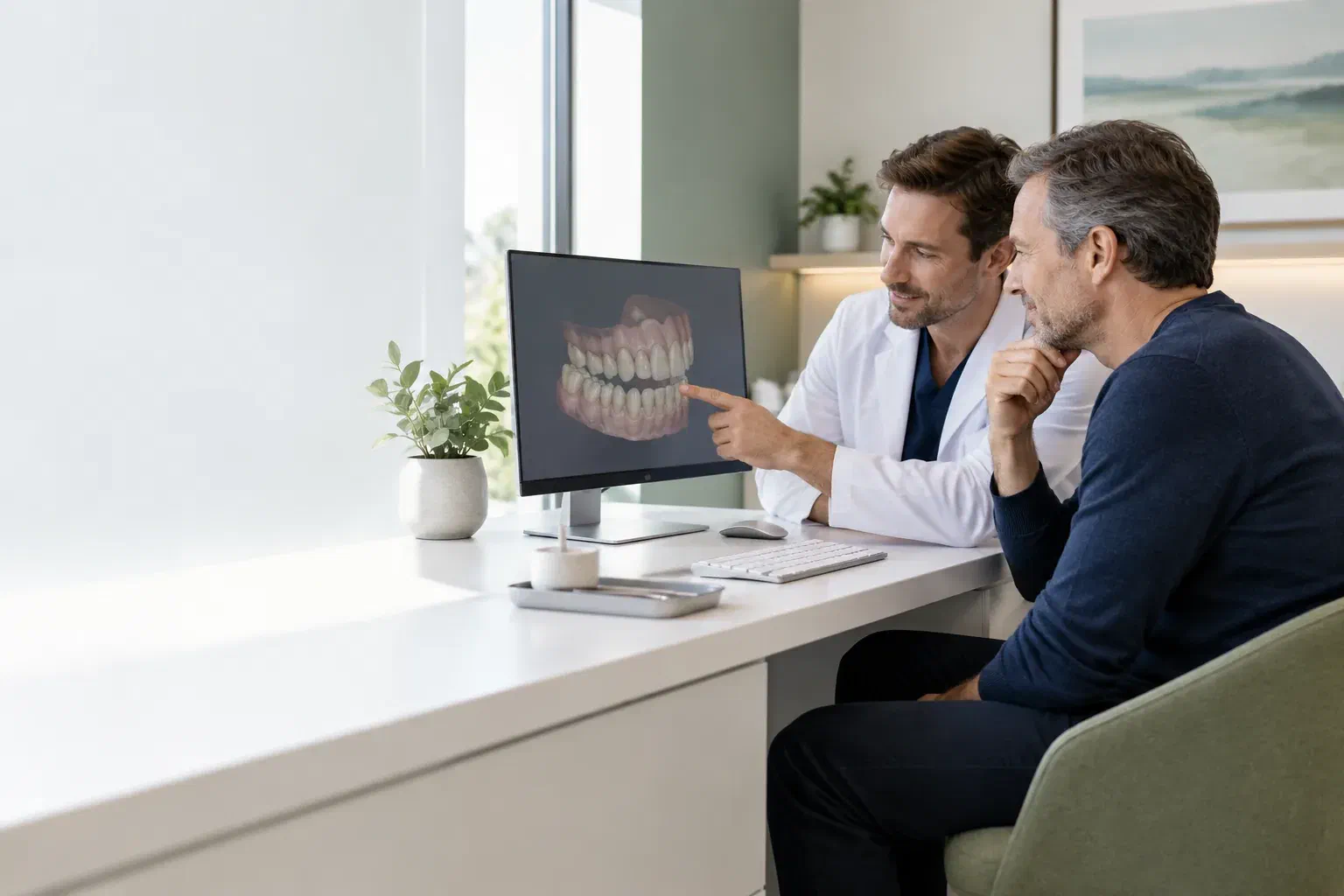
Your health matters as much as your scan when planning an implant. From Erin or Hillsburgh, book a consultation to talk about medical history, medications and habits alongside the digital records that guide placement.
Two people can have nearly identical scans and still receive different advice. The difference often lies in health history: medications, conditions that affect healing, smoking, or how easily someone can care for the area afterward. Computer-planned placement draws on digital records to consider where an implant could support the crown, given the bone, nerves and neighbouring roots. Those records are essential, yet they describe your jaw, not your whole health.
Imaging, planning software and a surgical guide are separate pieces of a possible workflow. Your case might call for one, several or a different approach. Feel free to ask which are suggested, what each adds and who takes charge of every step.
Households in Erin and Hillsburgh often juggle appointments around work and rural life, so we try to make the first visit count. We review the gap, your health and the replacements worth considering, and confirm whether an implant suits you before discussing technique. Imaging, any referral, surgery and restorative stages are then explained together.
An implant supports a tooth that has to heal well and stay healthy. Planning connects the condition of your mouth and your general health to that result, rather than focusing only on where a fixture might fit.
Nerves, the sinus and adjacent roots can limit options. The clinician chooses the records that are justified and explains whether they change the position or suggest another way forward.
The room in the gap and the bone beneath both matter. The plan considers the crown’s shape, how it meets your other teeth and whether you can keep the area clean, which is especially important when healing may be slower.
Some conditions or medicines call for input from your doctor, and some cases involve a dental specialist as well. Ask how information is shared and who is responsible for each part of your care.
A digital plan cannot judge suitability alone. Your medical history, examination, expectations and ability to maintain the restoration all carry weight in the recommendation.
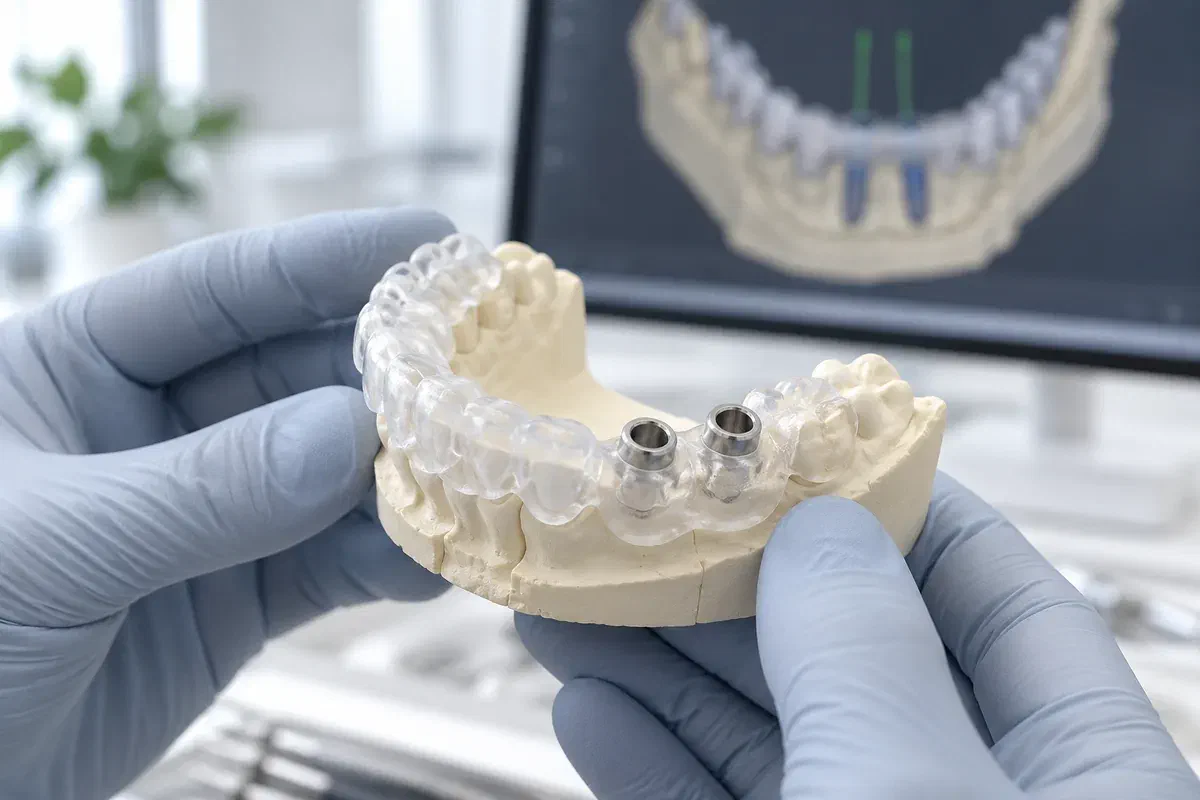
Digital information can help the clinician assess a proposed implant against the intended crown and the nerves, roots and bone that surround the site. In suitable cases, that plan may be used to produce a guide for surgery. Whether a guide makes sense depends on your clinical and medical picture and the treating team’s judgement.
Planning does not make surgery free of risk or ensure a particular result, and it cannot account for health factors on its own. Records must be accurate, the plan must be clinically appropriate, and the team must still respond to what they find.
Patient information: ITI — computer-guided implant surgery
Starting from the final crown keeps planning practical. Ask how its shape, your bite and cleaning access influenced the suggested position.
Records and your health history together may explain why preparation, longer healing or a specialist opinion is recommended first, and why a fast approach might not suit you.
If health factors make surgery less appealing, a bridge or removable partial may be worth comparing. Ask what the technology changes in your decision and what it does not.
Every case has its own number of visits and tools. Before you go ahead, ask for an outline of assessment, preparation, placement, the final tooth and maintenance, including where each takes place.
We review the missing tooth, your medical history, medicines, habits such as smoking and previous dental care. The exam shows which options are realistic and whether gum or tooth problems need attention first.
Photographs, a scan or impressions and appropriate X-ray imaging may be recommended. Ask what each is for, whether existing records are usable and why any additional imaging is worthwhile.
We look at the proposed position with the future tooth, along with benefits, limits, costs and alternatives. You will hear whether a graft, guide, physician consultation or temporary tooth is part of it.
If you choose treatment, surgical arrangements and check-ups are confirmed with you. The final crown follows healing, and you are given cleaning instructions and a review schedule.
Your instructions after surgery depend on what was done and on your health, so a digital plan cannot replace them. Follow the clinician who treated you and know whom to call if healing feels unusual.
Guidance may cover cleaning, diet, activity and prescribed medicines, and may differ if you take certain medications or have a condition affecting healing. Ask about anything unclear before going home.
A provisional tooth or appliance needs its own routine, and gum that heals more slowly may be tender under it. Learn how to wear and clean it, and phone if it rocks, chips or makes your bite feel off, rather than putting up with it until the next visit.
With the permanent tooth in place, ask the team to watch you clean around it and suggest the right brushes or floss. Agree on how often to come back. Mention soreness, bleeding gums or trouble reaching the area, and update the team whenever your medications or health change.
Medical questions are an important part of any implant consultation. We will relate each answer to your health, your mouth and the tooth you hope to replace.
Schedule a consultation with our team on Bronte Street to discuss the missing tooth, your health and what you hope to achieve. We will explain the likely pathway and help you think through questions about planning, responsibilities and aftercare.
A current list of your medications and details of any previous implant consultations or imaging help us prepare for the assessment.
