
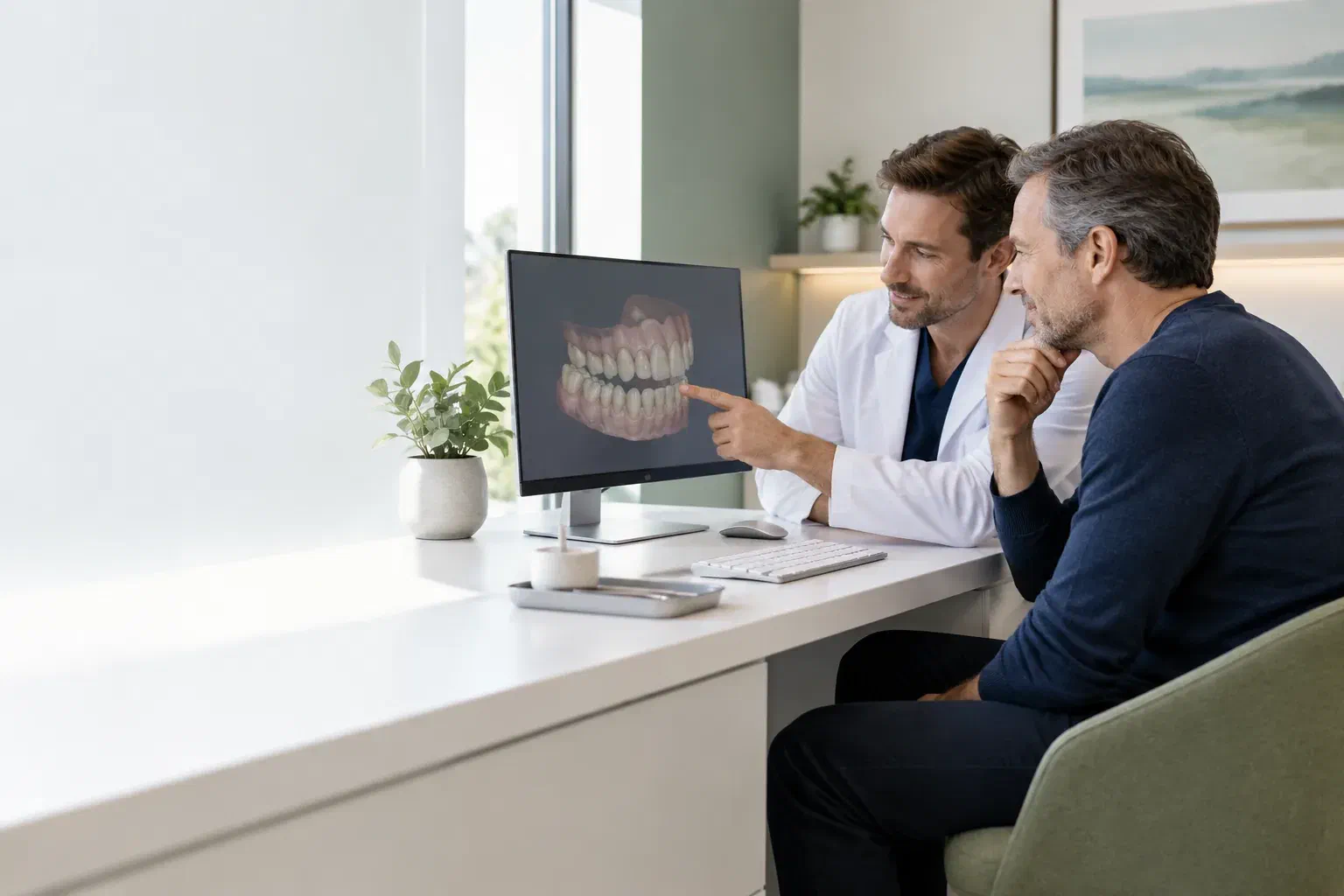
Illustrative consultation about digital planning for a dental implant
Restorative Dentistry

Computer-Planned Implant Placement in Mississauga

Implant care usually unfolds in stages, and busy calendars make that feel daunting. From Mississauga, start with a consultation that explains how digital planning works, which visits may be needed and why the order matters.

Planning around a busy life

How does a planned implant fit into your calendar?

Most people want to know two things early: how many appointments, and how long between them. The honest answer depends on the plan. Computer-planned placement means using digital records to think through where an implant should sit, judged against the crown it will hold, the bone and nearby anatomy, and your ability to clean it later. Those findings, more than the software, set the schedule.

Terms such as cone beam imaging, virtual planning and surgical guide describe separate steps that may or may not appear in your case. Knowing which ones are proposed, what each is for, and who performs them makes it much easier to map the visits ahead.

If you are coming from Mississauga, our first conversation focuses on the gap and on the replacements that make sense for you. We confirm that an implant is a reasonable option before discussing technique. Imaging, possible referrals, surgery and restorative appointments are then explained as one timeline you can plan around.

Map out an implant timeline
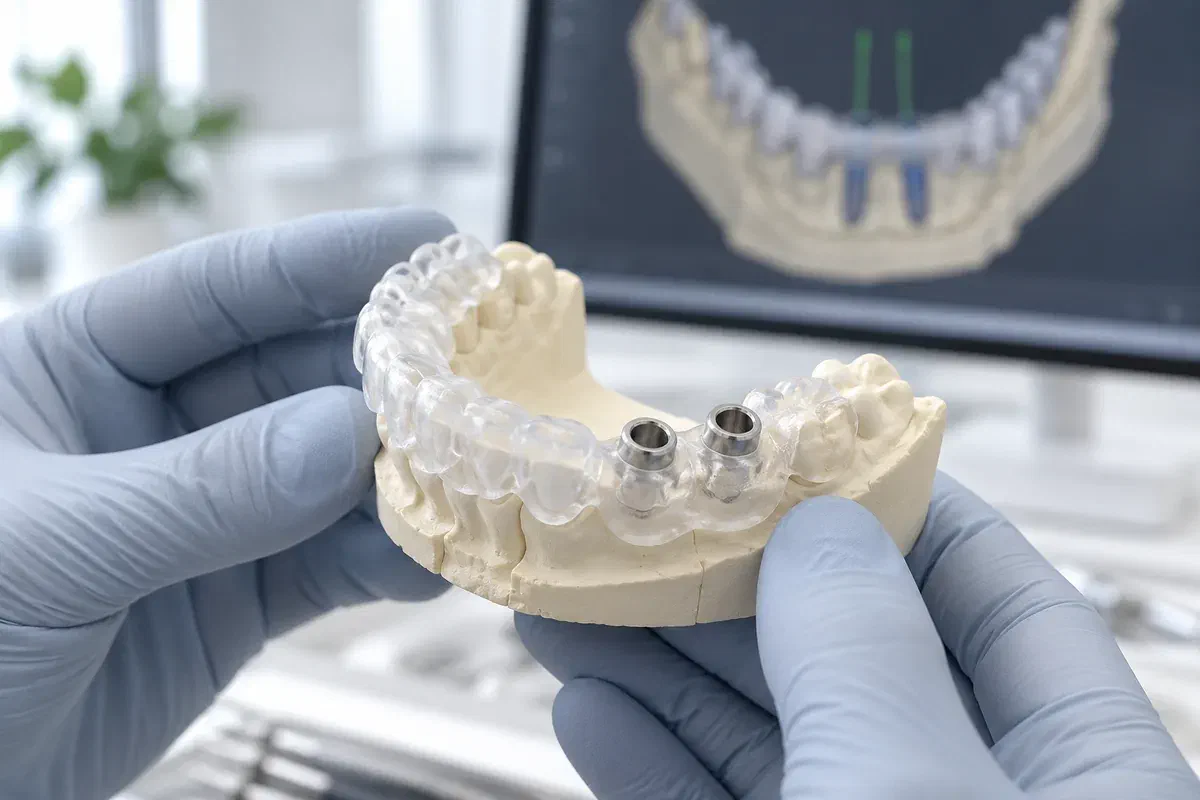
Dental implant planning model and illustrative surgical guide
What can stretch or shorten the sequence

Site, space and teamwork drive the schedule.

Because the implant supports a tooth you will rely on daily, planning ties the condition of your mouth to that finished result. That connection often explains why some cases need more steps than others.

Structures that call for caution

A gap near a nerve, the sinus or neighbouring roots may require additional records or a more careful approach. Your clinician decides what imaging is warranted and explains whether it changes the position, adds a step or points to another option.

Tight space above or below the gum

Limited bone or a narrow gap can mean extra preparation. The plan has to consider the crown’s shape, how it meets the teeth beside it and whether you can keep the area clean easily.

Appointments with more than one provider

When a specialist places the implant and another dentist restores it, your calendar involves two offices. Ask how records move between them and who coordinates timing, so nothing waits on a missing file.

Software never decides suitability alone. Health history, the examination, your expectations and your ability to keep up with care all form part of the recommendation.

Why the planning stage is worth it

Time spent planning can save confusion later.

Digital records allow the clinician to look at a possible implant position together with the planned restoration and the anatomy around it. For suitable cases, the plan may be used to create a guide for the surgical appointment. That decision depends on your mouth and the treating team’s assessment.

Even the best plan cannot remove surgical risk or promise a particular result. It relies on accurate records and a clinically sound position, and the team still has to respond to what they find on the day.

Patient information: ITI — computer-guided implant surgery

A target to work toward

Designing around the final tooth keeps each appointment purposeful. Ask how its shape, your bite and cleaning access guided the planned position.

Fewer surprises in the order of care

Records can explain in advance why grafting, a healing period or a specialist visit may come first. They also help show why a quicker advertised route may not apply to you.

Room to consider other paths

Planning should not crowd out a bridge or removable partial if either suits you better. Ask what the technology changes in your decision and what it leaves unresolved.

A typical sequence

Four stages you can put on the calendar.

Exact appointment numbers vary, and so do the tools. Ask for a written outline of assessment, preparation, placement, restoration and maintenance, including where each will happen, before you commit to treatment.

  1. Consultation and exam

    We discuss the missing tooth, your health, past treatment and scheduling needs. The exam shows which replacement options are realistic and whether decay or gum concerns should be treated before anything else.

  2. Records and imaging

    Photographs, scans or impressions, and suitable radiographs may be taken. Ask what each one is for, whether recent images from another office can save you an extra step, and why any further imaging would add something useful to the plan.

  3. Plan review and decision

    We go over the proposed position with the future tooth in view, plus benefits, limitations, costs and alternatives. You will hear whether a guide, graft, referral or temporary tooth forms part of the plan.

  4. Treatment and follow-up visits

    If you proceed, surgery and check-ups are booked by the treating team. The final crown is timed around healing, and you receive cleaning instructions and a review schedule once it is fitted.

The weeks after surgery

Build recovery into your plans.

Recovery guidance is specific to you and comes from the clinician who performed the procedure. Plan for it, follow it, and know whom to call if healing does not match what you were told.

Follow your own instructions

Advice may include cleaning, diet, activity and any medicine prescribed. Since it reflects exactly what was done, including grafts, ask about anything unclear before leaving, especially if work or travel is coming up.

Keep a temporary tooth secure

If you wear a provisional crown or appliance, ask how to use and clean it. Mention looseness, an altered bite or damage so it can be checked before you keep relying on it.

Book reviews before you forget

Once the permanent tooth is in, ask for a cleaning demonstration and schedule review visits. Raise any discomfort, trouble reaching the area or gum changes early rather than waiting.

Choosing a route

Pick the plan that fits your mouth and your life.

Comparing full treatment plans is more useful than comparing technique names. Ask about visits, preparation, restoration and long-term care for each choice.

When a guide suits you

Computer-guided implant placement

A guide may help carry a planned position into surgery. It depends on the records, support, access and clinical factors, and your clinician should explain what it does and does not offer.

A different workflow

Another implant approach

Not all implant care follows the same steps. Ask why a method is preferred, how the site was assessed and whether grafting or specialist treatment adds stages.

Bridge or partial

A non-surgical replacement

A bridge or removable appliance may involve a different number of visits and may be worth comparing. Neighbouring teeth, gap size, preferences and maintenance shape that choice.

Timing questions from Mississauga

Appointments, healing and what to expect.

Scheduling questions are some of the most practical ones you can ask. We will relate each step to your own mouth and the replacement you are considering.

(905) 876-4488
Why is there usually a wait between the implant and the final crown?
The bone and gum generally need time to heal around the implant before it carries a permanent tooth. How long depends on the site, any grafting and what is found during treatment, so ask what is planned for you.
Will I need time off work after implant surgery?
It varies with the procedure and how you heal. Ask the treating clinician what to expect for your case and plan a little flexibility around the surgery day, especially if grafting is included.
Can several stages be combined into fewer visits?
Sometimes steps can be grouped, but it depends on healing and clinical findings. Ask which appointments are essential, which could be combined and what the trade-offs would be.
Is a robot involved in computer-planned placement?
No. Computer planning is about preparing the plan with digital records. A clinician carries out and is responsible for the surgery. If any other technology is proposed, ask exactly what it does.
Does a digital plan make same-day teeth more likely?
Not by itself. How an implant is planned and when a tooth is attached are separate choices. Bone quality, healing and surgical findings all influence whether a temporary or final tooth is appropriate and when.
What happens if my schedule forces a delay between stages?
Tell the team as early as you can. Some delays are manageable, while others may affect a temporary tooth, the healing site or the plan itself. Ask what a pause in treatment would mean for your case and whether any check-ups should still go ahead in the meantime.
Mississauga to Bronte Street

Plan the first step today.

Book a consultation at our Bronte Street practice to discuss the missing tooth, your schedule and what you hope to achieve. We will outline the likely stages and help you prepare questions about planning, responsibilities and continuing care.

Let us know about previous consultations or any imaging held elsewhere, so we can consider whether it may help.

Visit Milton Dental Clinic
Unit 1, 342 Bronte St. S, Milton, ON L9T 5B7
Get directions Clinic hours
Monday–Thursday
11am–7pm
Friday–Sunday
By appointment only

Areas we serve

  • Milton
  • Oakville
  • Mississauga
  • Georgetown
  • Halton Hills
  • Acton
  • Campbellville
  • Brampton
  • Burlington
  • Puslinch
  • Rockwood
  • Erin
  • Caledon
  • Etobicoke
  • Old Milton
  • Bronte Meadows
  • Timberlea
  • Dorset Park
  • Dempsey
  • Clarke
  • Beaty
  • Coates
  • Harrison
  • Scott
  • Willmott
  • Ford
  • Bowes
  • Cobden
  • Walker
  • Mountain View
  • Milton Heights
  • Hawthorne Village
  • Valley View
  • Fallingbrook
  • Nassagaweya
  • Trafalgar
  • Esquesing
  • Nelson
  • Brookville
  • Moffat
  • Glen Williams
  • Norval
  • Limehouse
  • Stewarttown
  • Ashgrove
  • Hornby
  • Silver Creek
  • Speyside
  • Scotch Block
  • North Oakville
  • River Oaks
  • Glen Abbey
  • West Oak Trails
  • Palermo
  • Bronte Creek
  • College Park
  • Joshua Creek
  • Uptown Core
  • Preserve
  • Iroquois Ridge
  • Lisgar
  • Meadowvale
  • Meadowvale Village
  • Churchill Meadows
  • Erin Mills
  • Central Erin Mills
  • Streetsville
  • East Credit
  • Creditview
  • Heartland
  • Sheridan
  • Mount Pleasant
  • Credit Valley
  • Huttonville
  • Churchville
  • Springbrook
  • Northwest Brampton
  • Bram West
  • Fletcher's Meadow
  • Fletcher's Creek South
  • Alton Village
  • Orchard
  • Millcroft
  • Headon Forest
  • Tansley
  • Brant Hills
  • Tyandaga
  • Kilbride
  • Lowville
  • Aberfoyle
  • Morriston
  • Arkell
  • Hillsburgh
  • Freelton
  • Carlisle
  • Waterdown
  • Flamborough
  • Mountsberg

How can we help?

Milton Dental Clinic

Have a question about your smile? Choose the option that works best for you.

For urgent dental concerns, please call.
Messages are reviewed during clinic hours.