

Illustrative dentist and patient consultation about a suspected cracked tooth
Restorative Dentistry

Cracked Tooth Assessment

A tooth that hurts only sometimes can still deserve attention. Arrange a cracked-tooth assessment in Milton to discuss the pattern, examine the tooth, and understand which next steps fit the findings.

A closer look at a suspected crack

Start with the pattern, even when the tooth is hard to pinpoint.

A cracked-tooth assessment is an investigation into a tooth that may have structural damage. You might notice discomfort when chewing, a brief sharp feeling, or a visible line that worries you. Those observations are useful, but none establishes the diagnosis on its own.

Sometimes the difficult part is identifying the tooth involved. Pain can be intermittent, and an area may feel normal by the time you arrive. Tell us what usually brings the sensation on, how long it lasts, and whether the pattern has changed. You do not need to reproduce the pain deliberately.

At Milton Dental Clinic, the aim is to connect your history with the examination findings and explain what they mean. A useful assessment should distinguish what is known from what remains uncertain. If further investigation or a specialist opinion is needed, you should understand why that is being recommended.

Arrange a suspected-crack assessment
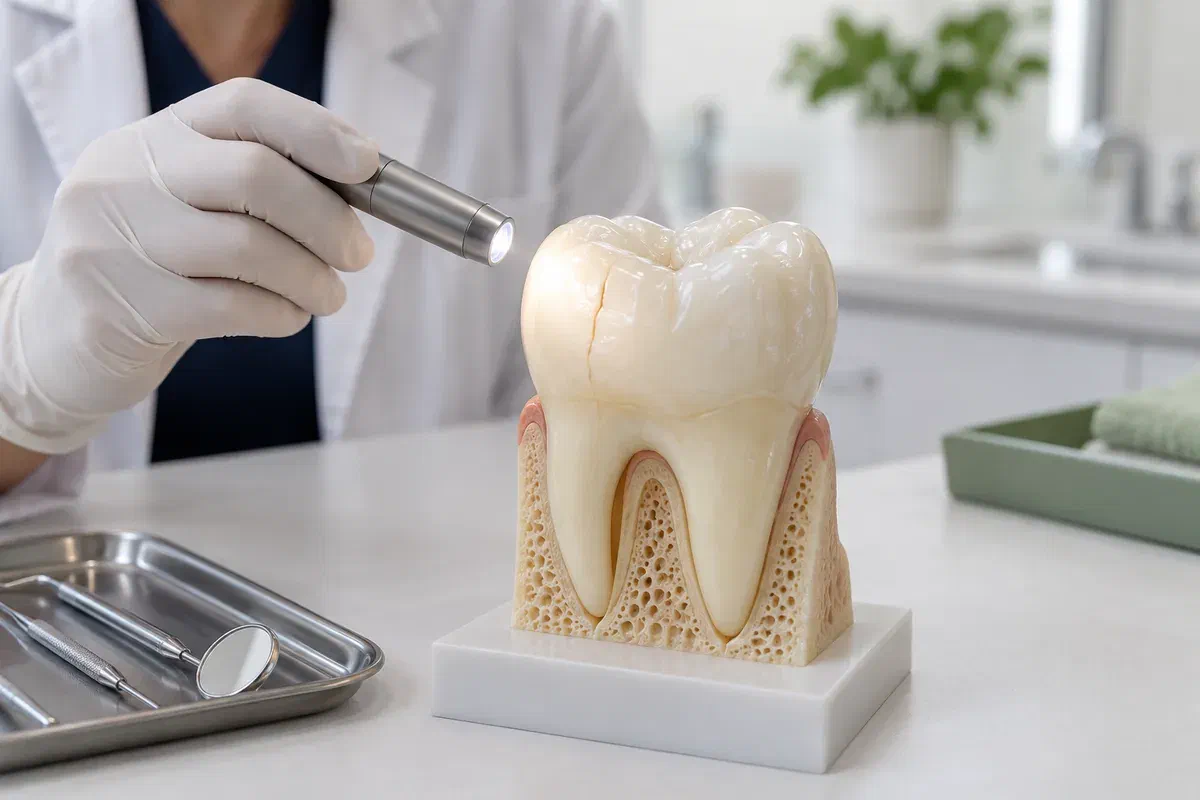
Illustrative tooth examination model with a fine visible crack
Clues to bring to the appointment

Small observations can help build a clearer picture.

Describe the circumstances in your own words. The way a symptom begins and ends can be as helpful to discuss as its intensity, especially when the concern does not happen at every meal.

Pain during a particular bite

Tell the dentist whether discomfort occurs as you bite down, release pressure, or chew certain foods. Mention when you first noticed it and whether you have started avoiding one side. Similar symptoms can have more than one cause.

A line noticed in the mirror

A surface line may not have the same significance as a deeper structural fracture. Avoid judging its depth by colour or appearance alone. The examination considers the line in the context of the tooth and any symptoms.

A change around an older restoration

An existing filling, crown, or previous repair forms part of the history. Explain whether the area recently felt rough, became sensitive, or lost a small piece. Bring any relevant information about earlier treatment if you have it.

Call about swelling, significant pain, a recent injury, or a tooth that feels loose. Those details help the team discuss the urgency of your visit before an appointment is arranged.

What an assessment can clarify

Make the next decision with more than a guess.

The purpose of assessment is not simply to find a visible line. It is to understand which tooth or tissues may explain the problem, whether the tooth appears restorable, and what information is still needed before recommending care.

Some cases become clearer during the first visit; others require further investigation or review. You should be told about those limits. A cautious explanation of uncertainty is more useful than a firm promise that the tooth can be saved before its condition is understood.

Separate the symptom from the diagnosis

Biting discomfort does not automatically prove a crack. Considering other explanations helps the discussion focus on the findings rather than selecting a treatment solely because a symptom sounds familiar.

Understand the purpose of each check

Ask what the dentist is looking for and how the result affects the recommendation. Knowing the reason for a test can make the appointment easier to follow and help you explain any discomfort during it.

Leave with an agreed next step

The outcome may be monitoring, protection, further assessment, or treatment. Before leaving, clarify what happens next, how soon it should happen, and which changes would mean you should contact the clinic earlier.

Investigating the concern

Your account and the clinical checks work together.

The exact checks depend on the tooth and your symptoms. Tell the team if you are anxious about triggering pain so the examination can be explained and you can agree on a way to pause.

  1. Describe the history without testing the tooth yourself

    Discuss the timing, triggers, previous restorations, and any injury. Mention whether discomfort continues after the trigger stops and whether you have noticed swelling or a change in the bite. Your account helps direct the examination.

  2. Examine the tooth and neighbouring tissues

    The dentist reviews the tooth surface, restorations, gums, and surrounding teeth. Appropriate checks may explore biting response, sensitivity, or the tissues supporting the tooth, with the choice guided by the findings.

  3. Review additional information when indicated

    Imaging or other investigations may help assess related problems, although a fine crack may not be directly visible on an X-ray. Ask what the records show and whether another opinion would help resolve uncertainty.

  4. Explain the findings and next decision

    Review the likely diagnosis, remaining questions, and available approaches. If a further procedure is suggested to investigate the tooth, discuss its purpose, possible findings, and implications before giving consent.

While the next step is being arranged

Keep track of changes without challenging the tooth.

The advice after an assessment depends on the findings and any temporary care provided. Ask for instructions that apply to your tooth, especially if further investigation or a specialist appointment is being arranged.

Avoid repeatedly provoking the painful bite

Trying to prove which food causes the sensation can place more stress on a vulnerable tooth. Tell the dentist what you have already noticed and ask how to manage eating while the next stage is pending.

Record meaningful changes

A brief note about new swelling, pain that lasts longer, or a change from occasional to constant discomfort can be useful. Contact the team about worsening symptoms rather than waiting to collect a detailed diary.

Follow through on the agreed review

If the discomfort settles, check whether the planned appointment is still needed before cancelling it. Improvement in symptoms does not by itself explain the condition of the tooth or replace the agreed assessment pathway.

Choosing the next step

The findings determine what needs attention.

Assessment may lead to very different recommendations. Ask what supports the proposed approach, what uncertainty remains, and what the alternatives would mean for the tooth.

When immediate repair is not indicated

Observation with a defined review

A superficial finding may be managed differently from a structural problem. If monitoring is recommended, ask what will be checked, when to return, and which symptoms should prompt an earlier appointment.

When the tooth needs support

Protection or restorative treatment

A suitable repair may be discussed if the examination suggests damage that can be restored. The amount of remaining tooth and the location of the problem influence whether a filling or a broader restoration is considered.

When more information is needed

Further investigation or referral

A difficult diagnosis or concern involving the inside or root of the tooth may justify additional assessment. Ask which question the next clinician or investigation is expected to answer and how the result will guide treatment.

Questions about suspected cracks

You do not need a diagnosis before asking for help.

An uncertain symptom is a reasonable reason to arrange an examination. These questions can help you prepare for the discussion without trying to diagnose the tooth at home.

(905) 876-4488
Can I book a crack assessment if I cannot identify the exact tooth?
Yes. Tell the team which side or area seems involved and describe the circumstances. Locating the source is part of the assessment. Avoid repeatedly biting hard objects to pinpoint it, and mention if the discomfort seems to move or affects more than one area.
Should I photograph a line I can see on my tooth?
A clear photograph may help explain what caught your attention, particularly if the appearance changes. It cannot establish the depth or significance of the line. Bring it as supporting information, while expecting the dentist to examine the tooth directly before recommending care.
Will every tooth crack show on a routine X-ray?
No. Fine cracks may not be visible directly, and an image is only one part of the investigation. The dentist considers the history and other findings as well. Ask what an X-ray is intended to assess rather than assuming a normal-looking image excludes every problem.
What if my tooth feels normal on the day of the assessment?
Keep the appointment and explain the earlier pattern. Intermittent symptoms can still provide useful information. The dentist may find signs during the examination or recommend an appropriate next step if the cause remains uncertain. You do not need to make the tooth hurt beforehand.
Does a suspected crack always mean an old filling must be removed?
No. The decision depends on what can be established through the assessment and what remains uncertain. If removal is proposed to investigate beneath a restoration, ask why it is needed, what the possible findings are, and how the tooth would be managed afterwards.
Can I bring notes from a previous opinion about the same tooth?
Yes. Previous findings, treatment dates, and available records can help explain the history. Let the clinic know what information exists so it can discuss obtaining relevant records appropriately. A new assessment still needs to consider the tooth’s current condition and any changes since then.
Cracked tooth assessment in Milton

Let’s make sense of what you have noticed.

Arrange a visit at our Bronte Street clinic to discuss a suspicious line, an uncomfortable bite, or a tooth that feels different. We can assess the concern, explain the findings, and help you understand the next decision.

For severe or worsening pain, swelling, or a recent dental injury, call before booking online so your immediate needs can be discussed.

Visit Milton Dental Clinic
Unit 1, 342 Bronte St. S, Milton, ON L9T 5B7
Get directions Clinic hours
Monday–Thursday
11am–7pm
Friday–Sunday
By appointment only

How can we help?

Milton Dental Clinic

Have a question about your smile? Choose the option that works best for you.

For urgent dental concerns, please call.
Messages are reviewed during clinic hours.