Tenderness when you chew
Say whether it catches you on the way down, on the way up, or only with firm foods. Mention whether you have switched sides since the incident. Bruising of the supporting tissues and a crack can feel alike at first.


A stray kernel, an olive pit, a fork that slipped. If something hard caught a tooth and it has not felt right since, you can arrange an assessment from Acton to find out what happened and what it needs.
It usually happens mid-meal. You bite on something unexpectedly hard, feel a jolt, and from then on the tooth is a little different: tender on chewing, sharp now and again, or simply unfamiliar under your tongue. A cracked-tooth assessment checks whether that moment left structural damage behind.
Try to remember the details of the incident and what has happened since. What did you bite? Which side? Has the tooth been sore every day or only sometimes, and is it improving or getting worse? Please do not keep biting on it to see whether it still hurts; your recollection is enough.
Arranging a visit from Acton gives you a way to stop guessing. We relate your account to what the examination shows, say what we can confirm and what we cannot, and explain our thinking if another test or a specialist opinion would help settle the question.
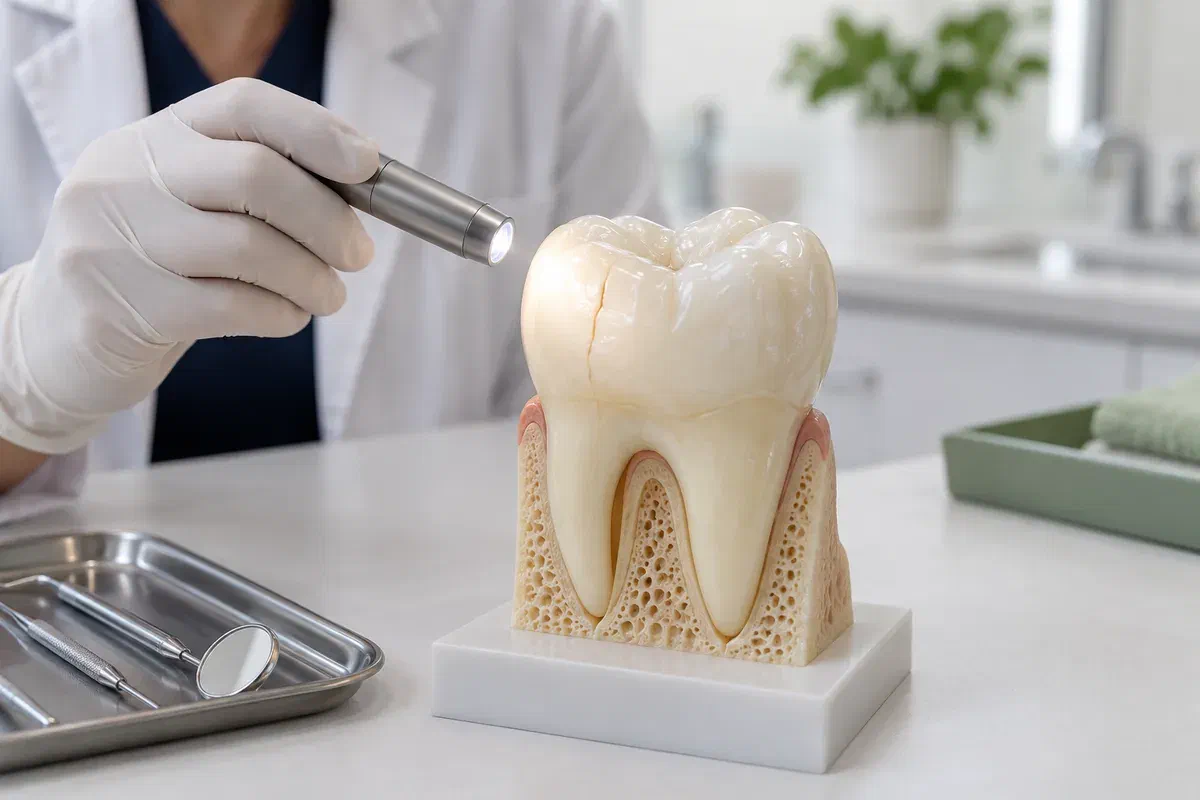
After an incident, the small differences matter. Describe them as they come, including ones that appear only with particular foods or on particular days.
Say whether it catches you on the way down, on the way up, or only with firm foods. Mention whether you have switched sides since the incident. Bruising of the supporting tissues and a crack can feel alike at first.
Your tongue may find an edge, or you may see a line that was not there before. Neither tells you how deep the damage goes. The dentist examines it alongside how the tooth is responding.
Sometimes the restoration chips rather than the tooth. If a filling or crown on that side feels different or a piece has come away, tell us, and share whatever you know about when it was placed.
Phone right away if the hard bite or knock was followed by swelling, strong or worsening pain, bleeding that will not settle, or a tooth that moves. Those details help the team decide how soon you should be seen.
Once the crunch has happened, the question is simple to ask and hard to answer at home: did the tooth crack, and if so, how badly? The assessment works out which tooth or tissue explains the change, whether the tooth looks restorable, and what is still unclear.
Some incidents leave obvious signs; others need a further test or a check again in a little while. You should be told which applies. A candid explanation of what is unknown is more useful than an assurance that all is well, or that the tooth can be rescued, before the findings are in.
A tooth can be sore after a hard bite without being cracked, and the reverse is also true. Looking at the possibilities avoids both unnecessary worry and missing damage that needs care.
Ask the dentist what a test is meant to reveal and how it could affect the advice. That understanding helps you stay involved and makes it easier to describe discomfort as it happens.
You may be advised to watch, protect, investigate further or treat. Leave knowing which, when it should happen and what new symptoms would mean calling sooner.
Checks are tailored to the tooth and the incident. If you are worried about the examination being painful, tell us, and we will explain each step and agree on a way to stop when you need to.
We ask what you bit, when it happened, how the tooth has felt since and about earlier fillings or injuries. Mention lingering pain after chewing, any swelling and whether your teeth now meet differently.
The dentist looks at the tooth, any restoration, the gum and the teeth around it, and may check how it reacts to biting or cold. After an impact, the supporting tissues get particular attention.
Images can show some kinds of damage and related problems, though a fine crack may not be visible on them. Ask what they reveal and whether another opinion would be useful if uncertainty remains.
We describe the likely diagnosis, any remaining questions and the available approaches. Should a further procedure be needed to investigate, its reasons, possible outcomes and implications are discussed before you agree.
Advice depends on what was found and on any temporary protection. Ask for guidance that applies to your tooth, particularly if you are waiting on further tests or a specialist.
Repeating the bite that caused the trouble, or chewing deliberately on that side, may add stress to a tooth that is already compromised. Share what you have noticed and ask how to eat for now.
Note any new swelling, an ache that lasts longer, or pain becoming constant. If the tooth is getting worse instead of better, call promptly rather than waiting for the planned review.
Even if the soreness fades, ask the clinic before cancelling a scheduled check. Settling symptoms do not show whether a crack is present, and they do not replace the next step you agreed.
You do not need to know whether the tooth cracked before calling. A few common worries after a hard bite in Acton are answered below; the tooth itself can wait for the examination.
Book an appointment at our Bronte Street practice to have a tooth checked after a hard bite, a knock or a sudden change. We will examine it, explain what we find and work out the next step together.
For a recent injury with swelling, bleeding or strong pain, or pain that keeps getting worse, phone the clinic instead of booking online so your situation can be discussed first.
