Avoiding certain textures
Tell us if you now cut food smaller, skip nuts or crusty bread, or chew only on one side. Describe whether discomfort came as you bit down or let go. A habit like this can stem from more than one cause.


Have you started chewing on one side without really deciding to? That quiet habit often points to a tooth worth checking. From Brampton, book an assessment to find the source and understand what it needs.
People rarely decide to stop using one side of their mouth. It just happens after a few sharp surprises on a crunchy bite. By the time someone at the table points it out, the habit may be weeks old. A cracked-tooth assessment looks at whether a tooth on the avoided side has structural damage or another problem.
Since you have been steering around it, the tooth may seem perfectly calm when you arrive. That is normal. What we need is the story behind the habit: which foods caught you out, whether the jolt came on biting or releasing, and how long it lasted. Please do not test it before the visit.
For anyone in Brampton weighing whether it is worth the trip, the aim is a straightforward one. We match what you tell us to the findings and explain which points are certain and which still need work. If further tests or a specialist would add something useful, the reason is spelled out.
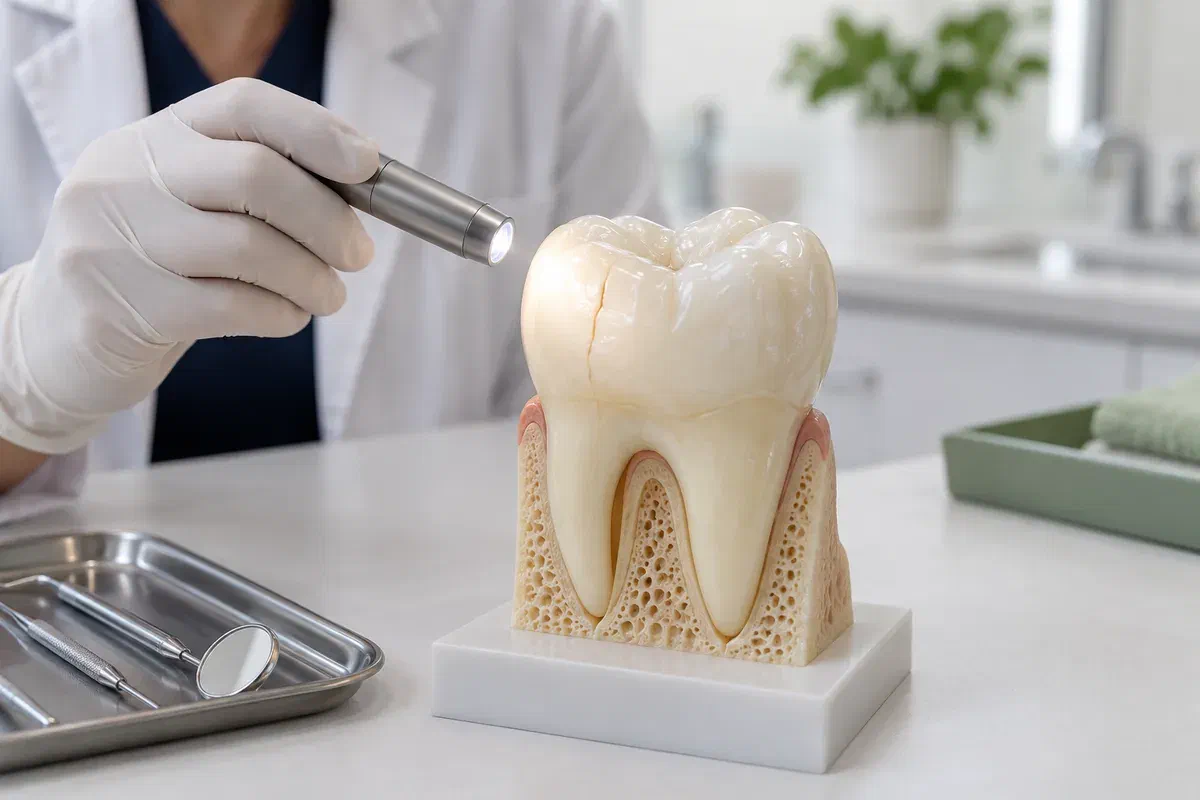
Small adjustments you have made to avoid discomfort can be as revealing as the pain itself. Share them in plain terms, even if they feel too minor to mention.
Tell us if you now cut food smaller, skip nuts or crusty bread, or chew only on one side. Describe whether discomfort came as you bit down or let go. A habit like this can stem from more than one cause.
You may have spotted a fine line while looking for the culprit. Some lines are only skin-deep in the enamel. Colour and appearance do not reveal depth, so the dentist examines it alongside your symptoms.
If a filling or crown on that side feels rough, sensitive or has lost a piece, mention it. Earlier treatment is part of the history, and any details you have about it can help the assessment.
Please call first about swelling, pain that is severe or increasing, a recent injury, or a tooth that wobbles. The team can then talk through how soon a visit should be.
Locating a crack is only one goal. The assessment tries to show which tooth or tissue explains the avoidance, whether that tooth seems restorable, and what is still unknown before any treatment is advised.
Some answers are clear at the first appointment, and some need further testing or a later review. You should be told which applies. A straightforward explanation of what is uncertain is worth more than a promise that the tooth will be saved before its state is understood.
Avoiding one side does not prove a crack is present. Considering other explanations means the recommendation is built on findings rather than on how familiar the symptom sounds.
Ask what a test is designed to reveal and how its result would change the advice. Knowing the purpose helps the visit feel less uncertain and makes it easier to say when something is uncomfortable.
Whether the outcome is monitoring, protection, more assessment or treatment, make sure you know the next step, its timing and which changes should prompt an earlier call.
We adapt the checks to your tooth and your symptoms. Feeling uneasy about pain being triggered is common, so mention it and we will explain each step and agree on how to pause.
We ask what first caught you out, how often it happens, about previous fillings, crowns and injuries, and whether pain lingers after chewing. Swelling or a change in how your teeth fit together is worth mentioning.
The dentist checks the teeth on that side, their restorations, the gums and the opposing teeth. Additional checks of biting, temperature response or supporting tissue are chosen according to the findings.
X-rays or other investigations can help identify related problems, though a hairline crack may not show up. Ask what the images reveal and whether another opinion would help clarify things.
We explain the likely diagnosis, any open questions and the available approaches. If a further procedure is proposed to investigate, we cover why, what it might show and what it would mean, before you consent.
Your instructions will depend on the findings and any temporary measure placed. Ask what applies to your tooth, especially if further testing or a specialist appointment is being organised.
Repeatedly checking whether a food still hurts can place extra force on a tooth that may be weakened. Tell us what you already know, and ask how to manage family meals until the next appointment.
Swelling, an ache that hangs on longer, or occasional pain turning constant are all worth noting. Get in touch promptly if the tooth is worsening rather than waiting until you have a full record.
Should the tooth settle, talk to us before cancelling a planned visit. Feeling better does not, by itself, reveal what is going on with the tooth or replace the follow-up agreed at your assessment.
Nobody expects you to know what is wrong before booking. Read through these if they help, and leave the detective work on the tooth to the examination.
Bring the side you have been avoiding to our Bronte Street practice, along with any line you have seen or anything else about the tooth that feels unusual. We will examine it, explain the findings and help you choose what comes next.
For a recent injury, swelling, or pain that is severe or getting worse, please call rather than book online so your immediate concerns can be discussed.
