Brief pain when chewing
Short, sharp twinges on biting or releasing, especially with certain foods, are a common reason to book. Note when they began and whether you have started chewing elsewhere. Other causes can feel similar.


Does this need a call today, or a booking this week? If you are in Erin or Hillsburgh with a tooth that may be cracked, knowing the difference helps you plan the trip and get the right kind of care.
From a rural household, a dental trip takes some planning, so the first question is often about timing. Most suspected cracks, the kind that give a brief twinge on chewing now and then, call for a prompt routine assessment. Swelling, severe or building pain, a recent injury or a loose tooth deserve a phone call first.
Either way, the assessment itself investigates whether the tooth has structural damage. It relies heavily on your account: what triggers the discomfort, how long it lasts, whether it is spreading or becoming more frequent. If the tooth happens to be calm when you sit down, the visit is still worthwhile, and there is no need to make it hurt first.
For people in Erin, the goal is to make the visit worth the drive. We connect your story to the examination, sort the settled points from the open ones, and if a further test or a specialist would help, we tell you why and how it might fit around your schedule.
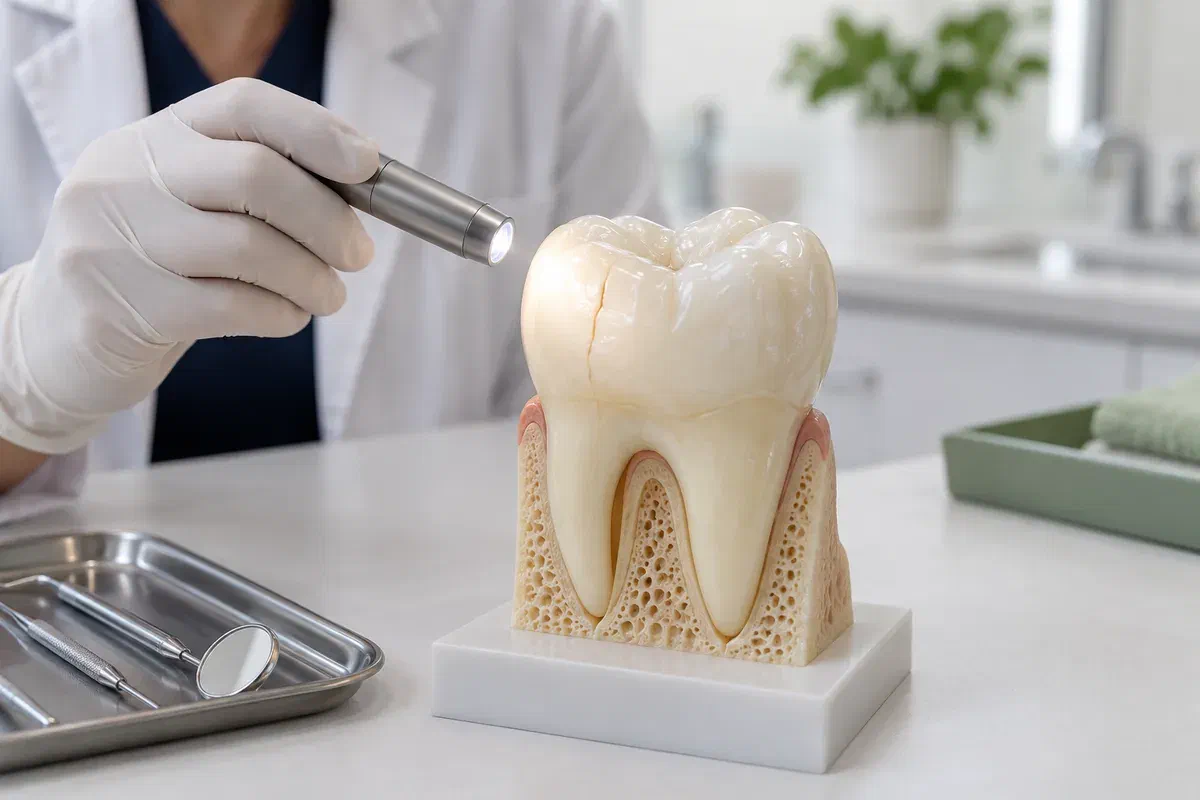
Most symptoms of a suspected crack are worth describing at a routine visit. A few should prompt a call. Either way, put them in your own words.
Short, sharp twinges on biting or releasing, especially with certain foods, are a common reason to book. Note when they began and whether you have started chewing elsewhere. Other causes can feel similar.
A newly noticed line or edge may be superficial or deeper. Its look does not tell you which. Mention it, and the dentist will examine it alongside your symptoms and the rest of the tooth.
If a filling or crown has chipped, roughened or become sensitive, include that. Mention any past treatment on the tooth and when it was done, if you know.
Call rather than book if you notice swelling of the gum or face, pain that is severe or keeps climbing, a recent injury, a loose tooth, or a gum bump near the tooth. The team will help decide how soon to be seen.
Getting the timing right is only the start. Once you are in the chair, the work is to pin down the tooth, or the gum or bone around it, that accounts for the trouble, to judge whether that tooth can reasonably be rebuilt, and to name the gaps that still need filling before anyone recommends treatment.
Some cases are clear on the first visit; others need another test or a later check. You should be told which applies, and how urgent any next step is. That honesty is more useful than a promise about the tooth before its condition is understood.
Biting pain can also come from decay, the gum or the bite. Considering each keeps the plan tied to what is found, rather than to what the symptom seems to suggest.
Ask what each test is looking for and how the result might change the advice. Knowing the purpose helps you stay comfortable and describe any sensation accurately.
Leave knowing the next step, how soon it is needed, whether it can be grouped with other appointments, and which changes should prompt a call in the meantime.
Checks are chosen for your tooth and your symptoms, not run as a fixed routine. Nervous about the twinge being set off? Mention it at the start; each step will be described beforehand, and a simple hand signal will stop things whenever you need.
We ask when it started, what triggers it, about past fillings or crowns and any injury. Tell us if pain lingers after the trigger ends, if there has been swelling, or if your bite feels different.
The dentist checks the tooth surface, restorations, surrounding gum and neighbouring teeth, and may assess the response to biting or cold, depending on what is found.
X-rays can reveal decay, infection and other problems, though a fine crack may not appear on them. Ask what the images do and do not show, and whether a specialist could help.
We explain the likely diagnosis, what remains uncertain, the options and how urgent each is. Any further investigative procedure is explained, including what it might show, before you decide.
Instructions depend on the findings and any temporary care. Request advice written for your own tooth, and if a referral or another test is coming, ask for enough notice to arrange the drive and any time away from work.
Crunching down on purpose to check the tooth may put more load on it than it can handle. You already know what sets it off, so pass that on and get the dentist’s view on meals until you are back.
New swelling, a gum bump, pain that lingers or starts by itself, or discomfort becoming constant are reasons to call promptly rather than waiting for the next visit.
A tooth that settles down is good news, but ring the clinic before you cancel. A quieter week says little about the crack itself, and the review is where any slow change gets noticed.
If you are unsure, calling is always reasonable. These answers may help you decide on timing from Erin.
Reserve a time at our Bronte Street practice online, or call first if you are unsure how urgent it is. We will examine the tooth, explain the findings and plan any next steps around your schedule.
A swollen face or gum, a recent blow, or pain that keeps ramping up should go to the phone rather than the online form, so the team can help you judge timing before you set out.
