When the pain shows up
Note whether discomfort comes as you bite, as you release, or only with certain foods. Add roughly when it began and whether you now avoid that side. Several different problems can produce this kind of pain.


Coming from Etobicoke for a suspected crack is easier when the visit is well organised. Bring your notes and questions, and we will examine the tooth, explain the findings and map out what follows.
When you are travelling a fair way for dental care, you want each appointment to move things forward. A cracked-tooth assessment is a good example. It investigates whether a tooth that hurts on chewing, or shows a worrying line, has structural damage, and it works best when you arrive with your observations ready.
Jot down a few points beforehand. Which tooth or side seems involved? Does the twinge strike on biting or on release? How long does it last, and is it happening more often? Note any older fillings in that area. There is no need to provoke the pain to make the visit useful.
From Etobicoke, planning ahead also means knowing what to do if things change between visits. We will connect your notes with the examination, explain what is certain and what is not, and tell you clearly when a further test, a specialist or closer urgent care would be the right call.
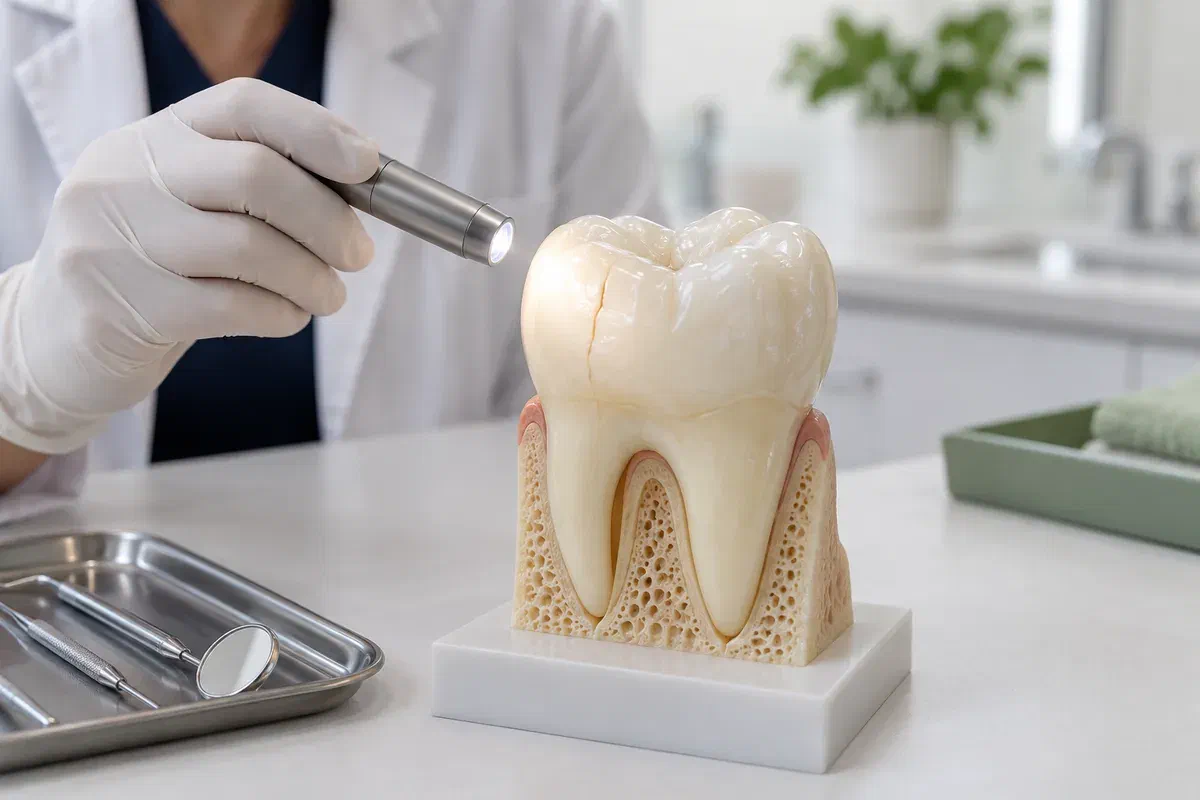
Writing things down before you set off helps you remember details in the chair. How a twinge starts, what stops it and how often it returns can matter as much as its strength.
Note whether discomfort comes as you bite, as you release, or only with certain foods. Add roughly when it began and whether you now avoid that side. Several different problems can produce this kind of pain.
If you have noticed a mark on the tooth, a clear photo can show what caught your eye. Remember that appearance does not show depth. The dentist will assess it in the context of the whole tooth and your symptoms.
List any fillings, crowns or root treatment in the area, with approximate dates and where they were done. Mention if a restoration has felt rough or sensitive or lost a fragment recently.
With a longer journey, call before setting out if your gum or face is swollen, the pain is severe or climbing, you have hurt your mouth recently, or the tooth has begun to move. The team can discuss urgency and whether care closer to home makes more sense first.
The assessment is about more than spotting a crack. It aims to identify which tooth or tissue explains your symptoms, whether the tooth seems restorable, and what is still unknown before any care is recommended.
Some questions are settled during the first appointment. Others need more testing or a later review, and when that is the case you should hear it plainly. Being upfront about uncertainty helps you plan your next trip better than an early promise about the tooth.
Pain on chewing can come from several sources besides a crack. Keeping the alternatives in mind means the recommendation follows the evidence rather than the first explanation that comes to mind.
Ask what a particular check aims to show and how the result could change the plan. Understanding this keeps you involved and helps you describe any discomfort clearly.
Before you leave, confirm the next step, how soon it is needed and whether it can be combined with other care. Ask which changes would warrant an earlier call.
The checks depend on your tooth and symptoms. If you are anxious about the pain being triggered, say so, and we will explain each step first and agree on a sign to stop.
We go through timing, triggers, earlier restorations and any injury. Tell us whether pain carries on after the trigger ends, and whether you have noticed swelling or a change in how your teeth meet.
The dentist looks at the tooth, any fillings or crowns, the gums and the teeth around it. Further checks of biting, sensitivity or supporting tissue are chosen according to what is found.
X-rays or other investigations may help with related problems, though a fine crack can be hard to see on them. Ask what any images show and whether another opinion would help settle remaining questions.
We explain the likely diagnosis, any uncertainty and the available options, including what could happen at a later visit. If a further procedure is suggested, its purpose and implications are discussed before you agree.
Instructions depend on what was found and any temporary care given. Ask for advice specific to your tooth, and make sure you know who to contact if a referral or further testing is pending.
A long drive home is not the time to find out whether the tooth still hurts on a hard snack. Ask before you leave which foods to skip and which side to chew on until the next appointment.
Record any swelling, pain that lasts longer or twinges turning into constant discomfort. If symptoms are worsening, call rather than waiting for the next visit, and seek closer urgent care if needed.
If things improve, check with the clinic before cancelling. Feeling better does not explain the condition of the tooth, and it does not replace the next step you agreed together.
You do not need a diagnosis before calling. These answers may help you organise your visit and know what to expect.
Reserve a time at our Bronte Street practice and pack your symptom notes, any photos and details of earlier work. The dentist will look closely, walk you through the findings and shape the next stage around your travel.
If pain is severe or worsening, there is swelling or you have had a recent injury, call first. Depending on the situation, urgent care nearer home may be the better first step.
