The exact moment it hurts
Biting, releasing, or only on grains and seeds? When did it begin, and have you shifted to chewing elsewhere? These specifics help target the examination, though several conditions can feel similar.


Cracks can be stubborn to find. An X-ray may look clear while the tooth still complains. For people in Puslinch, an assessment combines your history and a careful exam, and is honest about what stays uncertain.
One of the more frustrating dental experiences is being told the images look fine when your tooth clearly disagrees. Fine cracks often run in directions an X-ray cannot capture, so a normal picture does not close the question. A cracked-tooth assessment approaches the problem from several angles at once.
Your observations are one of those angles. How the twinge starts and stops, what foods set it off and whether it is getting more frequent all help narrow down the tooth involved. Discomfort that wanders or is absent on the day is normal with cracks, and you do not need to trigger it beforehand.
Coming in from Puslinch, you can expect us to pull the pieces together and show our reasoning. We separate what the examination supports from what remains a possibility, and if a further check, a review or a specialist could resolve the doubt, we explain how and why.
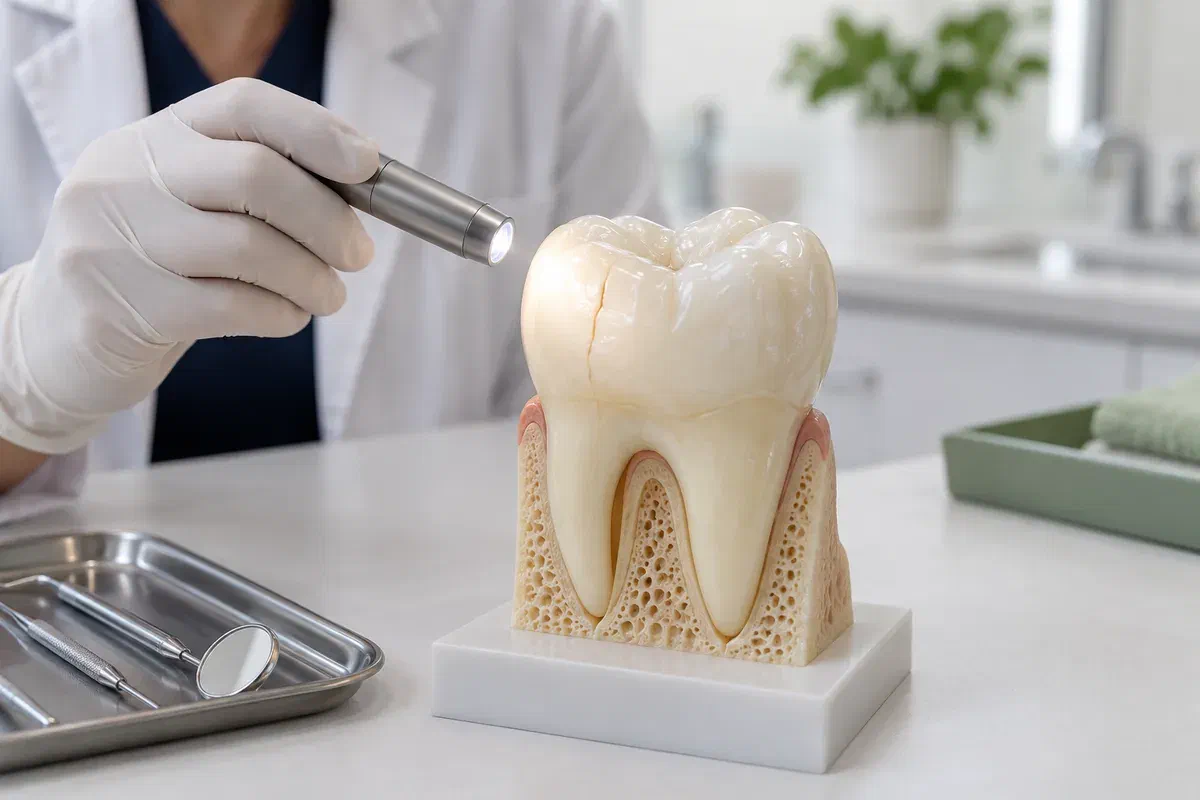
With an elusive crack, details that seem minor can point the way. Share them as you remember them, including any that only appear occasionally.
Biting, releasing, or only on grains and seeds? When did it begin, and have you shifted to chewing elsewhere? These specifics help target the examination, though several conditions can feel similar.
A line might be visible even when imaging is clear, or nothing may show at all. What a line looks like does not reveal its depth, so the dentist reads it alongside the rest of the findings.
Cracks sometimes hide near or beneath restorations. Mention fillings or crowns on that side, recent roughness, sensitivity or a lost fragment, and any dates or notes you have from earlier treatment.
Please phone rather than wait if you develop swelling, pain that is intense or climbing, a recent injury or a tooth that feels loose. The team can discuss how soon you should be seen.
With subtle problems, the goal is to build a picture rather than wait for one finding to prove everything. The assessment aims to identify the tooth or tissue responsible, judge whether it looks restorable, and be clear about what is still unknown.
Sometimes the evidence comes together in one visit. Often, with elusive cracks, it takes a further test or a review over time, and you should be told that plainly. Honest uncertainty is more useful than a firm promise made before the tooth is understood.
Biting pain may come from a crack, decay, the gums or the bite. Checking each one methodically keeps the recommendation tied to evidence instead of the most familiar explanation.
Different checks look at different things. Ask what each one is meant to reveal and how its result might change the plan, so you can follow along and mention discomfort as it occurs.
If the cause is still uncertain, you should still leave with a plan, whether that is monitoring, protection, another test or a referral, plus a clear sense of which changes mean calling earlier.
The checks depend on your symptoms and the tooth involved. If you are worried about pain being triggered, let us know first so each step can be explained and a pause agreed.
We go over timing, triggers, earlier fillings and crowns and any injury. Tell us if pain lingers after the trigger ends, if you have noticed swelling, or if your bite feels different.
The dentist inspects the tooth, its restorations, the gums and neighbouring teeth. Checks such as biting on a specific cusp, cold response or examining the gum around the tooth are chosen according to the findings.
X-rays help assess decay, infection and bone, but a fine crack may not appear on them. Ask what the images rule in or out, and whether another opinion or test would clarify things further.
We describe the likely diagnosis, how confident we are and the available approaches. If a further procedure is proposed to investigate, its purpose, possible findings and implications are discussed before you agree.
Guidance after the visit depends on the findings and any temporary measure. Ask what applies to your tooth, especially if you are waiting for a review, another test or a specialist.
Chewing hard on the suspect tooth to see whether it still hurts may stress it further. Tell us what you have observed and ask for eating advice that suits your situation.
New swelling, pain that lasts longer, pain that starts without a trigger, or a shift to constant discomfort are worth noting. If the tooth is worsening, call promptly rather than waiting.
For a problem that hides well, a follow-up may reveal what the first visit could not. Even if symptoms ease, check with the clinic before cancelling, since feeling better does not explain the tooth.
Uncertainty is common with cracks and is not a reason to wait. These answers may help you prepare from Puslinch without testing the tooth yourself.
Book a visit at our Bronte Street practice if a tooth keeps bothering you despite clear images. We will examine it from several angles, explain what we find and plan the next step with you.
If pain is severe or increasing, there is swelling, or you have had a recent injury, phone the clinic first rather than booking online so your needs can be discussed.
