How much of the cusp is sound
When a crack weakens a cusp or the walls around a filling, a covering restoration such as an onlay or crown may be advised. Those are often made over more than one visit, with a temporary protecting the tooth meanwhile.


Many cracked teeth spend a few weeks with a temporary before the final repair. From Acton, we explain what that in-between stage is for, how to protect the tooth and what the finished restoration will do.
After the first treatment visit, plenty of people go home with a tooth that looks almost finished but isn’t. A temporary crown or filling sits over the cracked tooth while the final restoration is prepared, or while the dentist watches how symptoms settle. Those weeks raise practical questions about eating, cleaning and what counts as a problem.
Whether a temporary is used at all depends on the crack. A small fracture at the edge of one cusp might be fully repaired in a single appointment. A crack running deeper, toward the pulp or the root, is more likely to need staged care, and sometimes the extent is clearer only once the tooth has been prepared.
We would like you to understand why each stage exists and what the eventual repair can and cannot do. Ask about comfort, timing, fees and options. Knowing the purpose of the temporary makes it easier to look after, and easier to spot when something isn’t right.
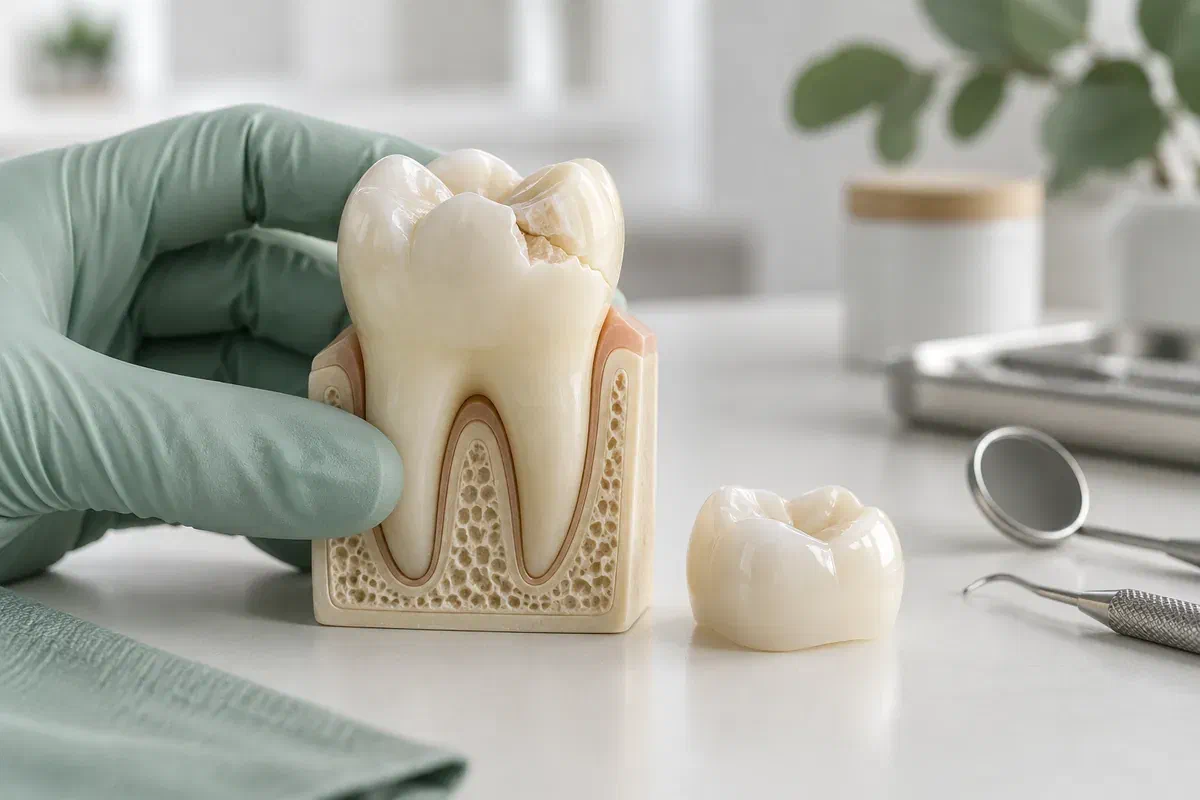
A crack is a description, not a plan. The dentist considers the remaining tooth, the pulp and the depth of the fracture, and these findings also decide whether a temporary stage makes sense.
When a crack weakens a cusp or the walls around a filling, a covering restoration such as an onlay or crown may be advised. Those are often made over more than one visit, with a temporary protecting the tooth meanwhile.
Lingering ache, sensitivity and test results help reveal whether the pulp is healthy. If it needs root canal treatment, that usually happens before the final restoration, and a temporary filling bridges the gap.
Fractures that reach well below the gum or split the tooth can make a reliable repair unlikely. Ask which findings suggest that and whether getting a specialist view before investing in staged treatment would help.
Sometimes a temporary is part of finding out more. Ask what it is expected to show and how the plan would change depending on how the tooth responds.
For a restorable tooth, the end goal is usually to rebuild the damaged area and provide lasting support. A temporary keeps the tooth covered and comfortable while that final restoration is made, and in some cases while root canal treatment is completed. Each stage has its own purpose within one plan.
Cracks in teeth don’t mend over time. The final crown or onlay can brace the tooth, but it cannot guarantee the crack won’t extend. Seeing the stages and the limits together helps you decide whether the full sequence is worth it for this tooth.
Patient information: American Association of Endodontists — cracked teeth
Ask what the temporary is doing and what the final restoration will add. They are designed differently, and treating them as the same thing can lead to avoidable breakages.
When the findings are favourable, saving your tooth may be a sensible investment. The dentist should explain the reasoning and anything that makes the long-term outlook uncertain.
Reviews and simple instructions help you act if pain returns or your bite feels different. A tooth that feels fine on day one still benefits from a check later on.
Some cracked teeth are restored in one sitting; others need a temporary stage, root canal care or a referral. Ask how the order of visits reflects the diagnosis and how to protect the tooth between them.
We look at the tooth, review your symptoms and take any images needed. The dentist describes the crack, whether the tooth looks restorable and which details may only become clear later.
You hear what each reasonable approach involves, what it can and can’t achieve, how many visits it needs and what it costs. We agree how unexpected findings would be handled.
The tooth is prepared, treated inside if the pulp requires it, and covered with a temporary where a lab-made restoration is planned. We explain comfort measures and how to look after the temporary.
The final restoration is placed and adjusted to your bite. Ask when normal chewing is fine, which symptoms deserve a call and whether a review has been booked.
Instructions differ during the temporary stage and after the final restoration is in. Keep the written advice and our phone number somewhere you can find quickly.
Temporary restorations are held with softer cement and are more likely to loosen. Skip sticky, chewy and very hard foods on that side, and slide floss out sideways rather than pulling it up. Call if the temporary shifts or breaks.
Let us know if the tooth hits before the others, aches with normal chewing or develops new sensitivity after the final restoration. Avoid repeatedly biting on a high spot to try to wear it down.
Clenching, grinding and biting on hard objects can stress a cracked tooth and dislodge temporaries. The dentist may suggest a night guard or another step, while being clear that protection reduces risk rather than removing it.
Most questions about staged care are practical ones. These answers are general guidance, and your dentist will tailor the advice to your tooth.
Our Bronte Street practice can assess the cracked tooth, explain the findings and set out the reasonable options, including whether a temporary stage is likely. You’ll know the purpose of each visit before treatment begins.
If you have severe pain, swelling, a temporary that has come off or a fresh break, please call us for advice. Online requests are best for non-urgent concerns.
