Missing or weakened cusps
When a corner breaks away, the walls next to it may also be thin or cracked. The dentist assesses whether rebuilding that one area will hold or whether the tooth needs a restoration covering its whole biting surface.


A corner of a tooth can give way mid-meal with little warning. For anyone coming from Burlington, we examine what is left, check the inside of the tooth and explain the repairs that make sense.
It often happens during an ordinary dinner. Something crunches that shouldn’t, and the tongue finds a jagged gap on a back tooth. Surprisingly, there may be little or no pain. A crack had probably been developing for some time, and the last bite simply finished the job.
What happens next depends on the break. A cusp that has snapped off cleanly above the gum is usually a very different situation from a fracture that continues into the centre of the tooth or down toward the root. Sometimes the full story only emerges once the area is cleaned, examined closely and any loose fragments are removed.
Before we start, you should understand what each repair is designed to achieve and where its limits are. Ask about comfort, appointments, fees and other choices. A clear explanation now makes it easier to decide calmly, even when the break itself felt sudden.
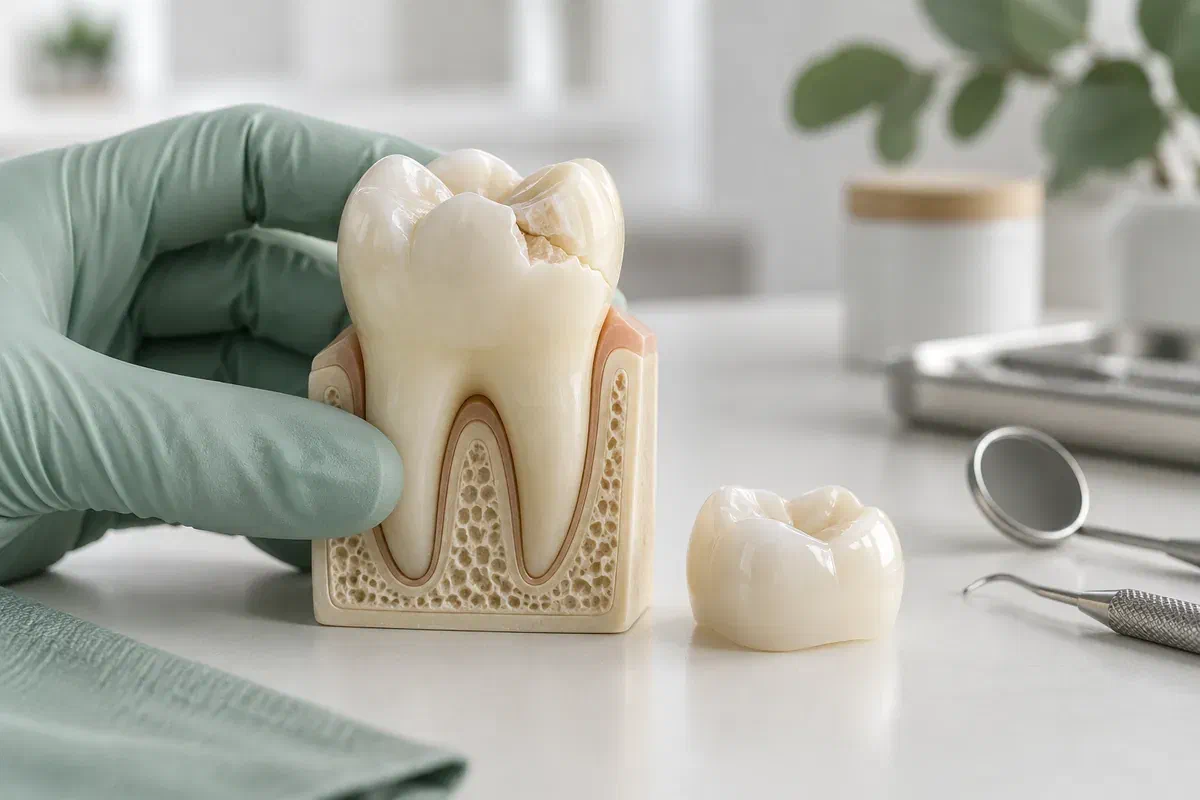
A broken or cracked tooth can mean several things. The dentist looks at the strength of the surrounding walls, the response of the pulp and how far the fracture travels before talking about options.
When a corner breaks away, the walls next to it may also be thin or cracked. The dentist assesses whether rebuilding that one area will hold or whether the tooth needs a restoration covering its whole biting surface.
A deep break can bring the inner tissue close to the surface. Sensitivity, lingering pain and test results help show whether the pulp is healthy, and therefore whether a surface repair alone is the right answer.
If a fracture extends well beneath the gumline or into the root, a lasting repair becomes less likely. Ask the dentist to explain how the depth affects the outlook and whether a specialist opinion would help you decide.
A broken tooth sometimes reveals more once treatment begins. Ask how the plan would adapt to new findings and at what point we would pause to talk with you.
If the tooth is restorable, treatment rebuilds the missing part and gives the rest of the tooth support suited to its strength. Where the pulp has been affected, root canal treatment may also be needed. Each of those steps has a separate job within the same plan.
Rebuilding the corner does not erase any crack left behind in the remaining tooth. Fractures in teeth don’t heal, and even a well-designed restoration can’t guarantee the tooth won’t crack again. Knowing that helps you judge the value of a repair against the chance of further care later.
Patient information: American Association of Endodontists — cracked teeth
Ask what each appointment is meant to address. Smoothing a sharp edge, protecting the tooth temporarily, treating the pulp and placing the final restoration are distinct steps, not interchangeable fixes.
Where the findings are favourable, restoring your own tooth may be the better choice. The dentist should explain why keeping it looks reasonable and what could make the long-term result less predictable.
Follow-up visits and clear instructions mean you know how to respond if pain comes back or your bite feels off. That guidance matters even when the repaired tooth feels comfortable straight away.
A broken cusp may be rebuilt in one appointment, while a deeper fracture may need stages or a referral. Ask how the order fits the diagnosis and how to protect the tooth in between.
We look at the tooth, ask how and when it broke and take any images needed. The dentist explains how far the damage seems to go, whether the tooth looks restorable and what is uncertain.
You hear the goals, limits, stages and costs of each reasonable approach. Together we agree how unexpected findings would be handled and which decisions may need to be revisited.
Depending on the break, we may bond a new corner on, prepare the tooth for an onlay or crown, or begin root canal care. You’ll be told how we’ll keep you comfortable and how to look after any temporary.
The restoration is checked as you bite and chew. Ask when you can eat normally, what symptoms warrant a call and whether further visits or a referral are still part of the plan.
Your instructions will depend on what was done and whether the final restoration is in. Keep the written advice and the clinic’s number nearby, especially if treatment involves more than one appointment or provider.
A temporary restoration is meant to bridge the gap, not take full chewing loads. Ask about foods to avoid and how to keep it clean. If it loosens or chips, call us rather than waiting for the next booking.
Should the tooth touch before the others, ache with everyday chewing or start to feel unusual, let us know. Resist the urge to grind a high spot down by biting on it again and again.
Grinding, clenching and crunching ice or hard candy can stress repaired teeth. The dentist may discuss a night guard or other protection, while explaining that it lowers risk rather than ruling out another crack.
Questions usually start with what to do right now and move on to the long term. These answers are general guidance; an examination will shape the advice for your tooth.
Come to our Bronte Street practice and we’ll examine the broken tooth, explain what we find and go through the reasonable repair options with you. You’ll understand the purpose of each step before any treatment starts.
Please call if you have significant pain, swelling or a fresh break so we can advise on availability. Online requests suit non-urgent concerns.
