A cusp that flexes under load
Many cracks sit under a single cusp, often beside an older filling, and flex when you bite at a certain angle. The dentist judges whether a contained repair will hold or whether the cusps need covering for support.


Crack pain can be vague, intermittent and hard to place. For anyone travelling from Caledon, we take the time to track down the tooth responsible, explain what we find and suggest repairs that match it.
Some people arrive sure of the problem tooth. Many don’t. The pain flickers somewhere on one side, maybe upper, maybe lower, sometimes with a bite and sometimes with cold, then disappears for a week. Cracks are known for this kind of elusive behaviour, which can make the search frustrating for everyone involved.
Once found, a crack can turn out to be small and confined to one cusp, deeper and nearing the pulp, or extending toward the root. Each leads to a different conversation about repair. Occasionally the full extent stays hidden until an old filling is removed or the tooth is viewed under magnification during treatment.
We will be open about what we have confirmed and what we still suspect, and about what each option is meant to achieve. Ask about comfort, timing, fees and alternatives as we go. A plan is easier to trust when you have seen how the diagnosis was reached and where its limits are.
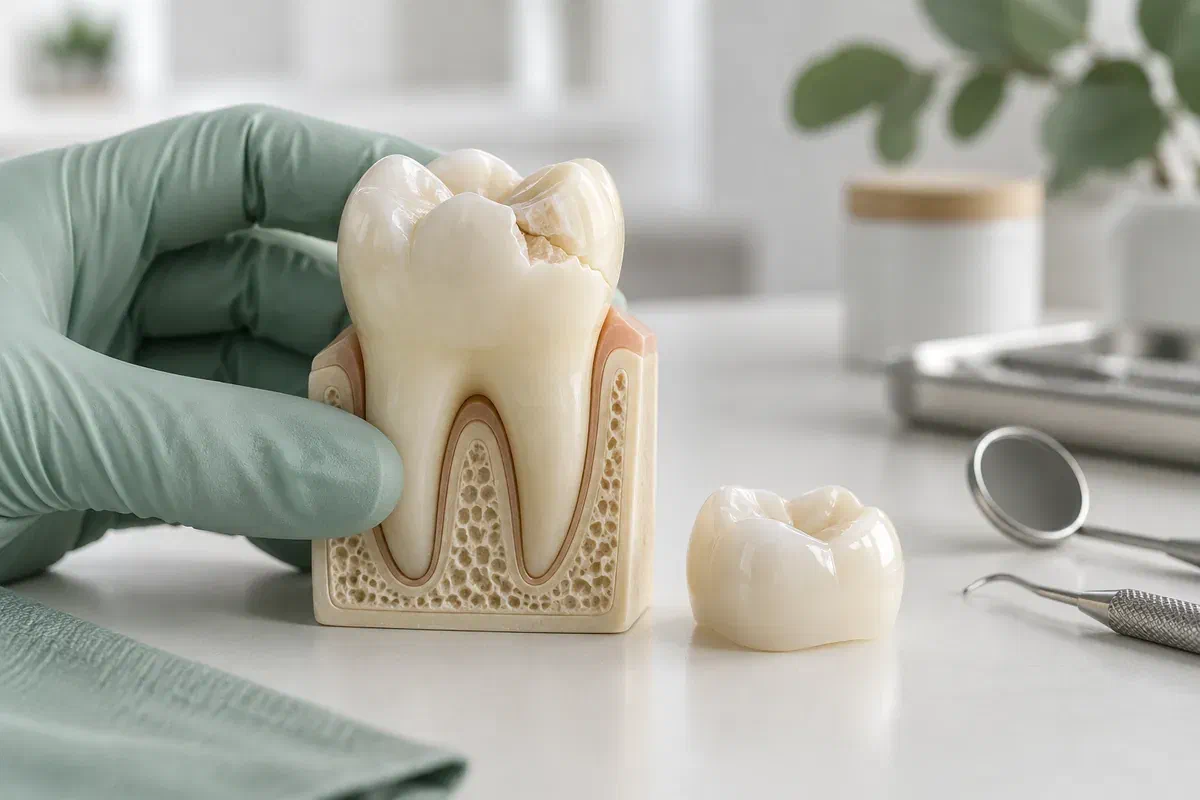
Finding the right tooth is the first step. After that, the dentist weighs how much sound structure remains, how the pulp is responding and how far the fracture runs before discussing repair.
Many cracks sit under a single cusp, often beside an older filling, and flex when you bite at a certain angle. The dentist judges whether a contained repair will hold or whether the cusps need covering for support.
Whether cold pain fades or lingers, and how the tooth responds to tests, helps show if the pulp is healthy, inflamed or failing. A troubled pulp needs its own treatment; sealing the outside alone may not settle the symptoms.
Cracks that run deep below the gum or into the root may leave too little to restore with confidence. Ask which findings suggest this and whether a specialist could help confirm the diagnosis.
A crack can remain hard to pin down even after careful testing. Ask what the next step might reveal, and how you would be included in any change of plan.
Once the cracked tooth is identified and judged restorable, treatment rebuilds the damaged area and gives the remainder appropriate support. If the pulp is involved, root canal care may also be needed. Getting the diagnosis right first avoids treating a healthy tooth while the real culprit carries on.
A crack will not seal itself, and no restoration can guarantee it won’t extend further. A crown or onlay can reduce flexing and often relieves symptoms, but some uncertainty always remains. Understanding that makes it easier to weigh how much treatment is sensible for this tooth.
Patient information: American Association of Endodontists — cracked teeth
Ask what each recommendation is designed to address. A diagnostic step, a temporary, pulp care and the final restoration are distinct, and the reasons for each should be clear.
When the findings are favourable, saving the tooth may be well worth it. The dentist should explain why and point out anything that makes the outlook harder to predict.
Review appointments and plain contact guidance help you respond if pain returns or your bite feels different, so a recurring problem is caught early.
Some cracked teeth are restored straight away; others need further investigation, staged care or a referral. Ask how each step links to the diagnosis and how to look after the tooth in between.
We ask when and how the pain happens, examine each suspect tooth and use bite tests, cold tests, magnification and images as needed. The dentist explains what the results suggest and what is still unclear.
You hear the aims, limits, stages and fees of each reasonable option. If an investigative step is proposed, we explain what it might show and how different results would change the plan.
Depending on the findings, this may be a bonded filling, an onlay or crown, root canal care or another fitting step. We describe how comfort is managed and how any temporary should be treated.
We check the bite and ask whether the original pain has eased. Ask when normal chewing is fine, which symptoms should prompt a call and whether any review or specialist visit remains.
What to do afterwards depends on the treatment and on whether a temporary or final restoration is in place. Keep the written guidance and our number close, particularly when more than one visit is involved.
A temporary restoration is not as strong as the final one. Keep hard, chewy and sticky foods away from it, clean gently around it and call if it loosens or breaks rather than waiting for the next booked visit.
Note whether the original pain has gone, changed or returned. Tell us if the tooth feels high, aches with ordinary chewing or a new pattern appears. Please don’t try to wear down a high spot yourself.
Clenching, grinding and chewing very hard things can strain cracked and restored teeth. The dentist can discuss a night guard or other measures, while explaining that protection lowers risk without eliminating it.
Vague, on-and-off pain raises plenty of questions. These answers are general; the examination will guide the advice for your own teeth.
Visit our Bronte Street practice for a careful examination. We’ll work to identify the tooth involved, explain what we find and go through the reasonable options before any repair begins.
If you have severe pain, swelling or a broken tooth, please call for advice on availability before travelling. Online requests suit non-urgent concerns.
