

Illustrative conversation about treatment options for a cracked tooth
Restorative Dentistry

Cracked Tooth Treatment in Mississauga

Clenching and night grinding can leave teeth with cracks long before anything breaks. For people travelling from Mississauga, we look at the cracked tooth and the forces behind it, then explain realistic repairs.

Pressure you may not notice

Do you wake up with a tight jaw and a tender tooth?

Teeth are built to meet briefly during chewing, not to be pressed together for hours. During busy, stressful stretches, many people clench during the day or grind at night without realising it. That steady load can start fine cracks, and one morning a back molar feels tender or twinges on the first bite of breakfast.

The tooth in question may have a crack limited to one cusp, a deeper fracture moving toward the pulp, or damage that has reached the root. Those are different problems with different treatments. Some of the detail may only become visible when an existing filling is taken out or the tooth is looked at under magnification.

We will explain what we can see and what is still a question mark, and we will talk about the forces involved as well as the tooth. Bring up comfort, scheduling, fees and alternatives. A repair is easier to choose when you understand both its purpose and what it cannot guarantee.

Discuss a tooth affected by grinding
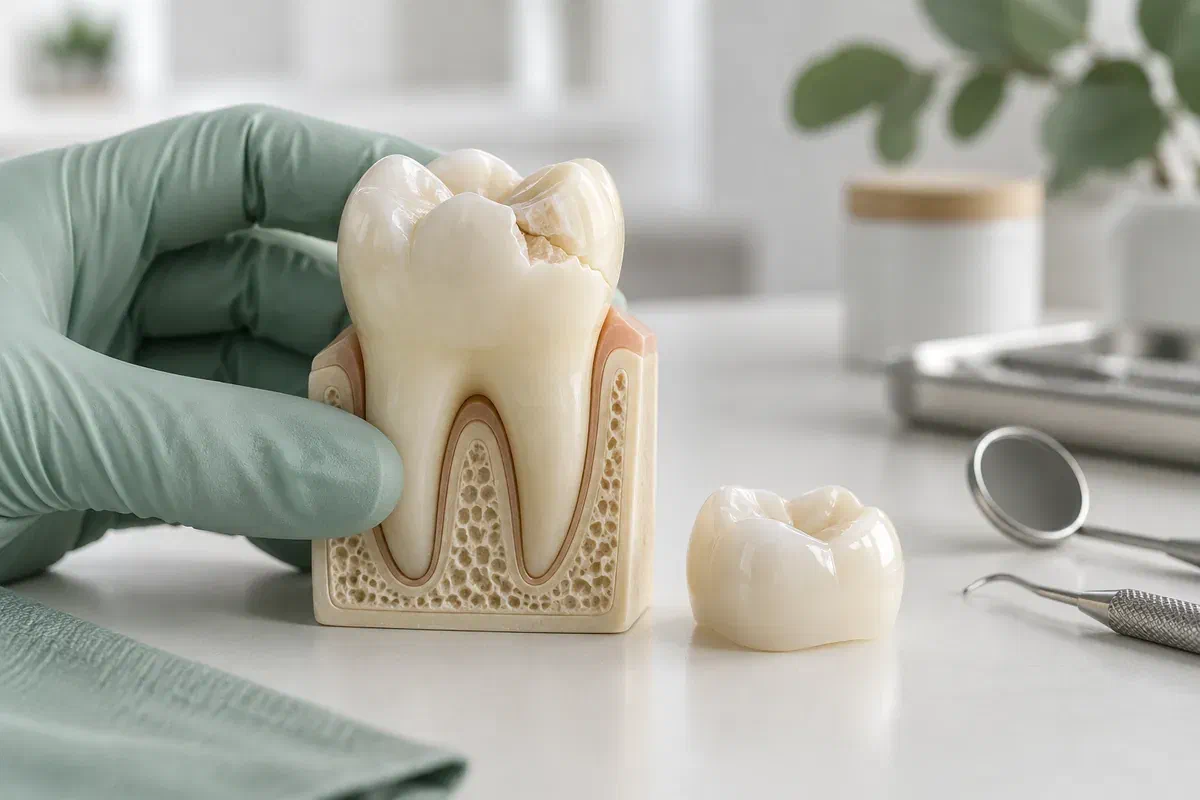
Illustrative tooth model and crown showing a restorative treatment concept
Factors in a Mississauga visit

Load, structure and the living tooth

Cracks come in many forms. The dentist looks at how much healthy tooth remains, how the pulp is responding, how deep the fracture reaches and what habits may be putting the tooth under strain.

Cusps worn or split by heavy biting

Grinding tends to stress the chewing surfaces of back teeth. When a cusp cracks, the dentist considers whether a limited repair is likely to cope with those forces or whether a restoration covering the cusps would be more appropriate.

An inner tissue under strain

Repeated flexing of a cracked tooth can irritate the pulp. Pain that lingers, aching at night and test results help show whether this tissue needs care, in which case an outer repair alone may not resolve the symptoms.

A fracture with a poor outlook

Some cracks run vertically down toward the root or divide the tooth in two, which makes a lasting repair unlikely. Ask what points in that direction and whether a specialist assessment would add useful information.

Even a thorough examination can leave questions open. Ask how the plan would change if treatment reveals more, and how you would be involved before any further step.

What treatment aims for

Strengthen the tooth and manage the strain on it

For a tooth that can be kept, treatment usually rebuilds the cracked area and provides support suited to the structure that is left. Where the pulp is affected, root canal treatment may be included. Alongside the repair, it often helps to address the clenching or grinding that contributed to the crack.

Teeth cannot knit a fracture back together. A crown or onlay may reduce flexing, yet it cannot promise that the crack will never spread, particularly if heavy forces continue. That trade-off is worth understanding before deciding how much treatment makes sense.

Patient information: American Association of Endodontists — cracked teeth

A clear purpose for each step

Ask what problem each appointment solves. Protecting the tooth, treating the pulp, placing a final restoration and making a night guard are different tasks that may all appear in one plan.

A chance to keep a functioning tooth

When the findings support it, keeping your natural tooth may be worthwhile. The dentist should explain why that seems sensible and which factors, including ongoing grinding, make the outlook less certain.

A plan for changes afterwards

Reviews and clear contact advice help you act if pain comes back or the bite changes. Knowing what to watch for is part of care, even when the tooth feels settled after treatment.

How we work through it

Diagnosis first, then the repair and the guard

Some cracked teeth need one visit; others need staged treatment, a referral or a protective appliance afterwards. Ask how the sequence relates to your diagnosis and what the tooth needs between appointments.

  1. Explain the findings and the habits

    We review your symptoms, the examination and any images, and ask about clenching or grinding. The dentist describes the crack, whether the tooth seems restorable and what remains uncertain.

  2. Agree on a plan you understand

    Each reasonable option is set out with its purpose, limits, stages and costs. We also clarify how new findings would be handled and which choices might need to be made again.

  3. Restore and protect the tooth

    The repair itself could be a filling, an onlay or crown, or root canal care first. We’ll explain how numbing and comfort are handled, and how gently to treat a temporary if one is fitted.

  4. Check the bite and discuss protection

    We check how the tooth meets the others and talk about whether a night guard is appropriate. Ask when normal chewing can resume, which symptoms need a call and what appointments remain.

Living with a repaired tooth

Ease the load and keep your reviews

Your aftercare will reflect the work done and whether the permanent restoration is in yet. Keep your written instructions and the clinic’s number handy, particularly when care is spread over several visits.

Treat temporaries with care

A temporary crown or filling is not as strong as the final one, and clenching can dislodge it. Ask which foods to avoid and how to clean around it, and call if it loosens or breaks.

Notice changes in how you bite

Let us know if the treated tooth feels high, hurts when chewing normal food or develops new symptoms. Please don’t try to grind a high spot down, which can strain the tooth further.

Work on the habit, not just the tooth

If you clench or grind, the dentist can discuss a night guard and simple daytime awareness. These measures can reduce strain, but they cannot guarantee that a cracked or restored tooth will never worsen.

Options for the cracked tooth

Strength left in the tooth decides the route

Each option has benefits and limits. Ask how it suits the location of the crack, the remaining structure, the health of the pulp and the forces your teeth are under.

When the tooth can be restored

Covering and bracing the tooth

A small crack may be handled with a filling, but teeth under heavy load often benefit from an onlay or crown that covers the cusps and spreads biting forces across the tooth.

Where the inner tissue is affected

Treating the pulp before restoring

Root canal treatment may be recommended when the pulp diagnosis calls for it and the tooth remains restorable. It addresses the inside of the tooth, and a protective final restoration is still needed afterwards.

If keeping it is not sensible

Extraction and a replacement discussion

A tooth with an unfavourable fracture may need removal. Ask why repair is unlikely to succeed, what a gap could mean, and how ongoing grinding might affect the replacement options being considered.

Grinding and cracks: Mississauga FAQs

Questions about clenching, cracks and repairs

People often want to know why the crack happened and how to stop it happening again. These answers are general; your examination will guide the details.

(905) 876-4488
Can night grinding crack a healthy tooth?
It can. Grinding and clenching put far more force on teeth than normal chewing, and over time that can lead to cracks, even in teeth without fillings. Large fillings and existing wear can make a tooth more vulnerable.
Will a night guard stop an existing crack from spreading?
A night guard can reduce the forces on your teeth while you sleep, which may lower strain on a cracked tooth. It cannot repair the crack or guarantee it will stay the same, so the tooth itself may still need treatment.
How can I tell whether I grind my teeth?
Signs include a sore jaw or headache on waking, flattened or chipped teeth, and a partner hearing grinding at night. The dentist may notice wear patterns during an examination and can discuss what they suggest.
What does the term “cracked tooth syndrome” mean?
It is a name sometimes used for a group of symptoms, such as sharp pain on biting or with cold, caused by an incomplete crack. It describes a pattern rather than a single treatment. The right repair still depends on the crack’s location and depth.
Why might more than one tooth be cracked?
When heavy forces are involved, several teeth can be affected at once. The dentist may prioritise the most symptomatic or most at-risk tooth and suggest monitoring others, explaining the reasoning and the timing.
What does root canal treatment add when a tooth is cracked?
It treats the pulp if that tissue is inflamed or infected; it does not seal the crack itself. It is recommended based on the pulp diagnosis, and the tooth also needs to be restorable, usually with a crown afterwards.
Coming from Mississauga

Have the tooth and your bite checked

Visit our Bronte Street practice for an examination of the cracked tooth and the forces acting on it. We’ll explain what we find, outline the reasonable options and discuss protection before any treatment begins.

If you have severe pain, swelling or a tooth that has just broken, please call so we can advise on availability. Online requests are for non-urgent matters.

Visit Milton Dental Clinic
Unit 1, 342 Bronte St. S, Milton, ON L9T 5B7
Get directions Clinic hours
Monday–Thursday
11am–7pm
Friday–Sunday
By appointment only

Areas we serve

  • Milton
  • Oakville
  • Mississauga
  • Georgetown
  • Halton Hills
  • Acton
  • Campbellville
  • Brampton
  • Burlington
  • Puslinch
  • Rockwood
  • Erin
  • Caledon
  • Etobicoke
  • Old Milton
  • Bronte Meadows
  • Timberlea
  • Dorset Park
  • Dempsey
  • Clarke
  • Beaty
  • Coates
  • Harrison
  • Scott
  • Willmott
  • Ford
  • Bowes
  • Cobden
  • Walker
  • Mountain View
  • Milton Heights
  • Hawthorne Village
  • Valley View
  • Fallingbrook
  • Nassagaweya
  • Trafalgar
  • Esquesing
  • Nelson
  • Brookville
  • Moffat
  • Glen Williams
  • Norval
  • Limehouse
  • Stewarttown
  • Ashgrove
  • Hornby
  • Silver Creek
  • Speyside
  • Scotch Block
  • North Oakville
  • River Oaks
  • Glen Abbey
  • West Oak Trails
  • Palermo
  • Bronte Creek
  • College Park
  • Joshua Creek
  • Uptown Core
  • Preserve
  • Iroquois Ridge
  • Lisgar
  • Meadowvale
  • Meadowvale Village
  • Churchill Meadows
  • Erin Mills
  • Central Erin Mills
  • Streetsville
  • East Credit
  • Creditview
  • Heartland
  • Sheridan
  • Mount Pleasant
  • Credit Valley
  • Huttonville
  • Churchville
  • Springbrook
  • Northwest Brampton
  • Bram West
  • Fletcher's Meadow
  • Fletcher's Creek South
  • Alton Village
  • Orchard
  • Millcroft
  • Headon Forest
  • Tansley
  • Brant Hills
  • Tyandaga
  • Kilbride
  • Lowville
  • Aberfoyle
  • Morriston
  • Arkell
  • Hillsburgh
  • Freelton
  • Carlisle
  • Waterdown
  • Flamborough
  • Mountsberg

How can we help?

Milton Dental Clinic

Have a question about your smile? Choose the option that works best for you.

For urgent dental concerns, please call.
Messages are reviewed during clinic hours.