

Illustrative consultation about a dental crown that has become detached
Restorative Dentistry

Crown Recementation in Milton

Your crown is sitting in your hand and the tooth feels strange. Here in Milton, we look at both the crown and the tooth it came from before deciding whether putting the same crown back is the right call.

The first evening without your crown

What to do tonight, and what to ask tomorrow

Most people in Milton notice it while brushing, flossing or finishing dinner: a hard shell suddenly loose on the tongue. Recementation is the treatment that attaches that same crown again, and it can work well when the crown still fits and the tooth underneath is sound enough to hold it.

The part people tend to skip is the reason. Cement can break down over time, but a crown can also lift because of new decay, a cracked core, a changed bite or a fit that was never quite right. Fixing it in place without finding the cause may only buy a short delay before the same thing happens.

For tonight, rinse the crown gently, put it in a small closed container and chew on the other side. When you call our Bronte Street practice, tell us how it came off and whether it had felt loose before. At the visit we can examine the crown and tooth side by side and explain the choices.

Call about your loose crown
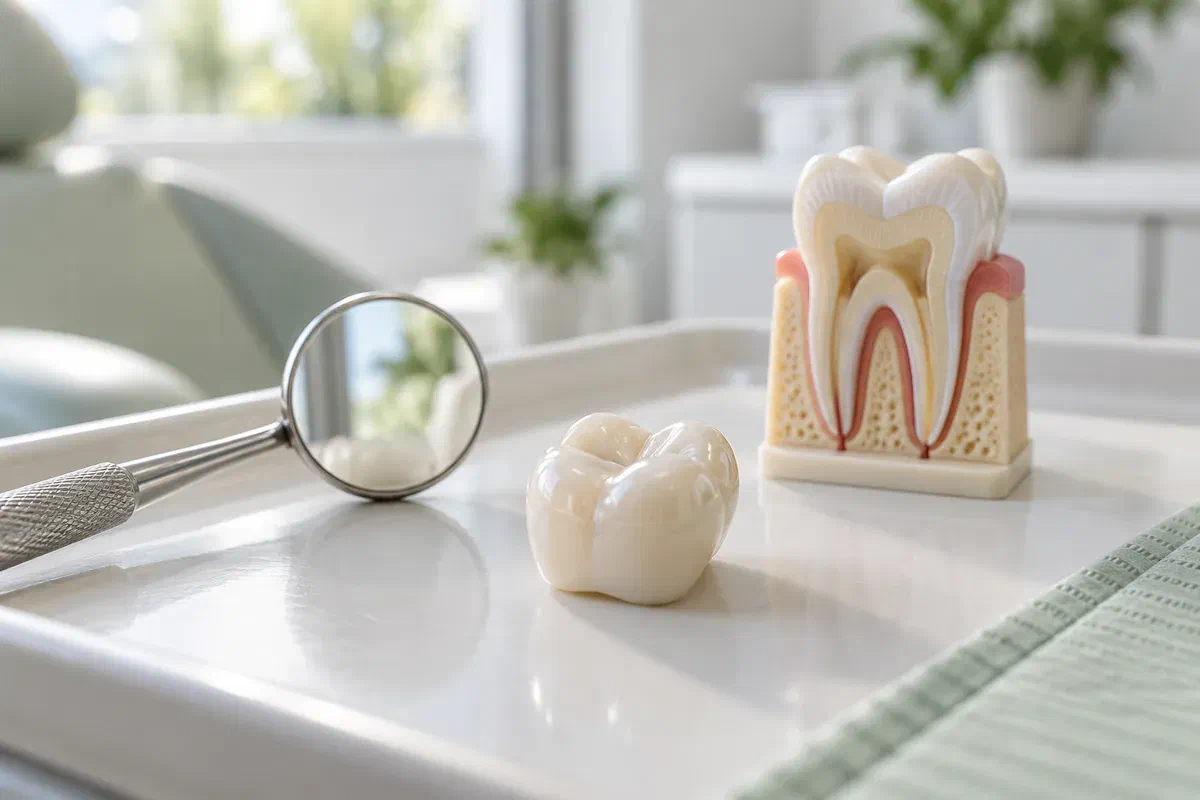
Ceramic dental crown beside a tooth teaching model and dental mirror
Useful things to tell us

A few details shape the first appointment

Pain is not the only thing that matters. It helps to know whether the crown is fully out or still hanging on, whether something seems stuck inside it, and how the tooth has felt since it lost its cover.

It lifted off with something sticky

Toffee, gum and chewy bread are common moments for a crown to let go. Save the crown somewhere safe and bring it along. Mention whether it had wobbled before, and try not to press it back on or bite down on that side to see what happens.

Cold or air makes the tooth twinge

Note what sets the feeling off and how long it lingers. An uncovered tooth can react to temperature, and the dentist will want to check its condition directly instead of assuming the crown going back on will settle everything.

It has been recemented before

A crown that keeps coming loose is asking for a closer look at the tooth, the restoration and how your teeth come together. Let the team know roughly when it was last refitted and whether it tends to happen with the same foods or habits.

If the crown is still partly on and rocking, call for advice instead of wiggling it free. Tell the team about pain, swelling or any knock to the mouth when you book.

Why keeping the original crown can help

Sometimes the crown you already have is still the right one

An undamaged crown that seats properly on a healthy enough tooth may be a good candidate to go back on. When that is the case, reusing it can spare you the time involved in making a new one. The deciding factor is the examination of the crown and the tooth together, not the crown’s appearance alone.

On the other hand, attaching a crown to a tooth that cannot support it tends to postpone the problem rather than solve it. If a different plan is suggested, it is reasonable to ask what the dentist saw. A clear answer should point to the tooth as it is today, rather than simply to how old the crown is.

Keep a crown that still does its job

If the fit and the supporting tooth check out, your existing crown can go on protecting the tooth. Ask whether anything needs to be repaired or prepared first so it has a sound base.

Find out why it let go

Looking at the tooth and the inside of the crown can reveal problems that an at-home fix would hide. Ask what the likely cause was and how the plan deals with it.

Know if this is the final step

In some cases refitting the crown is a stopgap while further treatment is planned. Confirm whether it is meant to stay long term or simply protect the tooth until the next stage.

Inside the appointment

Four steps from a loose crown to a clear plan

The visit starts with a question, not with cement: is this crown suitable to reuse? Because the answer may point somewhere else, plan for a conversation about what was found before assuming the crown will be fixed in place that day.

  1. Look at both pieces

    The dentist checks the crown, the exposed tooth and anything left inside the crown. What you describe, along with your dental history, helps decide whether an X-ray or other tests are needed before going further.

  2. Talk through the findings

    Fit, wear, cracks and the amount of supporting tooth all count. If decay or a fracture changes the picture, you should hear what it means, what the alternatives are and what each would cost before anything proceeds.

  3. Clean, prepare and reattach

    When reuse is suitable, the tooth and crown surfaces are cleaned and prepared, then a dental cement or bonding material chosen for that restoration is used. This is clinical work and not something to try with glue from the kitchen drawer.

  4. Confirm the bite and next steps

    Next comes a check of how the crown sits, how it meets the neighbouring and opposing teeth, and clears away excess cement. Before you go, ask about eating, cleaning around it and whether another visit is planned.

The days after

Your instructions are specific to this crown

Advice after recementation depends on the material used, the tooth and anything else done at the same appointment. Get clear instructions before you leave, especially if the fix is temporary or you are still numb.

Wait as long as you were told before chewing

Different cements set differently, so follow the timing your dentist gives you rather than advice from an earlier crown. While numb, take care not to bite your lip, cheek or tongue without noticing.

Clean the edges gently every day

Brush and clean between the teeth the way you were shown for that spot. If floss keeps snagging, the gum feels irritated or the edge feels rough, call rather than picking at it with something sharp.

Call if it feels loose or high

Any crown that starts to move again, or that hits before your other teeth when you close, should be checked. Describe what changed when you phone, and avoid testing it by pressing or clenching.

Patient information: NHS Wales — lost filling or crown

Possible outcomes

Three directions the visit can take

Your crown, the tooth under it and the gum around it are assessed as one unit. For each option, ask what it is meant to fix and what could happen if you decide to wait.

If it still fits and the tooth is sound

Put the same crown back on

When the crown is undamaged, sits snugly and has a dependable tooth under it, refitting is often reasonable. Your dentist should mention any limits on how long it may last, given why it came off.

If the base underneath has changed

Rebuild the tooth or make a new crown

Decay, a broken core or a poor fit can mean extra restorative work is needed first. Ask whether your current crown can still be used afterwards or whether a replacement is the better choice.

If refitting will not solve it

Step back and look at the whole tooth

A deep crack, extensive decay or another problem may call for a wider discussion. The dentist can explain whether the tooth can be kept and which alternatives to weigh if it cannot.

Milton crown questions

Things people ask after a crown comes off

A loose crown can look fine and still hide a problem under it. These answers explain why the tooth is checked before anyone decides to reattach the crown.

(905) 876-4488
How should I store my crown until the appointment?
Rinse it gently with water, let it dry and keep it in a small sealed container or bag so it cannot be lost or crushed. There is no need to scrub the inside. Bring it to the visit even if you are unsure it can be used again.
Is it all right to eat normally while the crown is out?
It is best to chew on the opposite side and avoid very hard, sticky or very hot and cold foods on the uncovered tooth. The exposed surface may be weaker or more sensitive than usual. Keep brushing the area gently so it stays clean.
What usually makes a crown come loose?
Cement can wear away with time, but other causes include decay at the edge of the crown, a fractured core, grinding or a change in how the teeth meet. That range of causes is the reason the tooth is examined instead of the crown simply being glued back.
Does it matter that I feel no pain at all?
Comfort is not a reliable sign that the tooth is healthy. A tooth that has had root canal treatment may not register pain the way a living tooth does. The fit and the support underneath can only be judged by an examination.
My crown seems to come off every year or so. Is that normal?
Repeated loosening is worth investigating rather than accepting. The dentist will look at the remaining tooth, the crown’s fit and your bite. Ask what is driving the pattern and whether one more recementation is likely to hold.
Can I ask about the cost before anything is done?
Yes. The team can explain the fee for the assessment when you book, and any further treatment should be discussed with you before it begins. Whether recementation is possible usually cannot be confirmed until the tooth has been examined.
Recementation close to home

Bring the crown in and we’ll take a look

Phone our Bronte Street practice in Milton about a crown that has come off or feels loose. Bring it with you, and we will examine it together with the tooth, walk you through what we find and discuss how best to cover and protect the tooth again.

Ring ahead when the tooth is very painful, the gum or face is swollen, the crown is moving or an injury was involved. The team can then advise on timing and the right next step.

Visit Milton Dental Clinic
Unit 1, 342 Bronte St. S, Milton, ON L9T 5B7
Get directions Clinic hours
Monday–Thursday
11am–7pm
Friday–Sunday
By appointment only

Areas we serve

  • Milton
  • Oakville
  • Mississauga
  • Georgetown
  • Halton Hills
  • Acton
  • Campbellville
  • Brampton
  • Burlington
  • Puslinch
  • Rockwood
  • Erin
  • Caledon
  • Etobicoke
  • Old Milton
  • Bronte Meadows
  • Timberlea
  • Dorset Park
  • Dempsey
  • Clarke
  • Beaty
  • Coates
  • Harrison
  • Scott
  • Willmott
  • Ford
  • Bowes
  • Cobden
  • Walker
  • Mountain View
  • Milton Heights
  • Hawthorne Village
  • Valley View
  • Fallingbrook
  • Nassagaweya
  • Trafalgar
  • Esquesing
  • Nelson
  • Brookville
  • Moffat
  • Glen Williams
  • Norval
  • Limehouse
  • Stewarttown
  • Ashgrove
  • Hornby
  • Silver Creek
  • Speyside
  • Scotch Block
  • North Oakville
  • River Oaks
  • Glen Abbey
  • West Oak Trails
  • Palermo
  • Bronte Creek
  • College Park
  • Joshua Creek
  • Uptown Core
  • Preserve
  • Iroquois Ridge
  • Lisgar
  • Meadowvale
  • Meadowvale Village
  • Churchill Meadows
  • Erin Mills
  • Central Erin Mills
  • Streetsville
  • East Credit
  • Creditview
  • Heartland
  • Sheridan
  • Mount Pleasant
  • Credit Valley
  • Huttonville
  • Churchville
  • Springbrook
  • Northwest Brampton
  • Bram West
  • Fletcher's Meadow
  • Fletcher's Creek South
  • Alton Village
  • Orchard
  • Millcroft
  • Headon Forest
  • Tansley
  • Brant Hills
  • Tyandaga
  • Kilbride
  • Lowville
  • Aberfoyle
  • Morriston
  • Arkell
  • Hillsburgh
  • Freelton
  • Carlisle
  • Waterdown
  • Flamborough
  • Mountsberg

How can we help?

Milton Dental Clinic

Have a question about your smile? Choose the option that works best for you.

For urgent dental concerns, please call.
Messages are reviewed during clinic hours.