

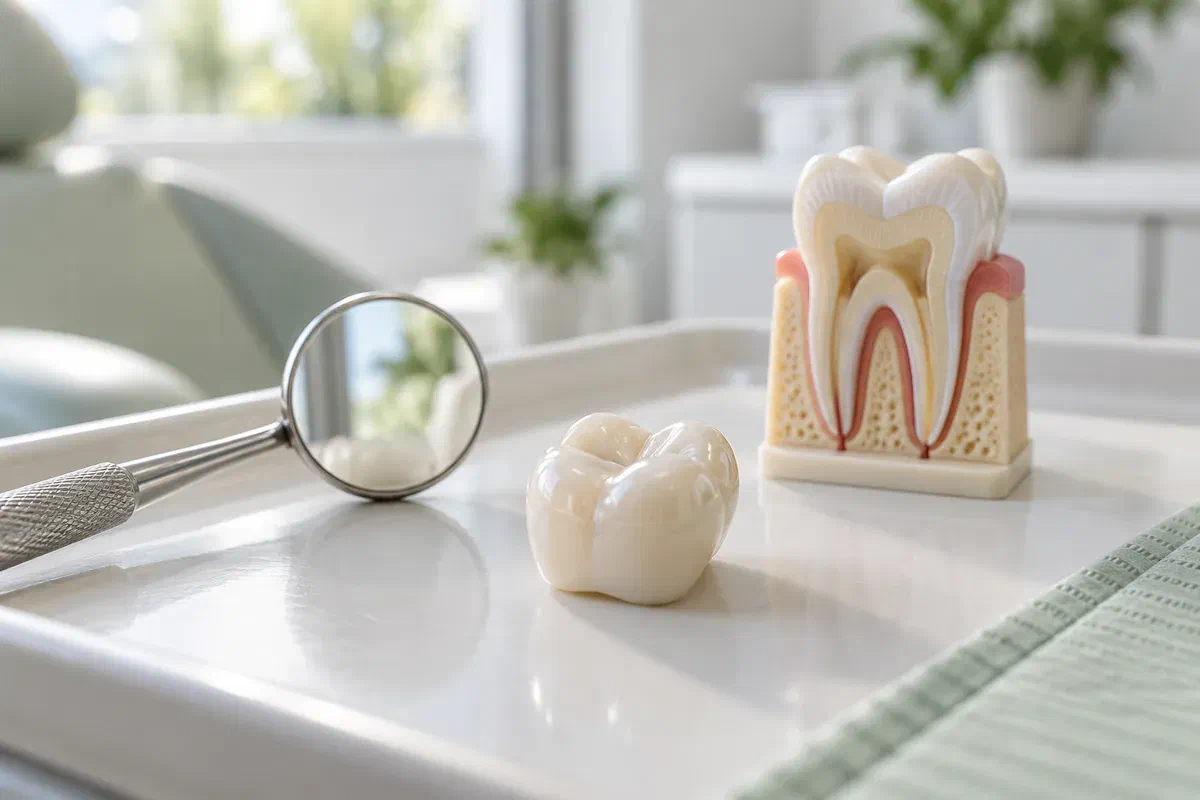
Illustrative consultation about a dental crown that has become detached
Restorative Dentistry

Crown Recementation in Old Milton

An older crown that finally lets go can feel like the end of an era. For anyone in Old Milton, Milton’s historic downtown, a visit to our Bronte Street practice lets us see whether that long-serving crown can go back on or needs a successor.

When a long-serving crown lets go

Years of service, and a question about the next ones

On the established streets of Old Milton, plenty of people have crowns that have quietly done their work for many years. When one of those finally comes away, the natural hope is that it can simply be fixed back in place. Recementation does exactly that when the crown is still in good shape and the tooth beneath it can continue to support it.

Age on its own does not rule a crown out, and it does not qualify one either. What matters is what has happened underneath over the years. The tooth may have developed decay along the edge, the core may have worn or broken, or the gum line may have shifted so the margin no longer seals as it once did.

Bring the crown with you, along with whatever you remember about when it was placed and whether it has been reattached before. Older records or the name of a previous dentist can help, though they are not required. We examine everything together and tell you plainly whether reusing it is sensible.

Ask about an older crown
Ceramic dental crown beside a tooth teaching model and dental mirror
Before you phone

Which of these sounds like your crown?

Even a painless crown loss is worth reporting with some detail. Tell the team whether the crown came out whole, whether anything is lodged inside, and how the bare tooth feels now.

It came out partway through a meal

Put the crown in a clean, lidded container and bring it in. It helps to know what you were chewing and whether you had noticed any looseness in the weeks before. Resist pushing it back on yourself or biting hard on that side.

The uncovered tooth feels tender

Notice whether hot, cold, sweet or pressure brings it on and whether the feeling fades quickly or stays. The tooth itself needs an assessment, since reattaching the crown may not settle every symptom.

It has come loose on other occasions

A pattern of crowns coming off points to something worth examining in the tooth, the crown or the way you bite. Let the team know roughly how many times it has happened and when it was last put back.

A crown that is loose but still in place is best left alone until you have spoken to the clinic. Mention pain, swelling or a recent fall or knock when you call.

The case for reuse

Can an older crown keep going?

Sometimes it can. If the crown is intact, still seats accurately and the tooth below remains a solid foundation, refitting it may let you keep a restoration you are used to. That avoids making a new one when it is not needed, but the decision rests on the examination.

Where the foundation has changed, reattaching the old crown can leave the real problem in place. If another route is recommended, ask which specific finding makes refitting a poor bet. You should hear about the state of the tooth now, not just the number of years the crown has been there.

Hold on to a crown that still works

When the crown, its fit and the tooth all pass inspection, the restoration may keep protecting the tooth. Ask whether any preparation or repair is needed before it goes back on.

Learn what caused the loosening

An examination can spot issues that a quick reattachment would cover over. Ask what seems to have contributed and how the suggested plan responds to it.

Be clear on short term versus long term

Refitting may be the finished treatment or a holding measure while something else is arranged. Make sure you know which one you are agreeing to.

How we approach an older crown

Examine, explain, refit if suitable, then review

The first goal is a decision rather than a quick fix. What the examination shows can redirect the plan, so leave room to talk about it before counting on the crown being cemented for good.

  1. Inspect the crown and the tooth

    The dentist looks at the crown’s inner surface and edges, the remaining tooth and any material that came away with it. Your history and symptoms help decide whether imaging or other tests would be useful.

  2. Decide together whether it can return

    Fit, wear, damage and the remaining support are weighed up. Any decay or fracture that alters the advice should be explained, along with the alternatives and their costs if a straightforward refit is not suitable.

  3. Ready the surfaces and seat the crown

    If reuse is appropriate, both surfaces are cleaned and prepared, and a dental cement or bonding method suited to that crown is applied. How it is done depends on the material and the tooth, which is why home adhesives are never a substitute.

  4. Review the fit and your instructions

    The position of the crown, its contact with neighbouring teeth and your bite are checked, and excess cement is removed. Ask how soon you can chew normally, how to clean around it and whether any follow-up is planned.

Looking after a refitted crown

Today’s instructions, not last decade’s

Guidance after recementation varies with the cement, the tooth and any other work done. Ask for clear directions before you go, particularly if the refit is temporary or your mouth is still numb.

Follow the eating advice you were given

Stick to the timing and food cautions from this appointment, even if you remember different advice from years ago. While the area is numb, be careful not to chew your cheek or tongue.

Keep the edge of the crown clean

Brush and clean between teeth using the method suggested for that area. Floss that catches every time, sore gums or a rough edge are worth reporting instead of scraping at them yourself.

Phone if something changes

Looseness returning, or a crown that seems to hit first when you close, should be looked at. Call and describe what you notice, and avoid testing it by pushing or biting hard.

Patient information: NHS Wales — lost filling or crown

What the findings can mean

Refit, rebuild or rethink

The crown, the tooth and the gum around it are judged as a set. For each option, ask what it is designed to fix and what is likely to happen if treatment is put off.

The crown fits and the tooth can hold it

Reattach the original crown

A sound crown may be cemented again when it seats properly and the tooth is strong enough. The dentist should mention any limits, given what led to it coming off in the first place.

The foundation needs work first

Restore the base or make a new crown

Decay, a worn or broken core or an edge that no longer seals may need further restorative work. Ask whether the old crown can still be used once that is done or whether a new one is the better plan.

Refitting would not address the problem

Discuss the tooth’s future

A large crack, deep decay or another diagnosis may call for a wider conversation. The dentist can explain whether the tooth can be kept and which alternatives make sense if it cannot.

Old Milton questions about older crowns

Answers for a crown with some history

A crown can look as good as the day it was placed while the tooth underneath has changed. These answers explain what the examination is looking for.

(905) 876-4488
My crown is very old. Is it automatically too old to reuse?
No. Age alone does not decide it. A crown can be reused if it is intact, still fits and the tooth underneath can support it. The dentist looks at those factors rather than the date it was made.
Do I need records from the dentist who placed the crown?
They are helpful but not essential. If you know roughly when the crown was made, whether the tooth had root canal treatment or whether it was ever reattached, share that. The examination itself provides most of what is needed.
Why does the gum around my old crown look different from before?
Gums can recede gradually, exposing the crown’s edge or part of the root. That change can affect how well the margin seals. Mention it at the visit so the dentist can check the area as part of deciding what to do.
There is a small piece of tooth inside the crown. What does that mean?
It may be part of the tooth, a core build-up or an older filling material, and it suggests the support underneath has changed. The dentist examines both pieces before explaining whether repair, a new crown or another approach is needed.
Should the crown go back on even if it no longer matches my other teeth?
That is a reasonable question to raise. If the crown is clinically suitable to reuse, appearance becomes a personal choice you can discuss. Ask what a replacement would involve so you can compare the options fairly.
Can I wait a few weeks before having it seen?
It is better not to leave a tooth uncovered for long. It may be more vulnerable to damage or sensitivity, and neighbouring teeth can shift slightly over time, which may affect whether the crown still fits. Call the clinic to discuss timing.
From Old Milton to Bronte Street

Show us the crown, and we’ll go from there

Contact our Bronte Street practice about a crown that has come off or feels loose. Bring it with you and we will examine it with the tooth, explain what we see and talk through the most suitable way to protect the tooth again.

If the crown is moving, the pain is significant, there is swelling or you have had an injury, please phone so the team can discuss when to come in and what to do next.

Visit Milton Dental Clinic
Unit 1, 342 Bronte St. S, Milton, ON L9T 5B7
Get directions Clinic hours
Monday–Thursday
11am–7pm
Friday–Sunday
By appointment only

Areas we serve

  • Milton
  • Oakville
  • Mississauga
  • Georgetown
  • Halton Hills
  • Acton
  • Campbellville
  • Brampton
  • Burlington
  • Puslinch
  • Rockwood
  • Erin
  • Caledon
  • Etobicoke
  • Old Milton
  • Bronte Meadows
  • Timberlea
  • Dorset Park
  • Dempsey
  • Clarke
  • Beaty
  • Coates
  • Harrison
  • Scott
  • Willmott
  • Ford
  • Bowes
  • Cobden
  • Walker
  • Mountain View
  • Milton Heights
  • Hawthorne Village
  • Valley View
  • Fallingbrook
  • Nassagaweya
  • Trafalgar
  • Esquesing
  • Nelson
  • Brookville
  • Moffat
  • Glen Williams
  • Norval
  • Limehouse
  • Stewarttown
  • Ashgrove
  • Hornby
  • Silver Creek
  • Speyside
  • Scotch Block
  • North Oakville
  • River Oaks
  • Glen Abbey
  • West Oak Trails
  • Palermo
  • Bronte Creek
  • College Park
  • Joshua Creek
  • Uptown Core
  • Preserve
  • Iroquois Ridge
  • Lisgar
  • Meadowvale
  • Meadowvale Village
  • Churchill Meadows
  • Erin Mills
  • Central Erin Mills
  • Streetsville
  • East Credit
  • Creditview
  • Heartland
  • Sheridan
  • Mount Pleasant
  • Credit Valley
  • Huttonville
  • Churchville
  • Springbrook
  • Northwest Brampton
  • Bram West
  • Fletcher's Meadow
  • Fletcher's Creek South
  • Alton Village
  • Orchard
  • Millcroft
  • Headon Forest
  • Tansley
  • Brant Hills
  • Tyandaga
  • Kilbride
  • Lowville
  • Aberfoyle
  • Morriston
  • Arkell
  • Hillsburgh
  • Freelton
  • Carlisle
  • Waterdown
  • Flamborough
  • Mountsberg

How can we help?

Milton Dental Clinic

Have a question about your smile? Choose the option that works best for you.

For urgent dental concerns, please call.
Messages are reviewed during clinic hours.