It broke on something hard
A bone, a nut shell or an unpopped kernel can chip a crown as it dislodges it. Mention what you bit, keep all the pieces and do not test the tooth with more hard food. Chew on the other side for now.


A crown that comes off with a chip or a crack raises a fair question: is it still usable? From Puslinch, bring every piece to our team, and we will check the crown and the tooth before advising on a refit or another route.
Sometimes the crown arrives in your hand looking whole. Other times there is a missing corner, a hairline crack or a flake of porcelain on the plate. That damage matters, because recementation reattaches the crown you have, and a crown that is no longer sound may not protect the tooth the way it should.
Small chips do not always rule a crown out, and some cracks are too fine to spot at home. The dentist will look at the size and position of any damage, how well the crown still seats and whether the tooth underneath has broken or decayed. All three shape the recommendation.
Gather every fragment you can safely find and keep them together in a small closed container. Avoid trying to glue the pieces or fit them back on. When you call, describe what you were eating and whether the crown had felt loose. In rural areas, one well-prepared visit is easier to plan than several.
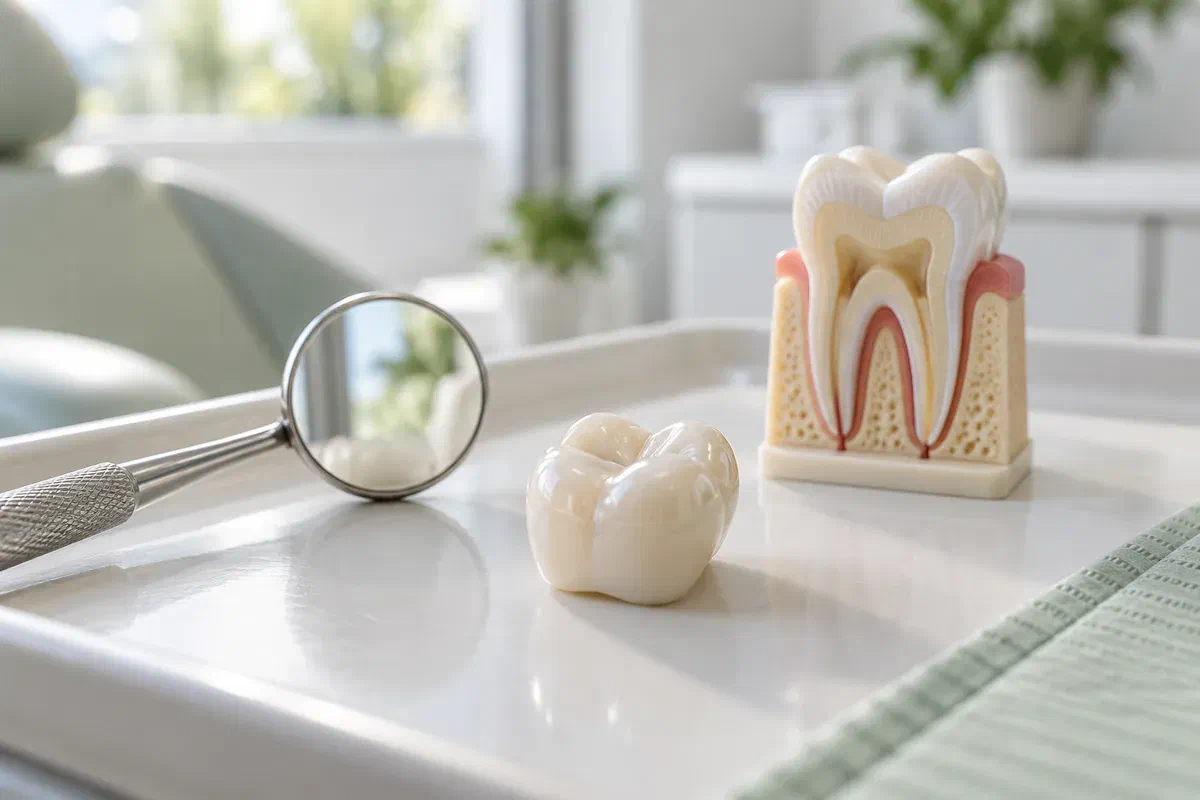
Painless or not, the details guide the first visit. Tell the team whether the crown is in one piece, whether part of the tooth seems to be inside it and how the exposed tooth feels.
A bone, a nut shell or an unpopped kernel can chip a crown as it dislodges it. Mention what you bit, keep all the pieces and do not test the tooth with more hard food. Chew on the other side for now.
A rough edge on the tongue or tenderness when biting may mean the tooth itself has broken. Describe how it feels and what triggers any discomfort, because the tooth needs examining separately from the crown.
If this crown has been chipped, repaired or recemented before, say so. Repeated problems can point to bite forces or a fit that needs attention. Let the team know roughly when it was last worked on.
A cracked crown that is still on the tooth should not be pried off. Phone for advice and mention any pain, swelling or recent injury.
If the chip is small, the crown still seats accurately and the supporting tooth is sound, the dentist may consider reattaching it, sometimes with a minor adjustment. That can save making a new crown. Whether it is appropriate depends on examining the damage, the fit and the tooth together.
A crown with a significant crack, or a tooth that has fractured beneath it, is unlikely to do well with simple recementation. If you are advised against reuse, ask what specifically rules it out. The reasoning should be tied to the condition of the crown and tooth now, not only to the crown’s age.
When a chip does not affect fit or strength, the crown may still protect the tooth. Ask whether smoothing or a small repair is advisable before it goes back on.
A crack in the crown, a break in the tooth or a bite problem may explain why it came off. Ask the dentist which applies and how the plan handles it.
A chipped crown may be reattached to protect the tooth while a replacement is made. Check whether it is intended to stay or simply bridge the gap until the next appointment.
Every visit starts by asking whether the crown can be reused safely. Damage raises the chance of a different recommendation, so leave space to talk it through before expecting the crown to be cemented.
The dentist closely examines the crown, the pieces you brought and the tooth beneath. Your symptoms and history may lead to imaging if a hidden fracture or decay is suspected.
Size and location of chips or cracks, fit and the remaining support are weighed. If the crown or tooth cannot be relied upon, you will hear the alternatives, what each involves and what it would cost.
If reuse is reasonable, any rough edges may be polished, then the crown and tooth are cleaned and conditioned for a professional cement or bonding material. Glue from home can make a cracked crown worse and is never a substitute.
The crown’s position and contacts are checked, excess cement is removed and your bite is assessed. Ask about eating, caring for the area and whether a replacement crown is being planned.
Instructions after a refit reflect the material, the state of the crown and anything else that was done. Ask for clear guidance before leaving, especially if the crown is on temporarily or your mouth is numb.
Follow the timing and food cautions from your dentist, and take extra care with very hard items if the crown has been chipped. While numb, chew carefully to protect your tongue and cheek.
Brush and floss as recommended around the crown. A rough spot, floss that keeps tearing or tender gums should be reported, not filed or picked at yourself.
Report any new chip, a crown that feels loose or a bite that feels high. Call and describe what has changed, and avoid testing it on hard foods.
Patient information: NHS Wales — lost filling or crown
A chip on the outside does not reveal what is happening underneath. These answers explain how the dentist decides whether a damaged crown can go back.
Has your crown come off chipped or cracked? Call our Bronte Street team and bring the crown and any fragments. We will examine them with the tooth, explain what the damage means and recommend a suitable way to protect the tooth from here.
A broken tooth, strong pain, swelling or damage from a fall or blow may need a different first step. Please call ahead so we can talk about how quickly you should come in.
