A bridge that has been reglued
If it has needed repair more than once, share that history. Repeated trouble may point to a design, fit, anchor or bite problem, and it affects whether another repair is likely to last.


Threading floss under a bridge gets harder when your fingers stiffen or your eyesight changes. From Erin or Hillsburgh, you can have the bridge and its anchors checked, and talk about a design and routine you can manage.
Arthritis, a tremor, reading glasses that never seem to be nearby: life changes, and a cleaning routine that once took a minute can start to feel like a chore. Under a bridge, skipped cleaning matters, because plaque collects at the anchoring teeth or implants that hold the whole restoration up.
The fix is not always a new bridge. Sometimes a different tool, such as a thicker-handled brush or a water flosser, makes a big difference. Sometimes the design itself makes access difficult, or the supports have already begun to suffer. An older bridge that is still sound and manageable may simply need a better routine.
Show us how you clean now and where it becomes awkward, and tell us what you still like about the bridge. The dentist can examine it and its anchors, then explain whether new aids, a repair or a replacement designed with access in mind makes sense. If the supports can only be fully assessed after removal, you will be told in advance.
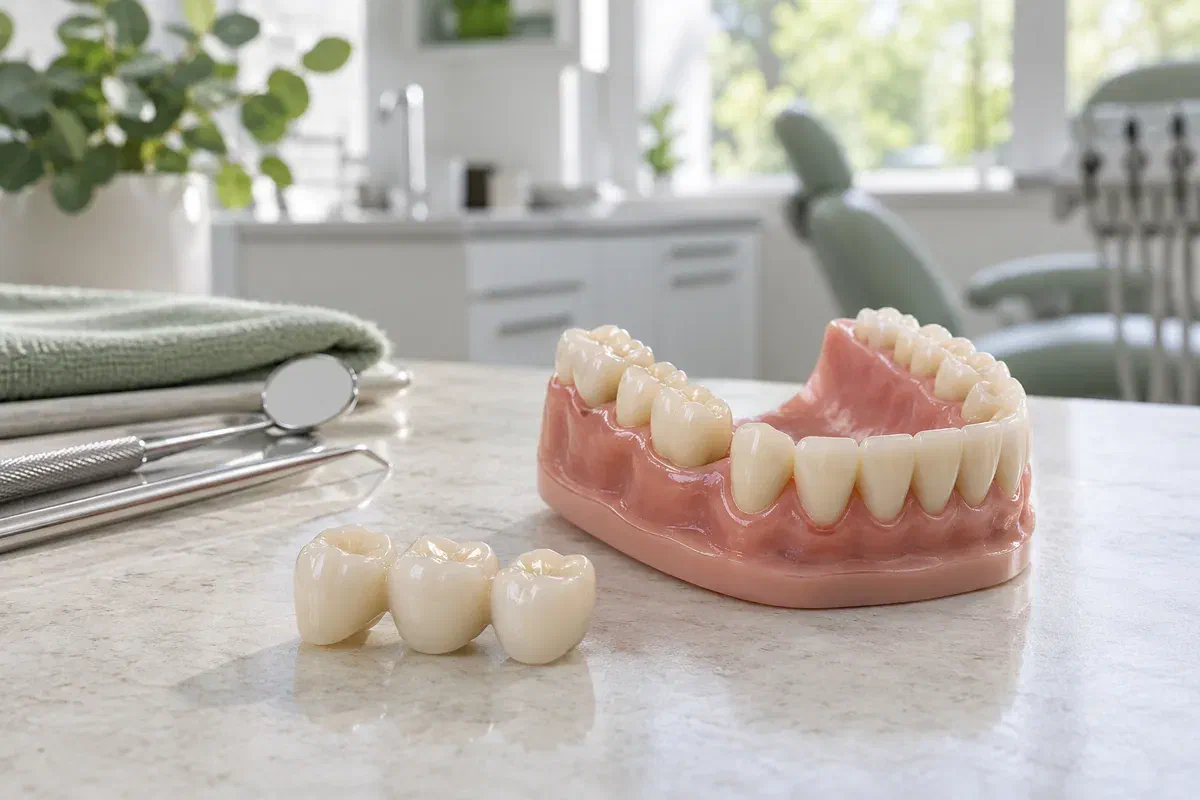
Gum and support problems can develop quietly, and a cosmetic change is not always a sign of failure. An examination keeps the advice matched to what is actually happening.
If it has needed repair more than once, share that history. Repeated trouble may point to a design, fit, anchor or bite problem, and it affects whether another repair is likely to last.
Gum that bleeds when brushed, or a support tooth that feels tender, may need care of its own. What the dentist finds there also influences whether a similar bridge would be a sensible replacement.
Be honest about which steps you skip and why. It helps the dentist evaluate the current shape and consider how access for your hands and eyesight could be built into any future design.
If the bridge feels loose, causes pain or has broken and become sharp, ring the clinic. Avoid trying to remove or fix it at home while you wait to hear back.
If replacement is chosen, the shape of the false teeth, the space beneath them and the contacts with neighbouring teeth can be planned with easier access in mind. That works only when the anchors and gums are healthy enough to support the design.
A new design cannot reverse gum disease or decay that developed under the old bridge. Those need separate diagnosis and treatment, sometimes before anything else. Ask how the anchors were examined and what their condition means for the replacement.
Tell the dentist what you can and cannot do comfortably. That can guide shape and spacing, although strength, bite and appearance still need to be balanced against access.
With the supports reviewed, you will hear whether repeating a familiar design is still sensible or whether something different would serve you better, perhaps because it is easier to reach. Ask which findings matter most, and how sure the dentist is about each one.
Before the bridge is completed, try out a few aids and settle on the ones you can use. Agree on a review schedule that keeps watch over the bridge and its anchors.
The order depends on the bridge type and the supports. Ask about the temporary, about what removal might uncover and about how the plan would adapt if more treatment were needed.
Along with the usual review of symptoms, repairs, bite and gums, the team may ask you to demonstrate your routine. X-rays are taken as appropriate. Seeing where the floss or brush stops tells the dentist a lot, and you will also learn what simply cannot be known until the bridge is off.
New tools, a minor adjustment or a repair are weighed against a new bridge. If replacement is recommended, discuss why, and review the design, alternatives, appointments, fees and uncertainties.
The old bridge is taken off with comfort measures suited to you, and any treatment is completed. The anchors are examined directly, records are made and the team explains the temporary.
The new bridge’s seating, bite, contacts and appearance are checked before cementation. Then you practise cleaning it in the chair, with your own aids, until it feels manageable.
The underside of the false teeth and the gum edge of every support are the areas that matter most. Ask for a method built around this bridge and your hands, not just a copy of your old steps.
Options may include threaders with stiff ends, interdental brushes with larger handles or a water flosser. The team can help you find what is easiest to use well.
A bite that feels uneven, lingering soreness or food collecting in a new place should be reported. A brief adjustment period is common, but persistent discomfort deserves a check.
Regular visits help spot areas your routine may not reach. Raise cleaning challenges, gum changes or movement, and call between reviews if something new appears.
Patient information: Cleveland Clinic — dental bridges
These answers focus on manageable home care, the changeover stage and what the dentist needs to confirm before making a final bridge.
At our Bronte Street practice, we can watch your routine, examine the bridge and its anchors and explain what can be kept. If replacement makes sense, the dentist will talk through designs that suit your comfort and how you clean.
Phone before booking online if the bridge is loose or painful, so we can advise you on timing.
