Loosening, chips or repeated fixes
Has the bridge been recemented or patched before? List those episodes. The dentist can judge whether this is an isolated event or a sign that fit, design, supports or bite forces make further repair less sensible.


Food that wedges under a bridge every evening is more than a nuisance. For people coming from Oakville, we find out why it is happening, check the teeth holding the bridge and explain whether a better-shaped replacement makes sense.
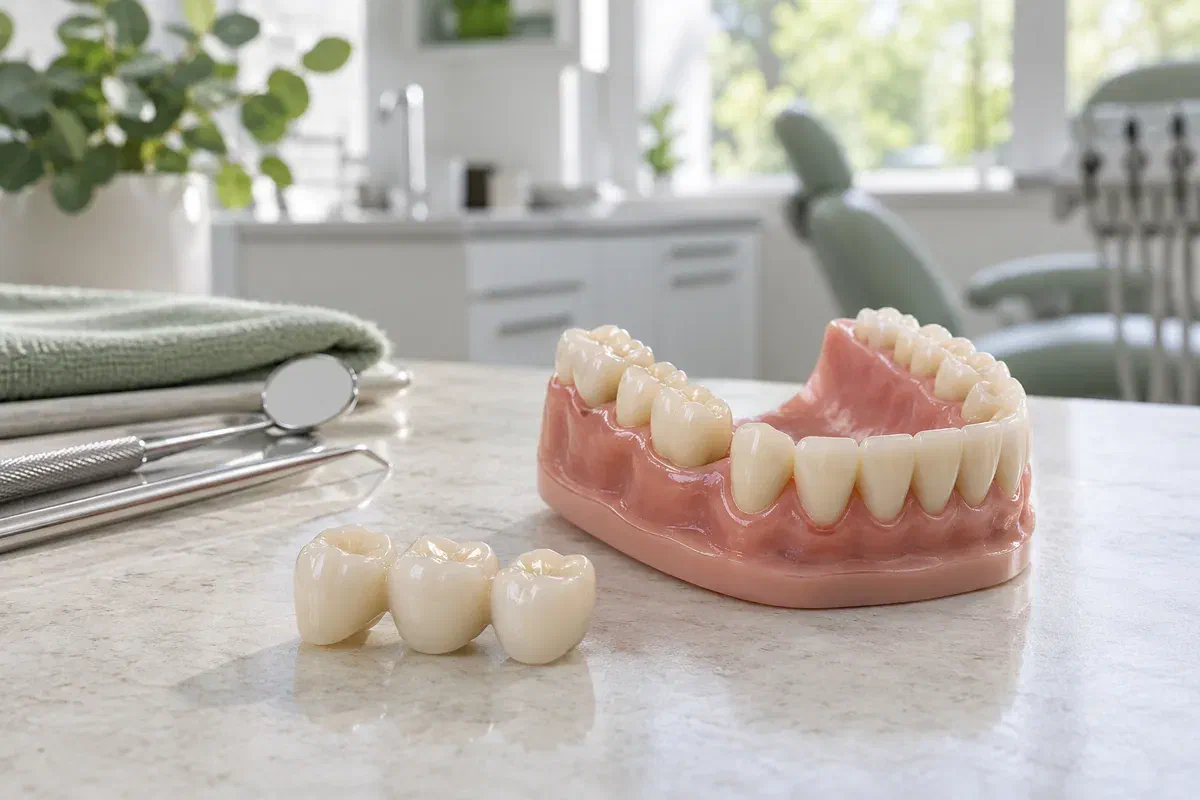
It usually starts small. A fibre of meat lodges beneath the false tooth, the threader bends instead of sliding through, and a stale taste lingers by morning. A bridge joins replacement teeth to anchoring teeth or implants, so the space under it has to stay cleanable for the whole unit to stay healthy.
Trapped food can come from the bridge’s shape, from gum that has receded around it or from a gap opening at an edge. Those causes lead to different answers. A bridge that is simply hard to clean is a different case from one whose supporting tooth is decaying, and its age tells you very little.
Describe your evening routine and where it fails, and tell us what you still like about the bridge. From there we can talk about better cleaning tools, an adjustment, a repair or a replacement. If the supports cannot be assessed fully without taking the bridge off, that will be explained first.
Some warning signs are easy to see; others only show on an X-ray. Equally, a cosmetic complaint can exist without anything failing. An examination keeps the recommendation tied to the findings.
Has the bridge been recemented or patched before? List those episodes. The dentist can judge whether this is an isolated event or a sign that fit, design, supports or bite forces make further repair less sensible.
A support tooth that is sore to bite on, sensitive to cold or swollen at the gum may need its own treatment. What the dentist finds there also helps decide whether a similar bridge is still a reasonable plan.
A smell or taste you cannot brush away often means debris is collecting where you cannot reach. Show us the spot. It helps the dentist evaluate the current design and think about cleaning access in any new one.
Reach out if your bridge wobbles, hurts or breaks and leaves a sharp area. Leave it in place and avoid do-it-yourself fixes until you have spoken with the team.
A new bridge gives the dentist a chance to revisit its contour, the contacts with neighbouring teeth and how it meets the opposite jaw, often with cleaning access as a central goal. That only works when the supports and gums can carry the proposed design.
A replacement will not, on its own, fix decay or gum disease that developed under the previous bridge. Those need separate diagnosis and care. It is reasonable to ask how the anchoring teeth or implants were checked and what their outlook means for the new work.
Your frustrations with the old bridge are useful. They can guide shape and space beneath the replacement teeth, without assuming every feature of the previous bridge should be reproduced.
Once the foundation is understood, the dentist can explain why a comparable bridge still suits you or why another option is on the table. Ask what tipped the recommendation.
Expect to be shown how to care for the new bridge on the day it is fitted. Agree on cleaning aids you will actually use and on the review timing needed to keep an eye on everything.
The details depend on the bridge type and the state of its supports. Before anything begins, ask about the temporary stage, what removal might reveal and how the plan would change if it had to.
The dentist looks at your concerns, past repairs, bite and gums, and takes appropriate X-rays of the supports. You will hear what can and cannot be confirmed while the bridge is still fixed in place.
Maintaining, repairing or recementing the existing bridge are considered before replacement. If a new bridge is recommended, ask for the reasoning and go through the design, alternatives, visits, fees and open questions.
With your agreement, the bridge is removed and any necessary treatment carried out using suitable comfort measures. The supports are re-examined, records are taken and the team explains any temporary bridge you will wear.
Before the final cementation, fit, contacts, bite and appearance are checked. Ask to practise cleaning beneath the new bridge in the chair, and confirm your review date and the signs that should prompt a call.
The underside of the bridge and the gum around each anchor are where problems tend to start. Ask for a method designed for this bridge, since your old technique may not suit the new shape.
Threaders, super floss, small interdental brushes or a water flosser may be suggested, depending on the design. If dexterity or access is an issue, mention it so the routine is realistic.
A new spot where food packs, a bite that feels off or tenderness that does not ease should be reported. Unfamiliar sensations can be normal briefly, but continuing discomfort is worth assessing.
Your bridge and the teeth or implants under it need ongoing monitoring. Bring cleaning questions and any gum changes or movement to each review, and call earlier if something new develops.
Patient information: Cleveland Clinic — dental bridges
These questions cover cleaning, the changeover period and the information the dentist needs before committing to a final design.
Bring your questions about a bridge that traps food or has started to feel different to our Bronte Street practice in Milton. We will examine it and its supports, explain what may be kept and outline replacement choices that fit your comfort and routine.
A loose or painful bridge is best discussed by phone first, before you choose a routine online appointment.
