Wobbling or clicking
Movement in an implant bridge may come from a loose screw, a worn component or, less often, a problem at the implant itself. On a tooth-supported bridge it may mean failing cement or an anchor issue. Tell us when it began.


Some bridges rest on implants placed years ago, sometimes by a clinic you no longer visit. If you are coming from Puslinch, bring what records you can, and we will assess the bridge, the implants or teeth under it and the realistic next steps.
Not every bridge is held by natural teeth. Many are screwed or cemented onto implants, and people move, change dentists or simply lose track of the paperwork. When such a bridge starts to feel loose, chips or becomes hard to clean, the first job is working out what it is attached to.
Tooth-supported and implant-supported bridges are assessed differently, and their problems have different causes. A screw may have loosened, the porcelain may have worn or the gum and bone around an implant may need attention. Age by itself says little; the condition of each part says a lot.
Bring any implant cards, previous clinic names or treatment summaries you have, and tell us what has changed. Our dentist can examine the bridge and its supports, then discuss repair, replacement or another approach. If parts of the assessment depend on removing the bridge or identifying components, that will be explained first. For households in Puslinch juggling farm work, commuting or school runs, knowing that early makes it easier to set aside the right amount of time.
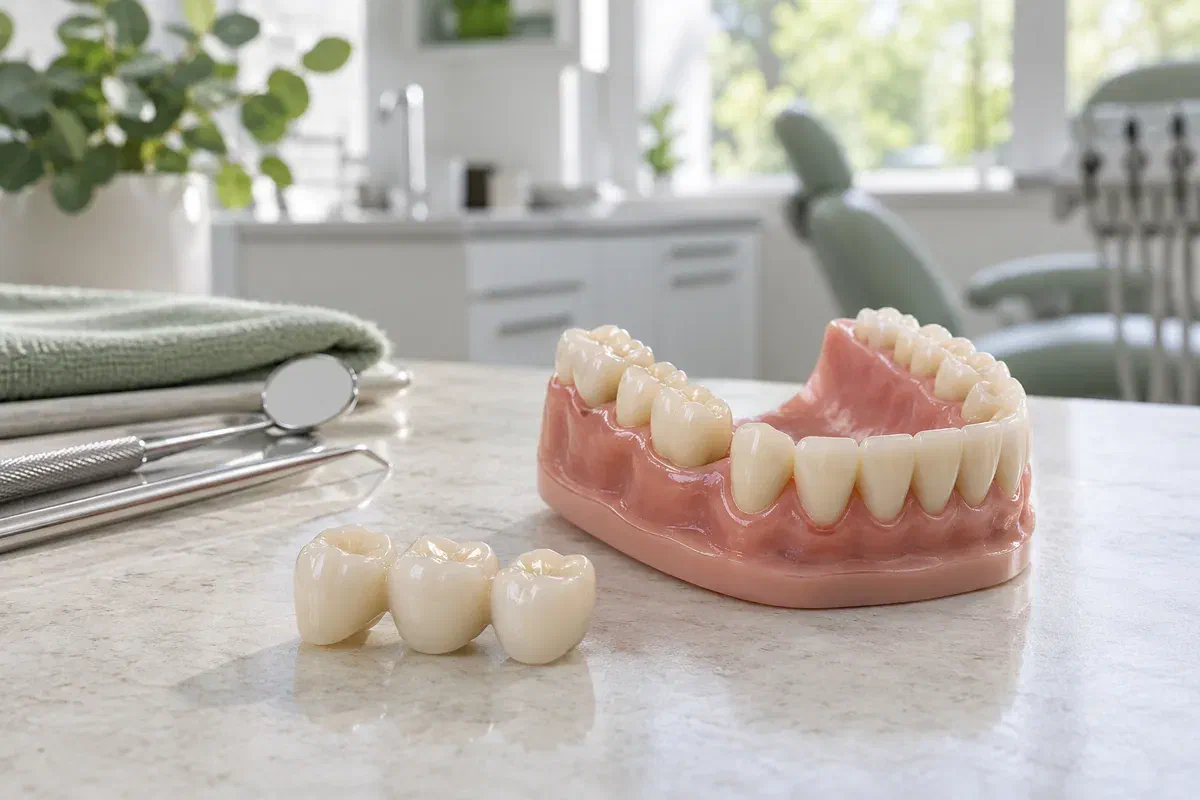
An implant bridge and a tooth-supported bridge can show similar symptoms for very different reasons. Examination keeps the advice matched to the structure you actually have.
Movement in an implant bridge may come from a loose screw, a worn component or, less often, a problem at the implant itself. On a tooth-supported bridge it may mean failing cement or an anchor issue. Tell us when it began.
Bleeding, puffiness or soreness around an implant or anchor tooth deserves a closer look. Those tissues may need treatment in their own right, and their health shapes what a replacement could involve.
Implant bridges in particular can have spaces beneath them that are tricky to clean. Show us where you struggle. It helps the dentist evaluate the design and plan cleaning access for the future.
A bridge that shifts, hurts or has snapped to a jagged edge needs a call to the clinic. Please don’t try to tighten, remove or glue an implant bridge yourself, even if a screw seems to be the obvious culprit.
When a bridge is remade, its shape, its contact with neighbouring teeth and its relationship to your bite can all be revisited. For implant bridges, cleaning access around the implants is often an important part of that conversation, as long as the implants and gums are healthy enough to carry the work.
A new restoration will not treat gum or bone problems around implants, or decay under natural anchors. Those are diagnosed and managed separately. Ask how each support was assessed and what its condition means for the plan.
Your experience of chewing, speaking and cleaning with the current bridge helps guide the next one. Some features may be worth keeping, while others are better changed.
Identifying the implant system, where possible, helps the dentist explain whether compatible parts are available and whether a similar design still suits you. When the system is unclear, ask how that uncertainty affects the choices on the table.
Implants and natural teeth benefit from slightly different home care, and a mixed bridge may need both approaches. Ask which tools suit your bridge, how to use them without damaging the gum and how often the whole restoration should be reviewed.
A bridge screwed onto implants follows a different sequence from one cemented to natural teeth. Ask about temporary arrangements, what removal or unscrewing may reveal and how the plan could change.
The dentist reviews your history, any records you bring, the bite and the gums, and takes appropriate X-rays. For implants, identifying the system may take some detective work or a records request.
Tightening, repairing or remaking the bridge are considered. If replacement is recommended, you can go over the design, compatible components, alternatives, stages, fees and remaining questions.
With your agreement, the bridge is unscrewed or removed using suitable comfort measures. Implants or anchor teeth are examined directly, records are taken and any interim arrangement is described.
The new bridge is checked for fit, bite and appearance and secured as its design requires. Ask to practise cleaning around the implants or anchors, and confirm the review schedule and warning signs.
Plaque around an implant can inflame the gum just as it can around a natural tooth. Ask for a routine designed for your new bridge and the supports beneath it.
The team may suggest interdental brushes, floss designed for implants or a water flosser, and show you where to use them. Mention dexterity or reach limits so the plan fits.
Bleeding gums, a bite that feels uneven, a new click or ongoing soreness should be mentioned. Getting used to a new bridge takes a little time, but persistent symptoms need checking.
Implant bridges benefit from periodic checks of the components and the tissue around them. Raise any concerns at each review and call earlier if something new develops.
Patient information: Cleveland Clinic — dental bridges
These cover implant-supported bridges, records from other clinics and what must be confirmed before a replacement can be planned.
Implant-borne or tooth-borne, your bridge can be examined at our Bronte Street practice. We will review any records you bring and explain what can be kept. Then you can talk through replacement options that respect your comfort, routine and future care.
Call first if the bridge is loose or painful, rather than booking a routine time online.
