

Illustrative patient consultation about damage to a dental crown
Restorative Dentistry

Dental Crown Repair in Brampton

Woke up to a chipped crown with no idea how it happened? Grinding and clenching are common culprits. From Brampton, book an exam that looks at the crown, its material, your bite and the tooth below before choosing how to repair it.

Damage you did not see happen

Some chips happen while you sleep.

No crunch, no dropped fork, just a rough corner one morning. Night-time grinding or daytime clenching can wear and chip crowns gradually, and the damage is often noticed long after it began. When the defect is small and the crown is otherwise sound, a repair can be a sensible response.

Before deciding anything, though, the dentist needs to see the full picture. Surface wear on a stable crown differs from a fracture that runs deep, a crown that has begun to loosen or a tooth with decay starting under the margin. Smoothing or patching should never be used to paper over those problems.

For anyone travelling from Brampton, a single focused visit can cover both the crown and the habit behind the damage. Mention when you spotted the change, how your jaw feels in the morning and whether the crown affects eating or your smile. We then outline polishing, a localized repair, replacement and other care, with the limits of each.

Have the wear assessed
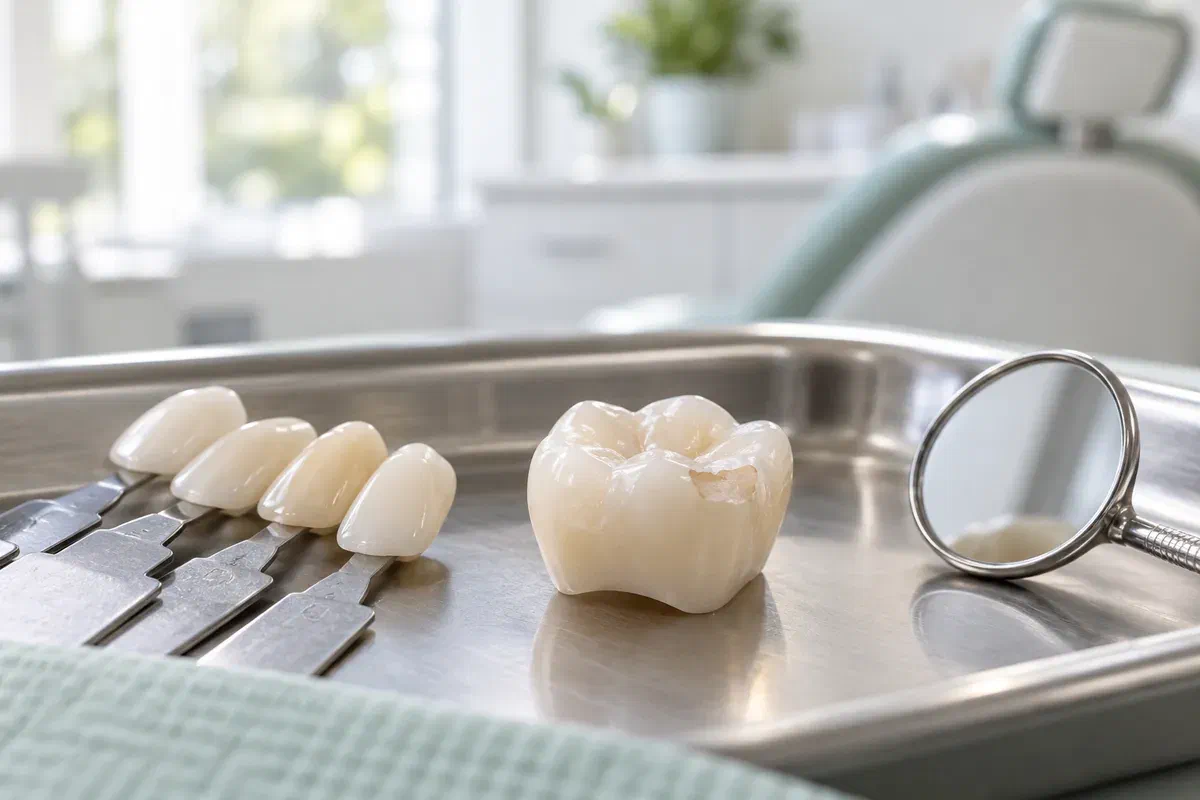
Ceramic crown with a small chipped area beside a shade guide
Clues worth sharing

What your crown and jaw may be telling you

Describe the damage alongside any jaw tightness, headaches or tooth sensitivity you have noticed. A minor chip may still be significant if it irritates your tongue, alters your bite or reflects pressure that keeps building.

A newly rough or flattened edge

Grinding can leave a crown with sharp or flattened areas. The dentist considers whether polishing is safe or whether it would remove too much material, change how the crown functions or leave an underlying fracture unaddressed.

A small piece missing from a visible crown

A chip at the front can catch your attention every time you smile. Say which part of the look troubles you, then find out how closely bonded material is likely to blend with the crown, both now and as the repair is exposed to ongoing pressure.

Damage on a back tooth that takes heavy force

Molars bear much of the load from clenching. The dentist studies where the opposing teeth hit the crown, because a localized repair on a surface under constant force may not hold up the way it would elsewhere.

Please tell us about any crown movement, pain, swelling or recent injury. Bite-related damage on the crown surface can occur together with a problem in the supporting tooth.

When repair is reasonable

Save the crown, and address the pressure behind it.

If the damage is limited and the crown remains secure, repairing it may preserve a restoration that still does its job. That is most worth considering when nothing in the tooth below calls for treatment that would make a surface repair unsuitable.

Keep in mind that repair material may not wear exactly like the original crown, particularly under heavy force. How long it lasts and how well it matches depend on your situation, and some repairs are meant only as a holding step. It is reasonable to ask whether you are getting a lasting solution or a bridge to replacement.

A fix in proportion to the chip

Minor wear does not necessarily mean the whole crown must go. Sometimes a modest touch-up is all the situation calls for; other times the worn area is so broad, or so loaded by your bite, that patching it would not be worth doing.

Comfort, function and appearance together

You might want sharp edges smoothed, a missing piece restored or simply a crown that feels normal again. Ask how the proposed repair meets that goal and which differences in finish may still show.

Attention to the cause, not just the chip

When grinding or clenching is involved, fixing the crown alone may simply reset the clock. The dentist can discuss whether further assessment or a protective appliance makes sense so that a repair has a fair chance.

Step by step

Read the wear, then plan the repair.

The right technique depends on the crown and the forces it faces. An examination comes first, followed by a plain explanation of your options, including the possibility that a new crown would suit you better.

  1. Examine the crown, tooth and bite

    The dentist checks the crown for wear, cracks and movement, looks at the gums and surrounding tissues and asks about symptoms such as jaw soreness. Records about the crown material help, but today’s findings lead the way.

  2. Decide on the scope of treatment

    Polish, rebuild or replace: each is weighed against the wear pattern you have. Ask how the tooth will look afterwards, how long the dentist expects the work to serve, how to shield it and what you would do if the grinding wins again.

  3. Treat the worn or chipped surface

    If repair is chosen, the area is prepared with a method appropriate for that type of crown. The dentist rebuilds and finishes the surface, or refines an edge when there is no need to add material.

  4. Check contacts and discuss protection

    Your bite is checked carefully against the treated area and you can describe how it feels. Ask what precautions apply in the short term and whether a review or a protective appliance is part of the plan.

Protecting your repair

Ease the load and keep things clean.

Ask what applies to your tooth in particular. A polished edge rarely needs special handling, whereas fresh bonding or a stopgap fix may call for a gentler few days, and grinding habits affect all three.

Notice and reduce clenching during the day

Many people clench without realizing it while driving, working or concentrating. Gently checking that your teeth are apart can ease pressure on a repaired crown. If grinding happens at night, the dentist can discuss whether protection would help.

Keep the margins and gum clean

Continue the brushing and interdental cleaning routine you have been shown. The crown edges and the gum around them still need daily care after a repair. Ask for advice if the new shape makes cleaning tricky.

Let us know if wear reappears

Contact the clinic if the repaired spot turns rough, looks different or chips again. Avoid filing it yourself at home. The team should check whether the plan, or the protection around it, needs adjusting.

Patient information: Cleveland Clinic — dental crowns

Your possible options

Different damage, different answers

Consider what each choice would correct and what it would not change, including the pressure on the tooth. Good advice reflects the state of the whole crown and your bite rather than the quickest way to hide a chip.

If nothing needs rebuilding

Smoothing a worn or sharp area

Polishing may resolve a minor rough patch when enough material remains and the contour stays suitable. The dentist confirms that smoothing will not leave a weak shape or conceal damage that needs another approach.

If a small area can be restored

A localized bonded repair

Some chips can be rebuilt with a suitable repair material. The crown material, the bonding surface available, the appearance you want and the strength of your bite all shape what is recommended and its limits.

When wear has gone too far

Replacement, with care for the tooth

Extensive wear, a large fracture, a loose crown or a problem underneath may make a new crown more appropriate. Any treatment the tooth needs is completed before replacement, and protection from grinding may be discussed.

Grinding and crown questions

What people ask after an unexplained chip

These answers connect the cause and size of the damage with what a repair can offer. They may help you get the most from your appointment.

(905) 876-4488
Can grinding my teeth really chip a crown?
Yes, it can contribute. Repeated grinding or clenching places strong forces on teeth and crowns, which can lead to wear or chipping over time. The dentist looks for signs of this during the exam and discusses whether it may be playing a role in your case.
Will I need a night guard after my crown is repaired?
Not everyone does. If there are signs of grinding or clenching, the dentist may discuss whether a protective appliance would help reduce stress on the crown. The decision depends on what the examination shows and your own symptoms.
Does a chip mean my crown was not made properly?
Not necessarily. Crowns can chip for many reasons, including grinding, a hard bite, an injury or the age of the restoration. The dentist assesses the crown as it is now and focuses on the most suitable next step for your tooth.
Can a crown repair hold up if I keep grinding?
Ongoing heavy force can shorten the life of any repair. That is why the cause is considered alongside the chip itself. Ask the dentist how your habits may affect the repair and what can be done to protect it.
If I’m coming from Brampton, how should I plan the visit?
When you call, mention the chip and any jaw symptoms so enough time can be set aside. Hours are Monday to Thursday 11am to 7pm, with Friday to Sunday by appointment. Call promptly if there is pain, swelling or a loose crown.
Is a localized repair as durable as a new crown?
It may not be, and durability depends on the crown, the size of the chip and the forces involved. Some repairs serve well for a long time, while others are interim steps. Ask the dentist what to expect for your situation.
Brampton crown repair

Find out what is wearing your crown down.

A chip from grinding is really two problems: the damaged surface and the force that caused it. At our Bronte Street clinic we look at both, check the tooth under the crown, and set out which repair, if any, is likely to last.

Keep any loose fragment in a small sealed container. Phone us promptly about strong pain, swelling or a crown that shifts, as those may mean you should be seen sooner.

Visit Milton Dental Clinic
Unit 1, 342 Bronte St. S, Milton, ON L9T 5B7
Get directions Clinic hours
Monday–Thursday
11am–7pm
Friday–Sunday
By appointment only

Areas we serve

  • Milton
  • Oakville
  • Mississauga
  • Georgetown
  • Halton Hills
  • Acton
  • Campbellville
  • Brampton
  • Burlington
  • Puslinch
  • Rockwood
  • Erin
  • Caledon
  • Etobicoke
  • Old Milton
  • Bronte Meadows
  • Timberlea
  • Dorset Park
  • Dempsey
  • Clarke
  • Beaty
  • Coates
  • Harrison
  • Scott
  • Willmott
  • Ford
  • Bowes
  • Cobden
  • Walker
  • Mountain View
  • Milton Heights
  • Hawthorne Village
  • Valley View
  • Fallingbrook
  • Nassagaweya
  • Trafalgar
  • Esquesing
  • Nelson
  • Brookville
  • Moffat
  • Glen Williams
  • Norval
  • Limehouse
  • Stewarttown
  • Ashgrove
  • Hornby
  • Silver Creek
  • Speyside
  • Scotch Block
  • North Oakville
  • River Oaks
  • Glen Abbey
  • West Oak Trails
  • Palermo
  • Bronte Creek
  • College Park
  • Joshua Creek
  • Uptown Core
  • Preserve
  • Iroquois Ridge
  • Lisgar
  • Meadowvale
  • Meadowvale Village
  • Churchill Meadows
  • Erin Mills
  • Central Erin Mills
  • Streetsville
  • East Credit
  • Creditview
  • Heartland
  • Sheridan
  • Mount Pleasant
  • Credit Valley
  • Huttonville
  • Churchville
  • Springbrook
  • Northwest Brampton
  • Bram West
  • Fletcher's Meadow
  • Fletcher's Creek South
  • Alton Village
  • Orchard
  • Millcroft
  • Headon Forest
  • Tansley
  • Brant Hills
  • Tyandaga
  • Kilbride
  • Lowville
  • Aberfoyle
  • Morriston
  • Arkell
  • Hillsburgh
  • Freelton
  • Carlisle
  • Waterdown
  • Flamborough
  • Mountsberg

How can we help?

Milton Dental Clinic

Have a question about your smile? Choose the option that works best for you.

For urgent dental concerns, please call.
Messages are reviewed during clinic hours.