

Illustrative patient consultation about damage to a dental crown
Restorative Dentistry

Dental Crown Repair in Burlington

You bit down on something hard and felt a piece of your crown give way. From Burlington, you can book an assessment that looks at the break, the crown material and the tooth it protects before anyone decides between repair and replacement.

Right after the crunch

Something cracked mid-bite. Here is what happens next.

An unpopped kernel, a cherry stone, a fork that slipped. Crowns are tough, yet a sudden hard bite can still chip or split one. The good news is that a small, well-contained break can sometimes be repaired, provided the crown around it is still worth keeping.

The first job is working out how far the damage goes. A flake off the surface of a firmly seated crown is a different matter from a crack that runs right through it, or from a crown that has started to lift or hides decay at its edge. Repairs are only appropriate once those deeper issues have been ruled out or addressed.

When you phone from Burlington, describe what you were eating, whether a piece came loose and how the tooth feels now. At the appointment we examine the whole crown and the tooth supporting it, then talk you through smoothing, a localized repair or a new crown, along with what each one realistically offers.

Book a visit after a break
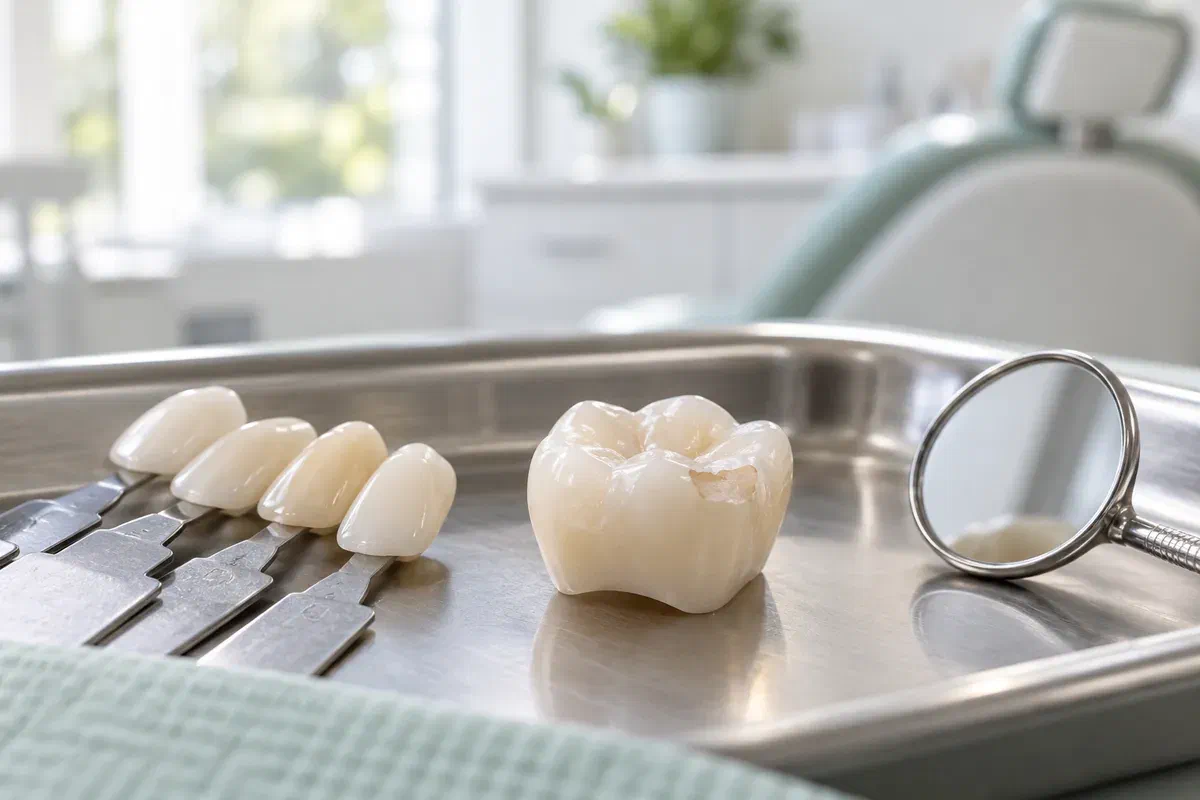
Ceramic crown with a small chipped area beside a shade guide
What you might feel now

Sharp, uneven or simply different?

Your description helps the dentist decide how quickly to see you. Note whether the edge cuts your tongue, whether your teeth now meet unevenly and whether anything aches, since a tiny visible flake can sit on top of a larger fracture.

Your tongue keeps returning to a jagged spot

A new sharp edge is uncomfortable and worth checking soon. In some cases it can be refined safely in the chair. In others, smoothing would thin the crown too far, spoil its shape or cover up a crack that needs different care.

A gap shows where the piece broke off

Breaks on visible crowns tend to bother people most. Tell the dentist what you would like improved and ask how closely bonded material is likely to match the crown, both right away and over the years that follow.

Chewing on that side feels off

Breaks on the back teeth usually happen where chewing force is greatest. The dentist checks how your opposing teeth now strike the crown, because that pressure strongly affects whether a small repair would last.

Tell us if the crown moves, if biting hurts, if there is swelling, or if the break came from a fall or blow. A damaged crown and an injured tooth can show up together.

Is a fix enough?

Not every break means starting over.

If only a small section broke and the rest is sound, repairing that section can keep a crown that still fits and functions. That route is worth a conversation when the crown is firmly attached and the tooth beneath shows no problem that would make a surface fix the wrong call.

Bear in mind that repair material and the original crown rarely age identically. How well a repair holds up and how closely it matches will depend on where and how the crown broke, and some fixes are only intended to tide you over. Ask which of those you are being offered.

Matching effort to damage

A single chip does not automatically justify removing a crown. Examination reveals when a smaller fix is reasonable and when the break is too large, or lands somewhere too demanding, for repair to be sensible.

A plan that covers looks and chewing

You may simply want the sharp edge gone, or you may want the missing piece rebuilt. Ask how each approach deals with your concern and whether the repaired spot could look slightly different afterwards.

Learning why it broke

One hard bite can explain a single chip, but repeat breaks suggest something else is going on. The dentist can look at your bite and habits so the repair is not simply waiting for the next failure.

From phone call to finished repair

Four steps, starting with a careful exam

No two broken crowns are handled exactly alike. You will be examined first and given a clear explanation of what is possible, including the chance that replacing the crown makes more sense than patching it.

  1. Find the full extent of the break

    The dentist examines the crown for cracks and movement, checks the gum and tissues around it and asks about your symptoms. Old notes on the crown material are useful, but what is seen today carries the most weight.

  2. Choose between smoothing, repair or replacement

    You and the dentist discuss which approach suits the break. Ask how the finished tooth should look, what the repair is expected to do, how to care for it and what would happen if it broke again.

  3. Prepare and rebuild the area

    If repair is the plan, the broken surface is prepared using a technique suited to that crown material. The dentist then builds and polishes the new section, or simply rounds off an edge when that is all it needs.

  4. Check how your teeth come together

    Your bite is tested against the repaired surface and you can say whether anything feels high or rough. Ask what to avoid for the first while and whether a follow-up is booked, especially for a temporary fix.

The days that follow

Chew with a little extra thought.

Precautions depend on exactly what was done. A smoothed edge usually asks less of you than a bonded build-up or a short-term repair, so confirm the instructions for your tooth before you return to your regular habits.

Steer clear of the foods that started it

Kernels, pits, ice and hard candy can stress a repaired section just as they stressed the original crown. If you grind or clench, say so, since the dentist may want to discuss whether a night guard or further assessment is appropriate.

Clean around the crown every day

Brush and clean between your teeth as you have been advised. Plaque still gathers where the crown meets the tooth after any repair, so that edge needs regular care. Ask the team if the new contour makes flossing harder.

Call if the edge changes again

Contact us if the repaired area roughens, looks different or chips once more. Avoid sanding or filing it yourself at home. A fresh examination will show whether the original approach is still suitable.

Patient information: Cleveland Clinic — dental crowns

Three possible routes

How much of the crown can stay?

The answer guides which route fits. Ask the dentist to explain what each option would correct and what it would leave in place, and how they judged the condition of the crown overall.

When the break is tiny

Rounding off a rough edge

Some small chips only need polishing, provided the crown keeps enough thickness and a sensible shape. The dentist makes sure refinement will not leave a weak contour or hide a crack that calls for something else.

When a missing section can be rebuilt

Bonding new material into the gap

For certain breaks, repair material can be bonded to the remaining crown. Which kind of crown you have, the bonding surface left, the result you want and the force your bite delivers will each affect what is advised.

If too much has fractured

Replacing the crown

A deep fracture, a loose or poorly fitting crown, repeated breakage or a problem underneath can make a new crown the better option. Any treatment the tooth needs first is planned in before the replacement is made.

Broken crown questions

Before you book, you may be wondering...

These answers link what happened to your crown with what a repair might achieve. Use them to prepare for the conversation at your appointment.

(905) 876-4488
Should I save the piece that broke off my crown?
Yes, if you can find it. Rinse it gently and keep it in a small sealed container. It may not be reattached, but it can help the dentist understand how the crown broke. Do not try to glue it back on yourself.
Can I use a dental repair kit from the pharmacy in the meantime?
It is best to call before using anything. Some temporary products can make the area harder to assess or treat. If an edge is cutting your cheek or tongue, the team can suggest a safe way to manage until your visit.
What if my crown cracked but nothing actually came off?
A crack without a missing piece still needs examination. It may be limited to the surface or it may extend further. The dentist checks the crown and the tooth beneath before deciding whether polishing, repair or replacement is appropriate.
Do all crown materials accept a repair equally well?
No. Porcelain, metal and other crown materials each bond in their own way, and a repair also needs enough healthy surface to hold onto. Paperwork from the dentist who made the crown is handy if you have it, though the method is chosen from what the examination shows.
Is a temporary repair just a way to delay a new crown?
Not always. A short-term fix can protect the tooth while something else is checked or while a fuller plan comes together. You should leave knowing its purpose, how gently to treat that side for now, and roughly when you will revisit the decision.
How do I plan a crown repair visit around a Burlington workday?
Weekday hours run from 11am to 7pm Monday to Thursday, which can suit an after-work visit, and Friday to Sunday appointments are available by arrangement. Mention any pain or looseness when you call so the team can judge how soon you should come in.
Burlington crown repairs

Broke a crown? Start with a proper look.

Book time at our Bronte Street clinic to have a chipped or cracked crown examined. We check the break, the restoration around it and the tooth that supports it, explain what a repair can reasonably do, and help you pick a sensible next step.

Bring the broken piece if you have it. Call right away about severe pain, swelling or a crown that has come loose so urgency can be discussed.

Visit Milton Dental Clinic
Unit 1, 342 Bronte St. S, Milton, ON L9T 5B7
Get directions Clinic hours
Monday–Thursday
11am–7pm
Friday–Sunday
By appointment only

Areas we serve

  • Milton
  • Oakville
  • Mississauga
  • Georgetown
  • Halton Hills
  • Acton
  • Campbellville
  • Brampton
  • Burlington
  • Puslinch
  • Rockwood
  • Erin
  • Caledon
  • Etobicoke
  • Old Milton
  • Bronte Meadows
  • Timberlea
  • Dorset Park
  • Dempsey
  • Clarke
  • Beaty
  • Coates
  • Harrison
  • Scott
  • Willmott
  • Ford
  • Bowes
  • Cobden
  • Walker
  • Mountain View
  • Milton Heights
  • Hawthorne Village
  • Valley View
  • Fallingbrook
  • Nassagaweya
  • Trafalgar
  • Esquesing
  • Nelson
  • Brookville
  • Moffat
  • Glen Williams
  • Norval
  • Limehouse
  • Stewarttown
  • Ashgrove
  • Hornby
  • Silver Creek
  • Speyside
  • Scotch Block
  • North Oakville
  • River Oaks
  • Glen Abbey
  • West Oak Trails
  • Palermo
  • Bronte Creek
  • College Park
  • Joshua Creek
  • Uptown Core
  • Preserve
  • Iroquois Ridge
  • Lisgar
  • Meadowvale
  • Meadowvale Village
  • Churchill Meadows
  • Erin Mills
  • Central Erin Mills
  • Streetsville
  • East Credit
  • Creditview
  • Heartland
  • Sheridan
  • Mount Pleasant
  • Credit Valley
  • Huttonville
  • Churchville
  • Springbrook
  • Northwest Brampton
  • Bram West
  • Fletcher's Meadow
  • Fletcher's Creek South
  • Alton Village
  • Orchard
  • Millcroft
  • Headon Forest
  • Tansley
  • Brant Hills
  • Tyandaga
  • Kilbride
  • Lowville
  • Aberfoyle
  • Morriston
  • Arkell
  • Hillsburgh
  • Freelton
  • Carlisle
  • Waterdown
  • Flamborough
  • Mountsberg

How can we help?

Milton Dental Clinic

Have a question about your smile? Choose the option that works best for you.

For urgent dental concerns, please call.
Messages are reviewed during clinic hours.