

Illustrative patient consultation about damage to a dental crown
Restorative Dentistry

Dental Crown Repair in Milton

When a crown chips, wears rough or cracks, the right response depends on more than the visible mark. Book a visit in Milton to find out how the crown material, the size of the damage and the tooth underneath shape your options.

Crown damage, close to home

Your tongue found the chip. Now find out what it means.

Most people discover crown damage the same way: a sharp spot during dinner, or a corner that suddenly feels different. A crown protects the tooth beneath it, yet the crown can still chip, wear down or fracture. Sometimes a limited repair is enough, provided the rest of the restoration is still in good shape.

A rough edge on a sound crown is a very different situation from a crack running through it, or a crown with trouble underneath. Covering a chip should never disguise a loose fit, decay or another issue that needs its own treatment, so the whole crown and the supporting tooth are examined together.

When you come in to our Milton office, let us know when the change appeared and whether it affects chewing, comfort or how your smile looks. From there we can talk through polishing, a localized repair, a replacement or another route, and explain the realistic limits of each before you decide.

Have the chip examined
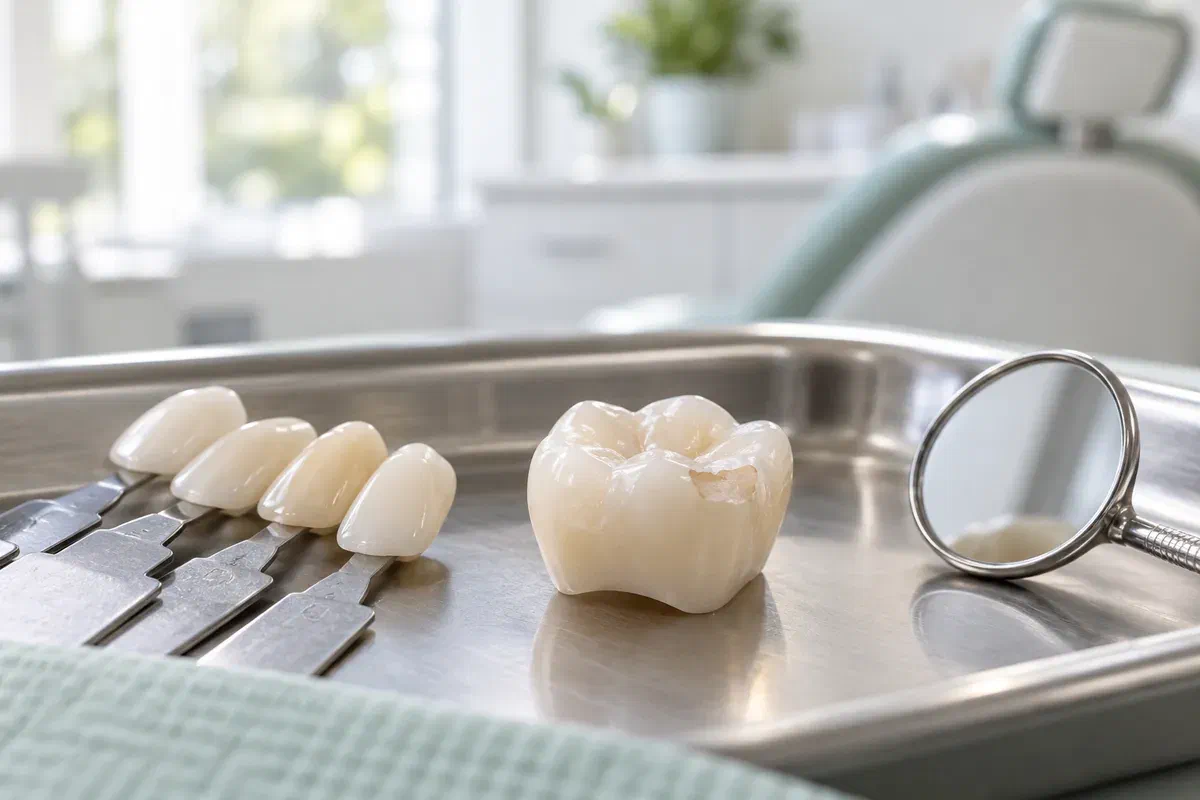
Ceramic crown with a small chipped area beside a shade guide
Signs that bring people in

A small chip can still matter a great deal.

Tell us what changed and what you feel when you bite or speak. Even a tiny defect can be important if it scratches your tongue, alters how your teeth meet, or turns out to be the visible part of something larger.

An edge that catches your tongue

A spot that has turned sharp overnight is worth having examined. The dentist can judge whether it can be smoothed safely, or whether smoothing would thin the crown too much, change its shape, or leave a deeper problem in place.

A front crown that no longer looks right

When part of the outer surface breaks away, a front crown can catch the eye. Describe what bothers you about how it looks, and ask how closely a repair is likely to blend with the existing material over time.

Damage where you do most of your chewing

A chip on a biting surface faces heavier demands than one tucked away from the bite. The dentist looks at where the opposing teeth land on the crown and whether a local repair would hold up in that spot.

Let us know about any movement in the crown, pain, swelling or a recent knock. Surface damage and a problem with the tooth underneath can happen at the same time.

Why repair is sometimes enough

Keep a crown that still serves you well.

If the defect is small and well placed, a repair may let you keep a crown that otherwise does its job. That option is worth exploring when the crown remains firmly in place and the tooth beneath does not need treatment that would rule repair out.

A repaired patch may wear or look a little different from the original material. How long it lasts and how well the colour matches depend on the situation, and some repairs are really a holding measure. Ask whether the plan is meant to last or to bridge the gap until a replacement.

Treatment scaled to the problem

A minor flaw does not always justify removing a whole crown. A careful assessment shows when a smaller approach is sensible and when the damage is too large, or sits in the wrong place, for that to help.

Attention to both looks and use

You might want a smoother edge, a better contour or a missing surface rebuilt. Ask how the proposed repair deals with your specific concern and whether any difference in shine or shade may still show.

Answers about repeat chipping

If this crown has broken before, it is worth asking why that area keeps giving way. A repair makes more sense when the conditions around it are reviewed too, instead of treating each break as a one-off.

What a Milton appointment involves

Examine first, then agree on a scope that fits.

The method depends on the crown and on the damage. Your visit starts with an examination and a clear explanation of the choices, and that explanation includes the possibility that a new crown is the better route.

  1. Look closely at the crown and tooth

    The dentist checks the condition and stability of the crown, the gum and tissues around it, and any symptoms you mention. Notes about the crown material or earlier work can help, but today’s examination guides the recommendation.

  2. Decide how far treatment should go

    Together you weigh smoothing, a bonded repair or a new restoration. Ask about the appearance you can expect, what the repair is meant to do, how to look after it, and what happens if it chips again.

  3. Carry out the surface work

    If a repair suits the situation, the area is prepared with a method matched to the crown material. The dentist then shapes and finishes the repair, or simply refines the edge when adding material is not needed.

  4. Check your bite and plan next steps

    The treated area and the way your teeth meet are checked, and you can say how the crown feels. Ask about precautions for the first while and any review visit, especially if the repair is temporary.

After your crown repair

Keep it clean and watch for changes.

Your instructions should match the work that was actually done. A polished edge, a bonded addition and a temporary repair can each call for different early precautions, so check with the team before going back to your normal habits.

Go easy on concentrated force

Cracking hard foods or tearing open packaging with your teeth can stress a small repaired area. If you grind or clench, mention it so the dentist can talk about whether more assessment or protection makes sense.

Keep caring for the tooth and gum

Stay with your recommended brushing and cleaning between teeth. A repaired crown still needs its edges and the gum around it kept clean. If the new shape makes flossing awkward, ask for tips.

Speak up about roughness or change

Call the clinic if the repair feels rough, looks different or breaks again. Please do not file it down yourself. The team needs to see whether the original approach still suits the tooth.

Patient information: Cleveland Clinic — dental crowns

Repair, refine or replace

What stays sound decides the right repair.

Think about what each option would fix and what it would leave as it is. A good recommendation explains the state of the whole crown, not just the quickest way to cover a chip.

When nothing needs adding

Smoothing a minor rough spot

A small surface flaw can sometimes be polished, as long as enough material remains and the shape stays suitable. The dentist makes sure refining it will not leave a poor contour or hide damage that needs a different plan.

When a small area can be restored

Rebuilding a limited defect

For selected chips, a suitable repair material can be bonded in place. The crown material, the surface available for bonding, the look you want and your bite all affect the recommendation and its limits.

When the damage goes further

A new crown or treatment beneath

A large fracture, a poor fit, repeated breakage or a problem under the crown can make replacement the better choice. If the tooth itself needs care, that is built into the plan before a new crown is made.

Crown repair questions

Clear answers before you commit to a repair.

A helpful conversation links the size and position of the damage with what you hope to achieve. These questions can help you judge whether a limited repair is sensible for your crown.

(905) 876-4488
Should I wait to see whether a small chip gets worse before booking?
It is usually better to have it examined while it is still small. A chip can hide a crack or a problem beneath the crown, and an early look gives more options. If it is painful, swollen or loose, call rather than waiting for a routine slot.
Is it safe to keep chewing on a chipped crown until my appointment?
Many people can manage by favouring the other side and avoiding very hard or sticky foods. If the crown moves, a sharp edge cuts your cheek or tongue, or biting hurts, contact the clinic so the team can advise you on how soon to come in.
How can a dentist tell what my crown is made of?
The examination, the appearance of the damaged area and any past records all help. Different materials call for different repair methods, so bring paperwork if you have it. Without records, the dentist still assesses the crown directly before suggesting an approach.
Why does the chipped part of my crown look darker or a different colour?
Some crowns are built in layers, so a chip can reveal an underlying material. That colour change alone does not show whether the crown has failed. The dentist checks how deep the damage goes and what remains intact before discussing your options.
Will I be able to see where the crown was repaired?
A perfect match cannot be promised. The existing shade, translucency and the position of the chip all influence how the repair blends. Ask what is realistic for your tooth, especially if it sits at the front of your smile.
What happens if a repaired crown chips a second time?
A second break does not automatically mean losing the tooth. The dentist reassesses the crown, the support beneath it and why the damage recurred. Depending on what is found, a new crown or a different approach may be discussed.
Crown repair in Milton

Bring the chip in while it is still small.

Visit our Bronte Street practice to have a chipped, rough or damaged crown looked at. We will examine the restoration and the tooth beneath it, explain what a repair can and cannot do, and help you compare sensible next steps.

Keep any broken piece in a clean, sealed container. Call about strong pain, swelling or a loose crown so we can talk about how soon you should be seen.

Visit Milton Dental Clinic
Unit 1, 342 Bronte St. S, Milton, ON L9T 5B7
Get directions Clinic hours
Monday–Thursday
11am–7pm
Friday–Sunday
By appointment only

Areas we serve

  • Milton
  • Oakville
  • Mississauga
  • Georgetown
  • Halton Hills
  • Acton
  • Campbellville
  • Brampton
  • Burlington
  • Puslinch
  • Rockwood
  • Erin
  • Caledon
  • Etobicoke
  • Old Milton
  • Bronte Meadows
  • Timberlea
  • Dorset Park
  • Dempsey
  • Clarke
  • Beaty
  • Coates
  • Harrison
  • Scott
  • Willmott
  • Ford
  • Bowes
  • Cobden
  • Walker
  • Mountain View
  • Milton Heights
  • Hawthorne Village
  • Valley View
  • Fallingbrook
  • Nassagaweya
  • Trafalgar
  • Esquesing
  • Nelson
  • Brookville
  • Moffat
  • Glen Williams
  • Norval
  • Limehouse
  • Stewarttown
  • Ashgrove
  • Hornby
  • Silver Creek
  • Speyside
  • Scotch Block
  • North Oakville
  • River Oaks
  • Glen Abbey
  • West Oak Trails
  • Palermo
  • Bronte Creek
  • College Park
  • Joshua Creek
  • Uptown Core
  • Preserve
  • Iroquois Ridge
  • Lisgar
  • Meadowvale
  • Meadowvale Village
  • Churchill Meadows
  • Erin Mills
  • Central Erin Mills
  • Streetsville
  • East Credit
  • Creditview
  • Heartland
  • Sheridan
  • Mount Pleasant
  • Credit Valley
  • Huttonville
  • Churchville
  • Springbrook
  • Northwest Brampton
  • Bram West
  • Fletcher's Meadow
  • Fletcher's Creek South
  • Alton Village
  • Orchard
  • Millcroft
  • Headon Forest
  • Tansley
  • Brant Hills
  • Tyandaga
  • Kilbride
  • Lowville
  • Aberfoyle
  • Morriston
  • Arkell
  • Hillsburgh
  • Freelton
  • Carlisle
  • Waterdown
  • Flamborough
  • Mountsberg

How can we help?

Milton Dental Clinic

Have a question about your smile? Choose the option that works best for you.

For urgent dental concerns, please call.
Messages are reviewed during clinic hours.