

Illustrative patient consultation about damage to a dental crown
Restorative Dentistry

Dental Crown Repair in Mississauga

A crown that has felt slightly rough for weeks is easy to put off. For people in Mississauga ready to deal with it, we examine the damage, identify what the crown is made of and check the tooth underneath before recommending anything.

The repair you have been postponing

How long is too long to live with a rough crown?

It does not hurt, so it slides down the to-do list. Meanwhile your tongue keeps checking the spot. Crowns can chip, wear thin or develop small fractures over time, and when the problem stays limited, a repair may be all that is needed to keep the rest of the crown in service.

Waiting does carry a cost if the visible flaw is part of something larger. A worn patch on a crown that sits snugly is one thing. A crack through the restoration, a margin that has started to leak or decay underneath is another, and none of those should simply be covered over.

Coming from Mississauga, it can help to bundle this into one well-prepared visit. Tell us roughly when you first noticed the change, whether it affects chewing or comfort and whether its appearance bothers you. We then compare smoothing, a localized repair, a new crown or other care, and explain what each can and cannot do.

Finally get it checked
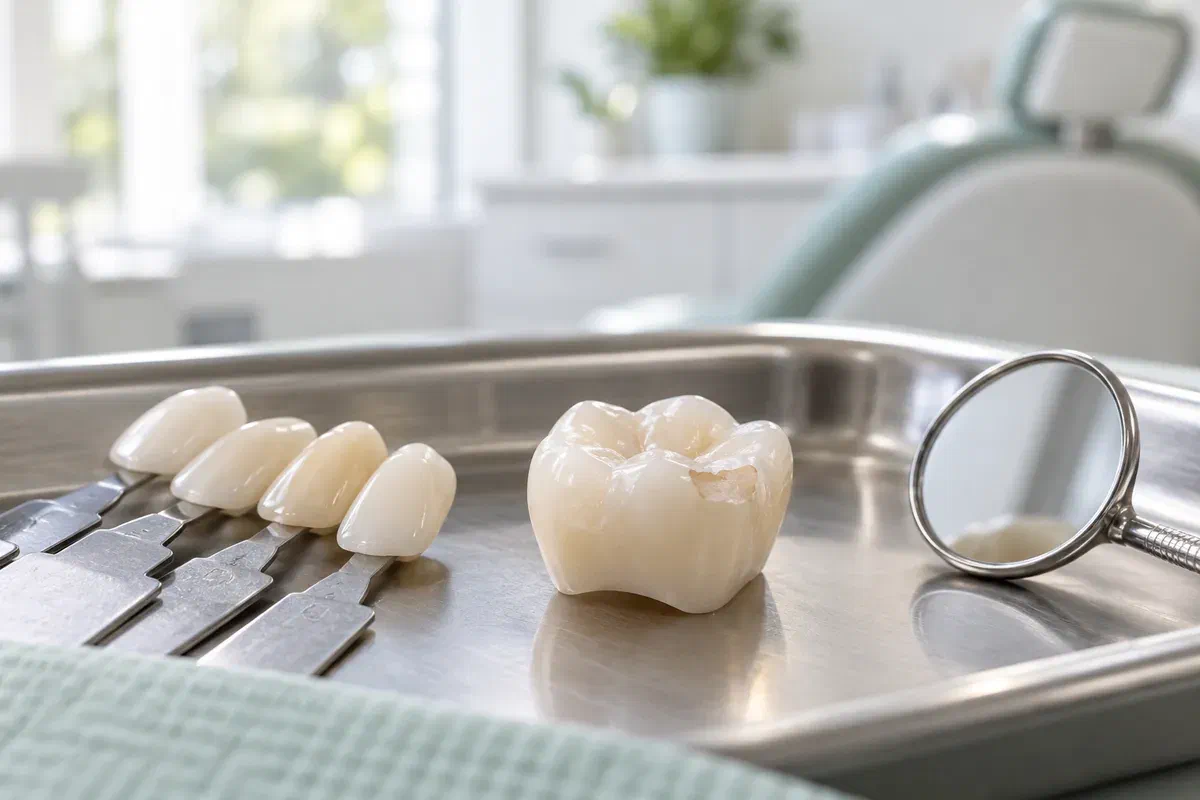
Ceramic crown with a small chipped area beside a shade guide
Small things that add up

Three changes worth mentioning

Let the dentist know how the crown has behaved since you first noticed it. A defect that seems minor can still matter if it irritates soft tissue, alters how you bite or turns out to be the tip of a deeper break.

Your tongue is sore from rubbing a spot

Persistent rubbing against a rough area can leave the tongue or cheek tender. The dentist judges whether the edge can be polished without weakening the crown or changing its shape, and whether something underneath needs attention first.

The chip has slowly become more noticeable

A small mark can seem to grow as you keep looking at it, or it may genuinely be getting larger. Describe what has changed, and ask how well a repair is likely to blend with this particular crown over time.

You have started chewing on the other side

Avoiding a tooth is often a sign the damage sits where your bite lands. The dentist maps how the opposing teeth contact the crown, since those forces decide whether a localized repair is a reasonable choice.

Mention any looseness, sensitivity, swelling or an injury you may have forgotten about. A rough crown surface and a problem in the tooth below it can develop side by side.

Why it can be worth acting

Fix the small flaw while it is still small.

Dealing with a limited defect promptly may let you keep a crown that otherwise works well. Repair is most reasonable when the crown is still firmly attached and the tooth beneath it does not need treatment that would make a surface fix pointless.

Be prepared for a repair to differ slightly from the original material in look and wear. Longevity and shade matching vary from case to case, and some repairs are meant only to hold things steady for a while. Ask the dentist whether yours is intended as lasting care or a step toward replacement.

Treatment that fits the flaw

Removing a whole crown for a minor irregularity is not always necessary. Assessment shows when a modest approach makes sense and when the damage is too widespread, or too exposed to biting, for repair to help.

Comfort and appearance both considered

For some people the goal is a tongue that stops hurting, for others a smile that looks complete again. Ask how the planned repair addresses your goal and whether a small difference in finish may remain.

A reason to look at the cause

Roughness that keeps coming back may mean the crown is facing heavy wear from grinding or a tight bite. Reviewing those conditions gives a repair a better chance than treating each new flaw as a separate accident.

One organized appointment

Examined, explained, treated and checked

Methods vary with the crown and the damage it has. The visit opens with an examination and a straightforward explanation of what is possible, including the chance that a new crown would be the sounder plan.

  1. Inspect the crown and surrounding gum

    The dentist examines the crown for wear, cracks and movement, looks at the nearby tissues and listens to how the tooth has felt. Past records may help identify the material, but the current findings lead the advice.

  2. Talk through how far to go

    Smoothing, a bonded repair or replacement are compared for your situation. Ask about the finish you can expect, the role the repair will play, day-to-day care and what the plan would be if it fails.

  3. Smooth or rebuild the area

    When repair is suitable, the damaged surface is prepared with a technique that matches the crown material. The dentist then shapes and polishes the repair, or refines the rough patch alone if nothing needs adding.

  4. Check the feel and agree on follow-up

    Your bite against the treated surface is tested and you can point out anything that feels high or rough. Ask which precautions apply for now and whether a review is planned, particularly for a temporary repair.

Once the rough spot is gone

Notice early, clean well, bite sensibly.

Aftercare should fit what was actually done. A polished surface, a bonded build-up and an interim repair can each need slightly different precautions, so confirm the details before going back to your normal routine.

Keep hard objects away from the repair

Pens, ice cubes, bottle caps and tough packaging all place concentrated force on a small repaired area. If you grind or clench, especially at night, mention it so the dentist can discuss assessment or protection.

Look after the crown edge and gum

Continue your recommended brushing and interdental cleaning. A smoother crown still needs its margins kept free of plaque, and the gum beside it needs the same care. Ask for a tip if the new contour is awkward to floss.

Book in if roughness returns

Get in touch if the area turns rough again, changes colour or breaks. Do not try to smooth it with a file or emery board. The team will check whether the first approach still suits the tooth.

Patient information: Cleveland Clinic — dental crowns

Matching care to the crown

Polish it, patch it or replace it

None of these is automatically right. The choice follows from the overall health of the crown, so expect the dentist to explain that first and the convenient fix for the rough spot second.

For minor roughness

Polishing the surface smooth

Light polishing can sometimes remove a small irregularity, provided enough material remains and the contour stays healthy. The dentist confirms that smoothing will not weaken the crown or hide damage that needs another approach.

For a contained chip

Bonding a small repair

Selected defects can be rebuilt with a suitable repair material. Your crown type, the surface left for bonding, the appearance you want and the pressures from your bite all inform the advice and its limits.

For wider or repeated damage

A new crown, with any needed tooth care

A large fracture, a poor seal, chips that keep coming back or a concern beneath the crown can make replacement the better path. Treatment the tooth needs is arranged first so the new crown sits on a healthy base.

Things people wonder about

Rough crown, honest answers

These questions tie the size and position of a defect to what you hope to gain. They can help you prepare for a focused, useful appointment.

(905) 876-4488
My crown has felt rough for months but never hurt. Does it still need a visit?
It is worth having examined. Many crown problems are painless at first, and roughness can sometimes signal wear or a small fracture. A check lets the dentist decide whether simple polishing, repair or a closer look at the tooth is appropriate.
Can a rough crown wear down the teeth it bites against?
A rough or chipped surface can be harder on opposing teeth than a smooth one. This is one reason the dentist may suggest polishing or repairing a defect even when it causes no pain. Your bite is checked as part of that decision.
What if the chipped crown is part of a bridge?
A bridge links several units together, so a chip on one affects the whole restoration. Repair may still be considered, but the dentist looks at the bridge as a unit, including its supports, before suggesting the most suitable approach.
I’m coming from Mississauga. Can I share details before the visit?
Yes. When you call, describe the crown, when the change started and any symptoms. If you have records from the dentist who placed it, bring them. Preparing this way helps the appointment focus on decisions rather than background.
Can polishing my crown affect how my teeth fit together?
It can when the rough area is part of your bite, so refinement is done in small steps and the contacts are checked afterwards. Avoid home tools such as nail files or sandpaper, which can damage the crown and the tooth.
Does the inner layer showing through mean the crown is finished?
Not necessarily. Many crowns are made in layers, and a chip can reveal what lies beneath the outer surface. The dentist checks how deep the damage goes and how much sound material remains before suggesting repair, replacement or monitoring.
Crown care from Mississauga

Cross it off the list this month.

Visit our Bronte Street clinic for a thorough look at a rough, chipped or worn crown. We examine the restoration and the tooth supporting it, set out what a repair could realistically achieve, and help you compare the choices that fit.

Bring any piece that broke off in a sealed container. Call promptly about sharp pain, swelling or a crown that has loosened so the right timing can be arranged.

Visit Milton Dental Clinic
Unit 1, 342 Bronte St. S, Milton, ON L9T 5B7
Get directions Clinic hours
Monday–Thursday
11am–7pm
Friday–Sunday
By appointment only

Areas we serve

  • Milton
  • Oakville
  • Mississauga
  • Georgetown
  • Halton Hills
  • Acton
  • Campbellville
  • Brampton
  • Burlington
  • Puslinch
  • Rockwood
  • Erin
  • Caledon
  • Etobicoke
  • Old Milton
  • Bronte Meadows
  • Timberlea
  • Dorset Park
  • Dempsey
  • Clarke
  • Beaty
  • Coates
  • Harrison
  • Scott
  • Willmott
  • Ford
  • Bowes
  • Cobden
  • Walker
  • Mountain View
  • Milton Heights
  • Hawthorne Village
  • Valley View
  • Fallingbrook
  • Nassagaweya
  • Trafalgar
  • Esquesing
  • Nelson
  • Brookville
  • Moffat
  • Glen Williams
  • Norval
  • Limehouse
  • Stewarttown
  • Ashgrove
  • Hornby
  • Silver Creek
  • Speyside
  • Scotch Block
  • North Oakville
  • River Oaks
  • Glen Abbey
  • West Oak Trails
  • Palermo
  • Bronte Creek
  • College Park
  • Joshua Creek
  • Uptown Core
  • Preserve
  • Iroquois Ridge
  • Lisgar
  • Meadowvale
  • Meadowvale Village
  • Churchill Meadows
  • Erin Mills
  • Central Erin Mills
  • Streetsville
  • East Credit
  • Creditview
  • Heartland
  • Sheridan
  • Mount Pleasant
  • Credit Valley
  • Huttonville
  • Churchville
  • Springbrook
  • Northwest Brampton
  • Bram West
  • Fletcher's Meadow
  • Fletcher's Creek South
  • Alton Village
  • Orchard
  • Millcroft
  • Headon Forest
  • Tansley
  • Brant Hills
  • Tyandaga
  • Kilbride
  • Lowville
  • Aberfoyle
  • Morriston
  • Arkell
  • Hillsburgh
  • Freelton
  • Carlisle
  • Waterdown
  • Flamborough
  • Mountsberg

How can we help?

Milton Dental Clinic

Have a question about your smile? Choose the option that works best for you.

For urgent dental concerns, please call.
Messages are reviewed during clinic hours.