A rough edge that bothers your tongue
This is often manageable for a short while, but it should be examined. Smoothing may solve it in one quick step, unless doing so would thin the crown excessively, change its shape or overlook a crack beneath.


Sometimes a damaged crown needs a sensible stopgap now and a fuller plan later. For people in Puslinch juggling a busy season, we can assess the break, the material and the tooth underneath, then help you map out what happens when.
Crowns rarely chip at a convenient moment. Harvest, a big work project or a houseful of guests can make several appointments feel impossible. The useful news is that some damage can be handled with a limited repair, either as lasting care or as a planned holding step.
What decides that is the state of the crown and tooth, not the calendar. A flake off a crown that still sits tightly can often wait for a simple fix. A crack that runs deep, a crown that wobbles or decay at the margin cannot safely be parked, and no repair should be used to hide them.
Coming from Puslinch, you can tell us up front what your schedule looks like over the next few months. Describe when the damage happened, how it affects chewing and comfort, and whether appearance matters for this tooth. We will explain the options, from polishing and localized repair to replacement or other care, and how they could be sequenced.
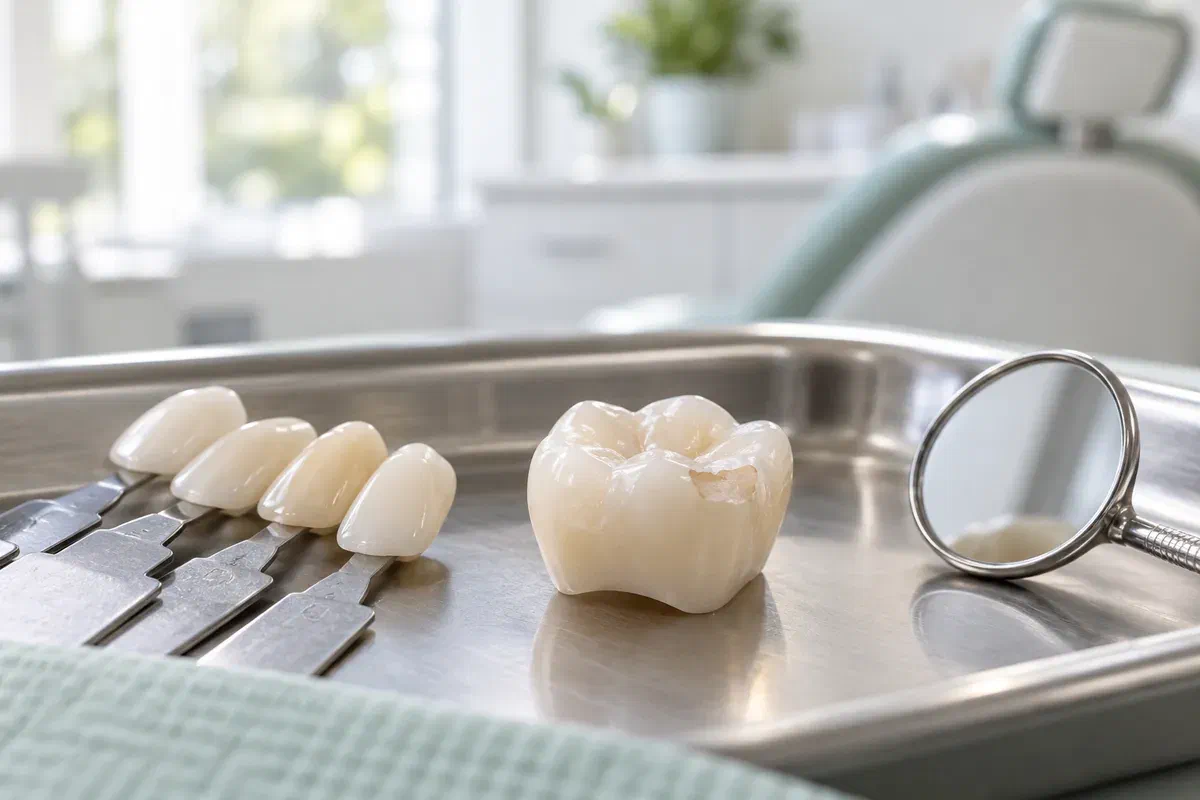
Your symptoms help sort that out. A chip that looks minor still deserves attention if it cuts your tongue, throws off your bite or is the visible edge of a fracture that could worsen with use.
This is often manageable for a short while, but it should be examined. Smoothing may solve it in one quick step, unless doing so would thin the crown excessively, change its shape or overlook a crack beneath.
A chip on a visible crown can feel urgent socially even when it is not urgent clinically. Say how much it bothers you, and ask how well a repair would blend in now and whether that might change later.
Back crowns take the brunt of chewing. The dentist looks at how the opposing teeth contact the damaged area, because heavy force may make a stopgap less reliable and push the timeline forward.
Pain, swelling, a loose crown or a recent blow to the face change the priority. Surface damage and a problem with the supporting tooth can appear together, so call promptly if any of these apply.
For a small, well-placed defect on a secure crown, repair may be all the tooth needs. In other cases it serves as a holding measure that protects the area until replacement can be scheduled. Either way, it is only appropriate when nothing in the tooth below requires treatment first.
Be clear about which kind of repair you are getting. Bonded material may look or wear slightly differently from the original crown, and a holding repair is not designed to last indefinitely. Ask how long the dentist expects it to serve and what signs would mean the plan needs to move faster.
Removing an entire crown for a small chip is not always necessary. An examination shows when a limited approach is sensible and when the damage is too large, or sits under too much load, to justify it.
Knowing whether you can wait a few months for replacement, or whether a repair is likely to be the final answer, makes scheduling far easier. Ask the dentist to spell out the timeline.
If this crown has chipped before, a stopgap may just delay the next break. The dentist can look at your bite, grinding habits or the crown’s age so the longer-term plan addresses the cause.
The method depends on the crown and the damage. Your appointment starts with an examination, then a straightforward conversation about what needs doing now, what can wait and whether a new crown is the better long-term route.
The dentist checks the crown’s stability and condition, the surrounding gum and tissues and any symptoms you report. Records about the crown material help, but today’s findings drive the recommendation.
You discuss polishing, a bonded repair or replacement, and whether a holding step makes sense. Ask what each option involves, how it should be cared for and how quickly the next stage would need to follow.
Whatever was agreed for today gets done: the chipped surface is readied in a way that suits that crown, then built up and finished. When only an edge needs attention, the dentist refines it without adding material.
The dentist confirms your teeth meet comfortably on the treated area. Ask about precautions until the next step and, if replacement is planned, book or pencil in that appointment before you leave.
Instructions depend on what was done. A polished edge may need very little care, while bonded material or a temporary repair may have specific early precautions. Confirm yours, especially if a further visit is planned.
Very hard foods, ice and using your teeth as tools are tough on bonded material, particularly a holding repair. If you clench or grind during long working days or at night, mention it so the dentist can discuss protection.
Brush and clean between your teeth as advised, even when time is tight. The crown’s edges and the gum beside them still need attention after a repair. Ask for tips if the area is awkward to reach.
Call the clinic if the repair roughens, loosens or breaks, rather than waiting for your scheduled visit. Do not file it at home. The team can decide whether the next step should come sooner.
Patient information: Cleveland Clinic — dental crowns
These answers link the type of damage with how much flexibility you have on timing. They can help you build a plan that is realistic and safe for the tooth.
Book time at our Bronte Street clinic to have a chipped or damaged crown examined. We assess the restoration and the tooth beneath it, explain what can wait and what cannot, and help you schedule the next steps sensibly.
If a fragment snapped off, tuck it into a clean lidded container for the visit. Whatever the season, phone straight away about strong pain, swelling or any looseness.
