

Illustrative patient consultation about damage to a dental crown
Restorative Dentistry

Dental Crown Repair in Rockwood

Second chip, same corner? A crown that keeps breaking in one spot is telling you something. From Rockwood, an assessment can look at the crown material, your bite and the tooth beneath to work out whether another repair is wise.

When chips keep coming back

Patch it again, or ask why it keeps breaking?

One chip can be bad luck. Two or three in the same place usually have a reason. Crowns can wear, flake and fracture, and a single limited defect on an otherwise sound crown may be a fair candidate for repair. A pattern is different, and it deserves a broader look before anything is rebuilt.

Repeated breakage may come from how your teeth meet, from grinding, from the design or age of the crown, or from a change in the tooth underneath. Repairing the surface again without finding the cause can leave you back where you started. It should also never be used to cover a loose fit or decay.

If you are making the trip from Rockwood, bring whatever you know about the crown’s history: when it was placed, how often it has chipped and what you were doing each time. At the visit we examine the crown and tooth, then compare polishing, another localized repair, replacement and other care, and explain the realistic limits of each.

Look into repeat chipping
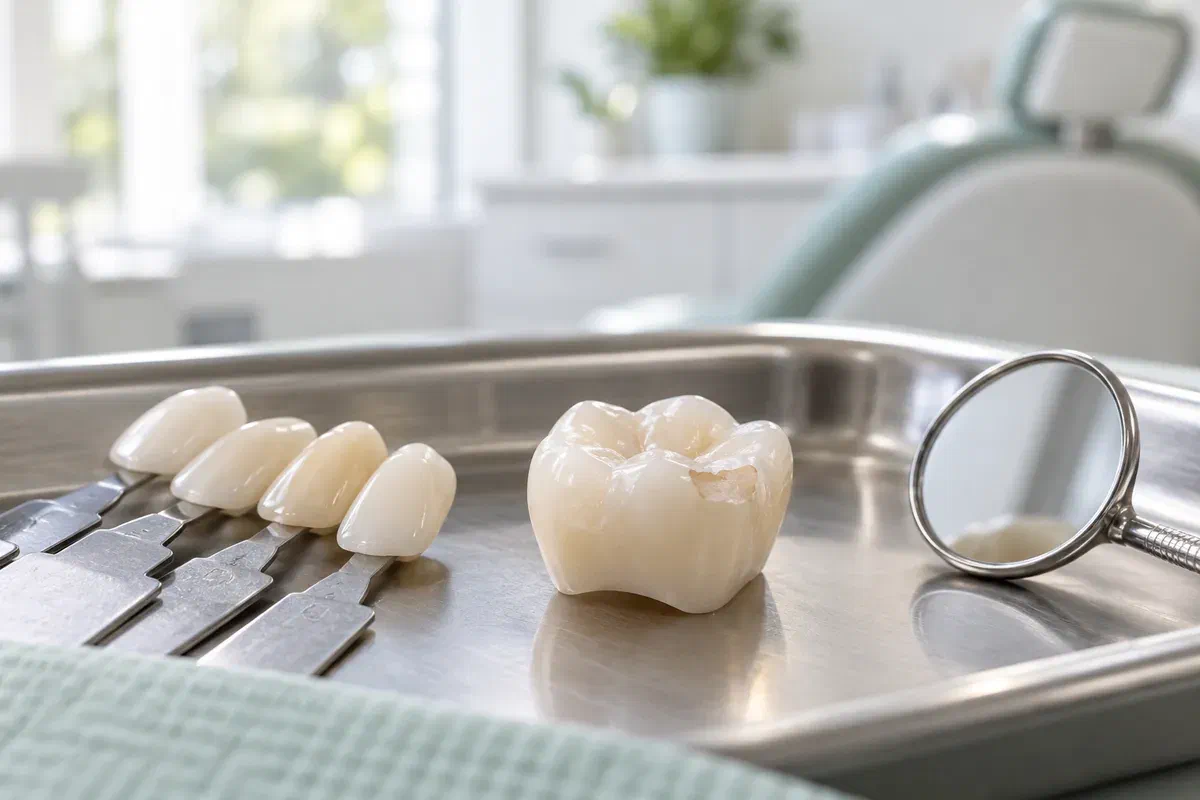
Ceramic crown with a small chipped area beside a shade guide
Patterns worth noticing

The same spot, again and again

Describe how and when each break has happened. Even a small recurring chip matters if it keeps irritating your tongue, changes your bite or points to stress that is concentrated on one part of the crown.

An edge that roughens soon after smoothing

If a rough area returns after it was polished, polishing it again may not be the answer. The dentist considers how much material is left, whether further smoothing would distort the crown and what keeps wearing it down.

A front chip that reappears

A repeatedly chipping front crown can be frustrating to look at. Tell the dentist what you want from its appearance, and ask whether another repair would blend well or whether a different approach would be more dependable.

Breaks where the teeth collide

Chips that cluster on a biting surface suggest that force is focused there. The dentist studies how your opposing teeth contact the crown, since that pattern may explain the breakage and affect whether repair is worthwhile.

Mention any looseness, pain, swelling or past injury to that tooth. Repeated surface damage can occur alongside a problem in the supporting tooth.

When another repair is reasonable

Repair works best once the cause is known.

If the examination finds a manageable reason for the chipping and the crown is otherwise secure, a further repair may still be a sensible way to keep it. That is most appropriate when the tooth underneath is healthy and nothing points to treatment that would make a surface repair inappropriate.

Each repair may wear or look a little different from the original crown, and repeated repairs on a heavily loaded area may not hold as long. Ask whether the dentist sees another repair as lasting care or as a short step before replacement.

A decision based on the full history

Knowing how often and how the crown has broken helps the dentist decide whether a limited repair is still reasonable or whether the damage pattern has made it impractical.

Appearance and function together

Your aim may be a smooth, comfortable edge or a front crown that looks whole for longer. Ask how the proposed approach serves that aim and whether visible differences in finish or shade may remain.

Tackling the reason, not just the result

If grinding, clenching or an uneven bite is involved, addressing that may protect any repair. The dentist can discuss whether further assessment, an adjustment or a protective appliance is worth considering.

How we approach recurring damage

History first, then a fresh assessment

The approach depends on the crown, the damage and the reason it recurs. The appointment starts with a conversation about the crown’s history and an examination, followed by a clear explanation of the options, including replacement.

  1. Review the crown’s history and condition

    The dentist asks about previous chips and repairs, examines the crown’s stability and surface, and checks the surrounding gum and tissues. Records from earlier treatment are valuable here, alongside today’s findings.

  2. Study the bite and possible causes

    Your bite and jaw movements are checked for patterns that might concentrate force on the crown. Ask what the dentist believes is driving the breakage and how that shapes the choice of treatment.

  3. Choose and complete the appropriate care

    If another repair is suitable, the area is readied in a way that matches the crown material, then rebuilt and finished, or simply refined. If replacement is advised, the steps toward a new crown are explained.

  4. Confirm comfort and plan protection

    The treated area is checked against your bite and you can say how it feels. Ask about early precautions, any planned review and whether protection against grinding or clenching is part of the plan.

Breaking the cycle

Habits that help a repair last longer

Aftercare should match the treatment and the reason the crown kept chipping. A polished edge, a bonded repair and an interim fix may each need different precautions, so confirm yours with the team.

Notice and reduce clenching

Many people clench during the day without realizing it. Keeping your lips together and teeth slightly apart can ease pressure. If you grind at night, ask whether a protective appliance would help shield the crown.

Keep cleaning the crown margins

Plaque builds up at the crown edge whether or not the surface has been repaired, so the usual brushing and interdental cleaning stay important. If the rebuilt contour makes floss snag, the team can show you another way.

Track any new chipping

If the crown chips again, note when it happened and what you were doing, then contact the clinic. Do not try to smooth it yourself. That information helps the team decide what to do next.

Patient information: Cleveland Clinic — dental crowns

Options after repeated chips

Smooth, repair once more, or replace

Ask what each option would solve, what it would not and how the crown’s history affects the choice. A good recommendation looks at the whole crown and the forces on it, not only the chip in front of you.

If wear is minor

Polishing a small rough patch

Light polishing may help if enough material remains and the crown keeps a suitable outline. The dentist checks that repeated smoothing has not already thinned the crown and that it will not hide damage needing more care.

If the cause is manageable

Another localized repair

A suitable repair material may be used again when the crown and bonding surface allow it. The crown type, the bite, appearance and the likelihood of further chipping all influence the advice and its limits.

If breakage keeps recurring

A new crown or treatment beneath

Repeated failure, a large fracture, a poor fit or a problem underneath may make replacement the more dependable choice. Any care the tooth needs is arranged first, and the bite may be considered in the design.

Repeat chipping questions

Why does it keep happening?

These answers relate the pattern of damage to the choices you have. They can help you discuss the crown’s history clearly with the dentist.

(905) 876-4488
Why does my crown keep chipping in the same place?
Possible reasons include heavy bite forces on that spot, grinding or clenching, the crown’s design or age, or a change in the tooth underneath. An examination of the crown and your bite helps identify which factors apply to you.
Is there a limit to how many times a crown can be repaired?
There is no fixed number. Each repair depends on how much sound material remains, the bonding surface and the forces involved. When repairs keep failing, the dentist may suggest that replacement would be more reliable.
Could my bite be causing the repeated chips?
It may be contributing. If opposing teeth strike the crown in a concentrated way, that area can be under extra stress. The dentist checks your bite and can discuss whether an adjustment, protection or a different approach would help.
Would a new crown made from a different material chip less?
Materials have different properties, and the dentist can discuss which might suit your bite and appearance goals. No material is immune to damage, so the cause of the chipping is still considered when planning a replacement.
Should I keep the records from earlier repairs?
Yes, if you have them. Knowing when and how the crown was previously repaired helps the dentist understand the pattern. Bring them along from Rockwood if they are easy to find, but an examination remains the main guide.
If the repair fails again, will I lose the tooth?
Not automatically. Repeated failure of a crown repair does not by itself mean the tooth cannot be restored. The dentist reassesses the crown, the supporting tooth and the reason for the damage before suggesting a new crown or another approach.
Visiting from Rockwood

Let’s find out what keeps breaking it.

A crown that keeps chipping deserves more than another quick patch. At our Bronte Street clinic we put its history, your bite and the health of the tooth together, then tell you honestly whether one more repair is worth it.

Save the latest fragment in a small sealed pot if you found it. Strong pain, swelling or a crown that now shifts are reasons to phone rather than wait for a routine slot.

Visit Milton Dental Clinic
Unit 1, 342 Bronte St. S, Milton, ON L9T 5B7
Get directions Clinic hours
Monday–Thursday
11am–7pm
Friday–Sunday
By appointment only

Areas we serve

  • Milton
  • Oakville
  • Mississauga
  • Georgetown
  • Halton Hills
  • Acton
  • Campbellville
  • Brampton
  • Burlington
  • Puslinch
  • Rockwood
  • Erin
  • Caledon
  • Etobicoke
  • Old Milton
  • Bronte Meadows
  • Timberlea
  • Dorset Park
  • Dempsey
  • Clarke
  • Beaty
  • Coates
  • Harrison
  • Scott
  • Willmott
  • Ford
  • Bowes
  • Cobden
  • Walker
  • Mountain View
  • Milton Heights
  • Hawthorne Village
  • Valley View
  • Fallingbrook
  • Nassagaweya
  • Trafalgar
  • Esquesing
  • Nelson
  • Brookville
  • Moffat
  • Glen Williams
  • Norval
  • Limehouse
  • Stewarttown
  • Ashgrove
  • Hornby
  • Silver Creek
  • Speyside
  • Scotch Block
  • North Oakville
  • River Oaks
  • Glen Abbey
  • West Oak Trails
  • Palermo
  • Bronte Creek
  • College Park
  • Joshua Creek
  • Uptown Core
  • Preserve
  • Iroquois Ridge
  • Lisgar
  • Meadowvale
  • Meadowvale Village
  • Churchill Meadows
  • Erin Mills
  • Central Erin Mills
  • Streetsville
  • East Credit
  • Creditview
  • Heartland
  • Sheridan
  • Mount Pleasant
  • Credit Valley
  • Huttonville
  • Churchville
  • Springbrook
  • Northwest Brampton
  • Bram West
  • Fletcher's Meadow
  • Fletcher's Creek South
  • Alton Village
  • Orchard
  • Millcroft
  • Headon Forest
  • Tansley
  • Brant Hills
  • Tyandaga
  • Kilbride
  • Lowville
  • Aberfoyle
  • Morriston
  • Arkell
  • Hillsburgh
  • Freelton
  • Carlisle
  • Waterdown
  • Flamborough
  • Mountsberg

How can we help?

Milton Dental Clinic

Have a question about your smile? Choose the option that works best for you.

For urgent dental concerns, please call.
Messages are reviewed during clinic hours.