Wear, chips or cracks
Porcelain can chip and metal can thin over years of chewing. If the damage is substantial or earlier repairs have failed, the dentist considers whether a repair could still provide the needed shape and function.


Gold, metal-backed porcelain, all-ceramic: the crown you have may not be the material you would choose today. If you are coming from Acton, we can talk through what suits the tooth now, and whether a change is needed at all.
Many people arrive with a specific request: a gold molar they would like to be white, or a porcelain-fused-to-metal crown with a dark band at the gum. Those wishes are reasonable to raise. The useful next step is to see whether the tooth and bite can support the change.
Crown replacement is the process of removing the existing crown and making a new restoration when that suits the tooth. Material preference can be one reason. Others include a fracture, an edge that no longer fits well, decay that has to be reached, or a shape that causes trouble.
Below any crown is a tooth that may have altered since it was first covered. The examination considers the structure that remains, the gum, your symptoms and previous treatment. Tell us what you would like to improve, and we will explain how each material might fit your tooth and where the limits are.
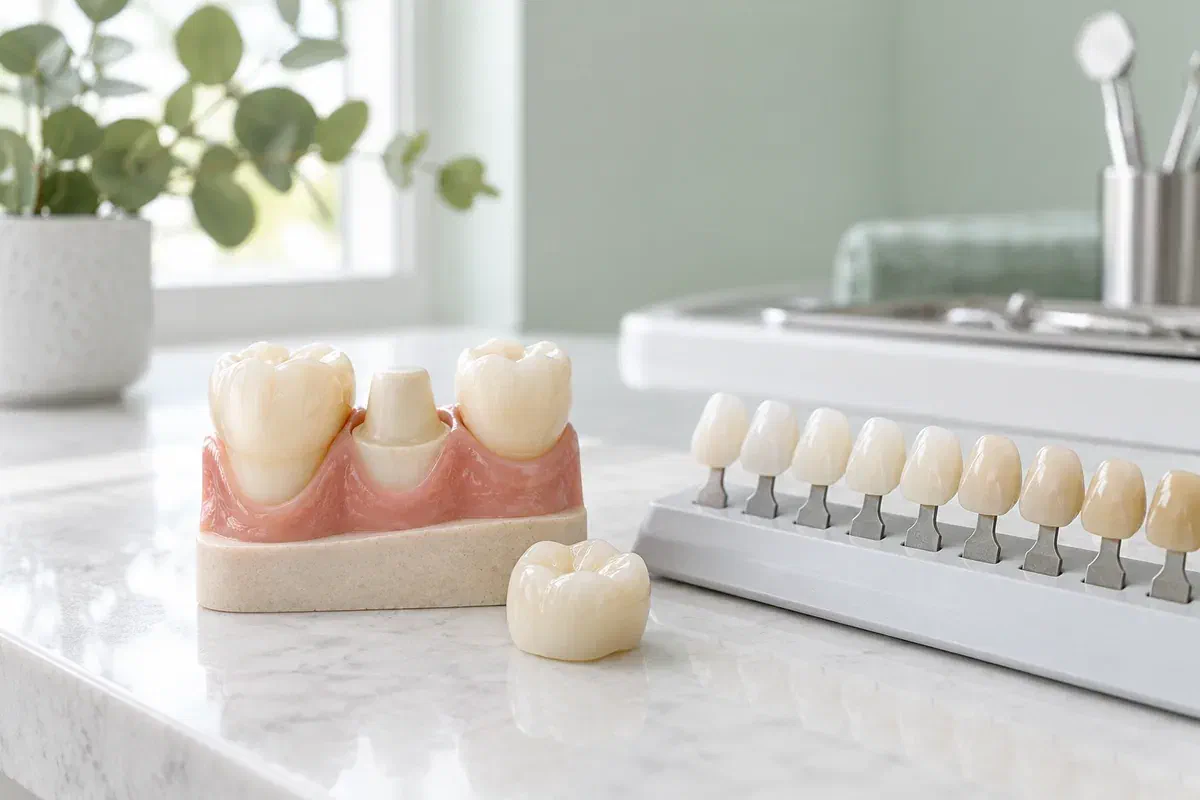
A crown does not need replacing just because a newer material exists. Assessment helps tell whether a change offers real value or whether a working crown is best left alone.
Porcelain can chip and metal can thin over years of chewing. If the damage is substantial or earlier repairs have failed, the dentist considers whether a repair could still provide the needed shape and function.
A dark band, a gap or suspected decay at the margin may need investigation. Examination clarifies what is happening, and whether removing the crown is required to treat the area properly.
Switching from metal to a tooth-coloured material is a common request. It is weighed with the crown’s condition and the tooth’s demands, because replacing a sound crown has both advantages and costs.
If the tooth is painful, the gum is swollen or the crown moves, mention it. That may take priority over the material discussion.
When replacement is appropriate, the material can be selected for the tooth’s position, the space available and the forces it handles. Contour and appearance are planned together with how much tooth remains and how easy the area will be to keep clean.
Any new crown, whatever its material, leaves the tooth subject to the same underlying factors. The amount of natural structure, the nerve or a past root canal and the condition of the gum still affect what happens next. Ask which of these matter for this tooth.
If the old crown is coming off and decay or a weak core is found, that must be treated first. Ask how it will be handled before the new crown is made.
All-ceramic, metal-ceramic and metal crowns each balance appearance, strength and the amount of tooth reduction differently. The suggestion should be explained for your bite and tooth position, not as one best choice.
Different materials can affect contour, thickness and how the crown meets opposing teeth. Mention anything about the old crown’s feel you would like to change.
Visit numbers depend on the tooth and the material chosen, which is useful to know before arranging trips from Acton. Ask beforehand about the temporary stage, comfort, fees and what would happen if the tooth needs more preparation or treatment than expected.
The dentist examines the current crown, the gum and your bite, discusses your goals and takes appropriate X-rays or other records. You will hear which materials are realistic and what cannot be confirmed until removal.
Once you agree and comfort measures are in place, the crown is removed using a technique suited to its material. The tooth is examined, and any findings that alter the plan are explained before continuing.
Different materials may need different preparation. Supporting treatment is done or arranged, the tooth is recorded by impression or scan, colour is matched where it matters, and a temporary is fitted.
Seating, neighbouring contacts and the bite are reviewed, and your opinion on its appearance counts here too. After placement, the team explains early care, cleaning and any follow-up.
Whatever it is made of, the crown sits on a tooth and gum that still need attention. Ask whether the material or any extra treatment changes the aftercare advice.
Some cements set quickly and others need more time, and numbness may linger. Ask before leaving when ordinary chewing is fine, and be careful with your cheeks and tongue in the meantime.
Keep up the recommended routine along the gumline. If floss catches or a spot feels hard to reach, tell us; reshaping or a different cleaning method may help.
Tooth-coloured and metal crowns can feel different at first. Ongoing sensitivity, pain on biting or a crown that seems to strike first should still be examined rather than tested with hard foods.
Patient information: ADA MouthHealthy — dental crowns
These questions cover what people often ask about changing crown materials. Bring your own about appearance, timing and the temporary stage.
Visit our Bronte Street practice for a consultation. We will examine your crown and the tooth supporting it, compare realistic materials, and explain whether a change is worthwhile and what it would involve.
Pain, swelling or a loose crown should be mentioned when booking so the team can plan suitable timing.
