One crown breaking down while others hold
A crown with a large fracture or a record of failed repairs may need replacing even if the others are fine. The dentist considers how much of each restoration is sound and whether a repair could still work.


Three or four older crowns, placed at different times, and now one of them is giving trouble. For people travelling from Brampton, we help sort which crowns need work, which can wait, and how to pace it.
Crowns tend to accumulate. One went on after a cracked filling, another years later after a root canal, and each was made by a different dentist in a different material. When one starts causing trouble, it is natural to wonder whether the rest are close behind.
Every crown deserves its own verdict. Replacement, meaning removal of the current crown and the making of a new restoration, is appropriate when that particular crown is damaged, poorly fitted, covering a problem that needs treatment, or no longer acceptable in appearance. A neighbour’s age is not a reason on its own.
The teeth underneath also change at their own pace. Examination looks at each tooth’s remaining structure, the gum around it, any symptoms and its history. Tell us which crowns bother you and how, from colour to comfort, and we can map out which changes are clinically needed and which are optional.
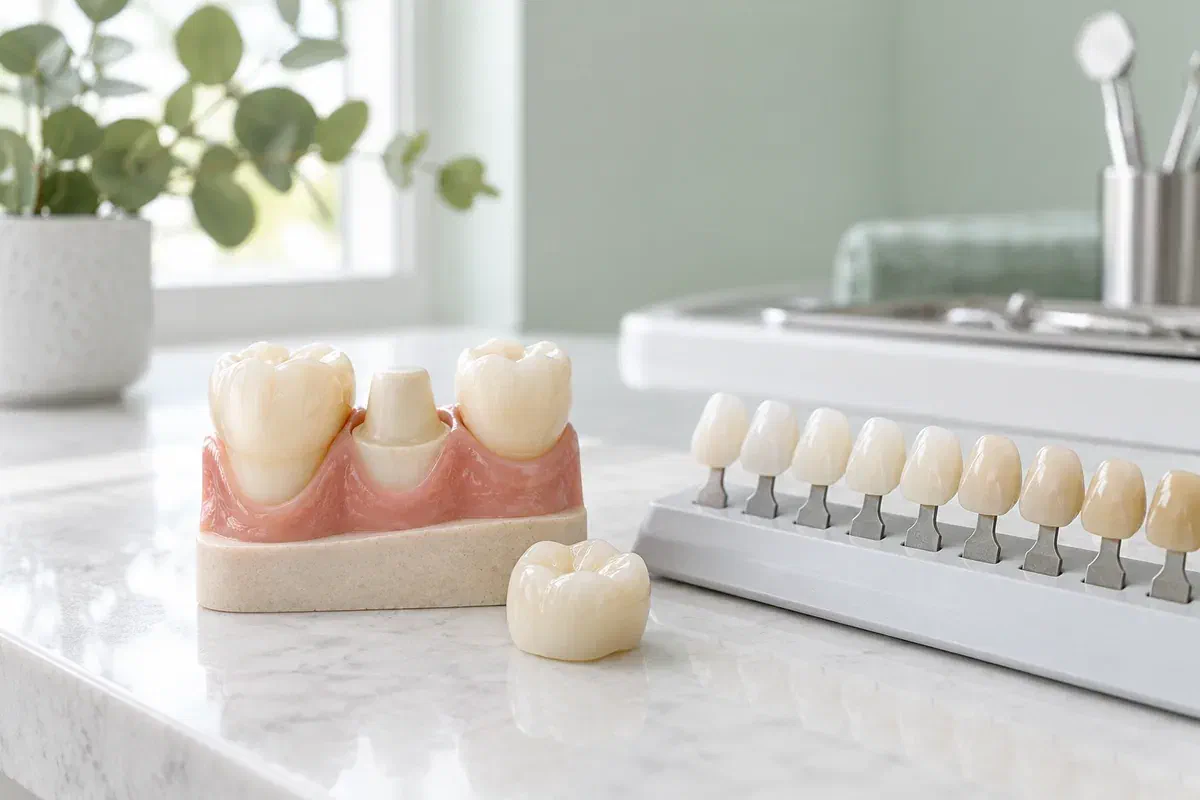
A mouth with several crowns rarely needs them all replaced at once. Assessment helps identify the restorations with a real concern and the ones that can stay in service and be monitored.
A crown with a large fracture or a record of failed repairs may need replacing even if the others are fine. The dentist considers how much of each restoration is sound and whether a repair could still work.
Each crown edge is checked for decay, gaps or fit issues. A problem at one margin does not mean every crown has the same issue, and examination clarifies which, if any, need removal for treatment.
Crowns made at different times can vary in shade and shape. If that bothers you, we can talk through the options, including the trade-offs of replacing crowns that are otherwise working well.
Point out any crown that is painful, loose or near swollen gum. That one may need attention before any wider plan is discussed.
When more than one crown needs replacing, planning them together can help with bite, shade and contour. Each new crown is still designed around its own tooth, its supporting structure and how easily you can clean it, but the overall result can be considered as a whole.
A new crown, or several, does not promise that those teeth will never need more care. Remaining tooth structure, the pulp or past root canals, gum health and other factors continue to matter tooth by tooth. Ask which limitations apply to each one.
Every tooth in the plan should have a stated reason. If decay or a damaged core is found under any of them, ask how it will be handled before the permanent crown is placed.
Front and back teeth face different demands, and neighbouring crowns may need to look consistent. Materials should be explained for each position rather than chosen as one universal best.
Several older crowns can leave uneven contacts or awkward cleaning spots. Describe any problems you have noticed so shape, bite and access for cleaning can be planned across the affected teeth.
Visit numbers depend on how many teeth are involved and what each needs. Before starting, discuss temporary crowns, comfort, fees, and how the plan would adjust if one of the supporting teeth needs more treatment.
The dentist examines each crown and the gum around it, asks about symptoms and uses appropriate records. You will learn which crowns have a clinical reason for replacement and what remains uncertain until they are removed.
With consent and comfort measures, the first crown is removed and the tooth examined directly. Findings that alter the plan are explained before work continues, and the order for any remaining teeth is confirmed.
Supporting treatment is done or arranged, then records are taken for the new crown or crowns. Shade and shape are discussed with neighbouring teeth in mind, and temporaries protect the prepared teeth.
Fit, contacts and bite are checked and you share your view on appearance and comfort. Once placed, the team explains care and cleaning and confirms when, or whether, the next crown will be addressed.
Crowns become part of your routine, but every tooth and gumline around them still needs care. Ask for instructions that reflect any extra treatment done on each tooth.
Eating guidance can depend on the cement and on whether you are numb. Ask before leaving when normal chewing is fine, and take care with your cheeks and tongue until feeling returns.
Brush along the gumline and clean between all crowned teeth as advised. If floss catches at one of them or a spot is hard to reach, tell us so we can check it and suggest a suitable tool.
Lingering sensitivity, pain on chewing or a crown that seems to touch first should be checked. It is better to have it assessed than to test it with hard food or assume it will settle.
Patient information: ADA MouthHealthy — dental crowns
These are common questions when several crowns are involved. Bring your own about appearance, staging and fitting appointments into your schedule.
Schedule a consultation at our Bronte Street practice. We will review your crowns, examine the teeth that support them and explain which need replacing, which can stay, and how the work could be staged.
If one crown is loose, painful or near swollen gum, mention that first when you get in touch so the team can arrange appropriate timing.
