

Illustrative patient and dentist discussion about replacing an older crown
Restorative Dentistry

Dental Crown Replacement in Burlington

A piece of porcelain came away while you were eating, and now the tongue keeps finding the rough spot. From Burlington or nearer, the first step is deciding whether that crown can be repaired or should be remade.

Chipped, cracked or worn through

Repair it, or start again?

A chip in a crown tends to happen at an ordinary moment: biting into crusty bread, an olive pit, a fork against the teeth. Afterwards the question is practical. Can the damaged crown be smoothed or patched, or has it reached the point where a new one would serve the tooth better?

Crown replacement means removing the existing restoration and making a new one, and it should only go ahead when there is a clear reason. Damage is one. Others include a poor fit, decay that has to be reached from underneath, or an appearance that has stopped working for you.

Underneath, the tooth itself may have changed since the crown was placed. That is why the examination covers the remaining structure, the gum, any symptoms and past work, not just the visible chip. Tell us about colour, comfort and any earlier repairs, and we will set out which options are realistic and why.

Have a chipped crown assessed
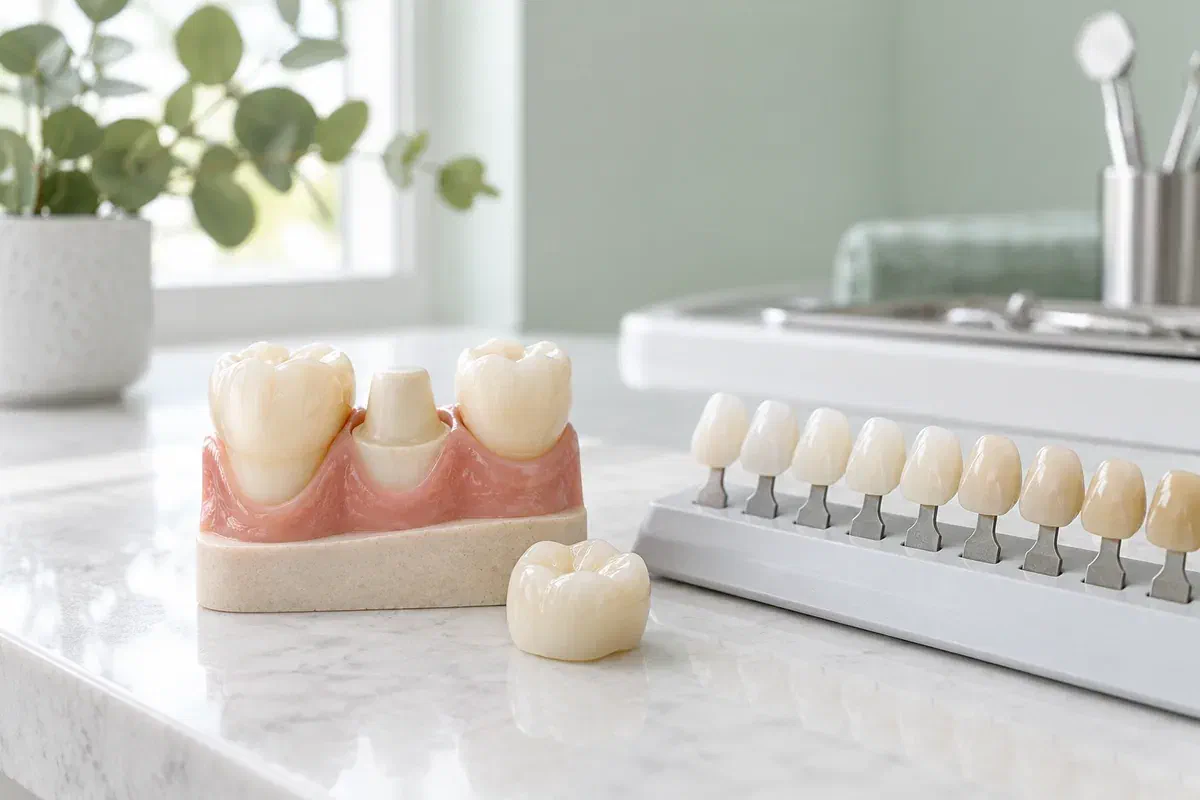
Prepared-tooth teaching model with a ceramic crown and shade guide
Deciding whether damage is serious

When a chip is more than cosmetic

Crowns are not replaced on a schedule. The decision rests on what the damage involves and on the health of the tooth below, so that a restoration with useful life left is not removed without reason.

Breakage that has gone too far for a patch

Small chips can sometimes be polished or bonded. When a large section is missing, the underlying material is exposed, or repairs keep coming away, the dentist considers whether a patch could still give proper shape and chewing function.

Damage close to the gumline

A fracture that reaches the edge of the crown can affect its seal against the tooth. Examination helps establish whether decay or a fit problem is involved and whether the crown must come off to treat it.

A repair that would look out of place

On a front tooth, a patched area may not match the rest of the crown. Your expectations for appearance are worth discussing, along with the pros and cons of replacing a crown that otherwise still works.

Mention sharp pain, swelling or any looseness along with the chip. These can shift the assessment and the urgency of treatment.

When a new crown makes sense

Strength, shape and shade, reconsidered

Remaking a damaged crown gives an opportunity to design it around the current tooth and bite. Material, contour and appearance are chosen together, with the amount of supporting structure and your cleaning routine in mind, so the new crown is suited to the forces it will face.

Still, a new crown does not secure the tooth’s future on its own. Remaining tooth structure, the pulp or an earlier root canal, gum health and other factors continue to affect how it does. Ask which of these apply to the tooth in question.

Match the treatment to the cause

If the crown chipped because of heavy biting or grinding, or decay was found under it, the plan should address that. Ask how any underlying issue will be handled before the final crown goes on.

Think about where the tooth sits

A back tooth that does heavy chewing and a front tooth people see every day place different demands on a crown. The suggested material should be explained in that context, not offered as one best answer for everyone.

Bring up what bothered you before

Maybe the old crown felt bulky, trapped food or caught your tongue even before it chipped. Mention it, because shape, contacts and cleaning access can all be refined while the replacement is planned.

Replacing a damaged crown

Four stages, explained in advance

Visit numbers vary with the tooth and the treatment needed. Ask beforehand about the temporary crown, comfort, fees and how the plan would change if the tooth under the broken crown needs further care.

  1. Look at the damage and take records

    The dentist examines the chipped crown, the gum and your bite, asks about symptoms and uses appropriate records. Together you clarify why replacement is being considered and what cannot be known while the crown is still on.

  2. Take off the damaged crown

    After you consent and comfort measures are in place, the crown is removed with a suitable technique. With the tooth visible, any new findings are discussed before work that changes the agreed plan begins.

  3. Prepare the tooth and capture its shape

    Supporting treatment is completed or arranged, and records are taken so the new crown can be made. Shade and form are discussed where relevant, and a temporary crown is placed while you wait.

  4. Check, adjust and seat the new crown

    The fit, contacts and bite are assessed and you can comment on how it looks and feels. When it is placed, the team explains first-day care, cleaning and any follow-up.

Protecting the new crown

Habits that help it last

The tooth and gum around a new crown still need care every day. If the chip happened during clenching or biting something hard, ask what might reduce the chance of it happening again.

Ease into eating after the fitting

Guidance may depend on the cement and on whether you are still numb. Ask before you go when normal chewing is fine, and take care with your lips and tongue while sensation returns.

Keep cleaning right up to the gum

Brush along the margin and clean between teeth as shown. If floss catches or one area is difficult to reach, say so, and the team can check the contour and suggest a suitable aid.

Have ongoing discomfort checked

Sensitivity that continues, pain when biting or a crown that touches before the others should be looked at. Testing it on hard foods, or assuming every sensation is normal, is not a good substitute.

Patient information: ADA MouthHealthy — dental crowns

Options for a broken crown

From a small fix to a full rethink

What is realistic depends on the extent of the damage and the condition of the tooth beneath. Compare each option’s purpose and limits before deciding.

When the damage is limited

Polish or repair what is there

A minor chip can sometimes be smoothed or repaired, and a sound crown may simply be monitored. Ask why that approach does or does not suit the damage you have.

When the tooth can take another crown

Make a new crown

Replacement may be right once underlying needs are addressed. Discuss material, preparation, temporary care and the state of the supporting tooth as one plan.

When the fracture changes the outlook

Review the bigger picture

A crack that extends into the tooth or root can limit what any crown can do. The dentist can explain whether further treatment might keep the tooth, or whether extraction and replacement options should be considered.

Chipped crown questions

Answers worth having first

These questions often come up after a crown breaks. Bring your own about looks, timing and what to do with the tooth in the meantime.

(905) 876-4488
Can a chipped porcelain crown be bonded instead of replaced?
Sometimes. Small chips in a suitable location may be repaired with tooth-coloured bonding material, although the result may not last as long or match perfectly. The dentist will explain whether your chip is a reasonable candidate.
Is it safe to keep chewing on a chipped crown?
Until it is examined, chew carefully on the other side and avoid very hard foods. A sharp edge can irritate your tongue or cheek. If you have pain, swelling or the crown feels loose, contact the clinic promptly.
Why did my crown chip in the first place?
Biting on something hard, grinding or clenching, the design of the crown and its age can all play a part. Understanding the likely cause helps decide what kind of replacement, or protection, makes sense.
Would a night guard protect a new crown?
If grinding or clenching is suspected, the dentist may discuss a night guard as one way to reduce stress on crowns and natural teeth. Whether it is advisable depends on your examination findings.
Does a new crown always need root canal treatment as well?
No. Replacing a crown and treating the inside of a tooth are separate decisions, based on symptoms, tests and the condition of any past treatment. Ask what findings support a recommendation if one is made.
Can my first visit from Burlington include a full plan?
The first appointment usually covers the examination and a discussion of options. Some things can only be confirmed once the crown is off, but you should leave with a clear idea of the likely steps and how many visits to plan for.
Burlington crown replacement

Let’s decide what that chip needs

Bring the broken crown to our Bronte Street practice and we will examine the damaged crown, check the tooth beneath it and explain whether a repair or a new crown is the better route, with the steps for each.

If the break has left a sharp edge, the tooth hurts or the crown is moving, mention it when you call so the team can arrange suitable timing.

Visit Milton Dental Clinic
Unit 1, 342 Bronte St. S, Milton, ON L9T 5B7
Get directions Clinic hours
Monday–Thursday
11am–7pm
Friday–Sunday
By appointment only

Areas we serve

  • Milton
  • Oakville
  • Mississauga
  • Georgetown
  • Halton Hills
  • Acton
  • Campbellville
  • Brampton
  • Burlington
  • Puslinch
  • Rockwood
  • Erin
  • Caledon
  • Etobicoke
  • Old Milton
  • Bronte Meadows
  • Timberlea
  • Dorset Park
  • Dempsey
  • Clarke
  • Beaty
  • Coates
  • Harrison
  • Scott
  • Willmott
  • Ford
  • Bowes
  • Cobden
  • Walker
  • Mountain View
  • Milton Heights
  • Hawthorne Village
  • Valley View
  • Fallingbrook
  • Nassagaweya
  • Trafalgar
  • Esquesing
  • Nelson
  • Brookville
  • Moffat
  • Glen Williams
  • Norval
  • Limehouse
  • Stewarttown
  • Ashgrove
  • Hornby
  • Silver Creek
  • Speyside
  • Scotch Block
  • North Oakville
  • River Oaks
  • Glen Abbey
  • West Oak Trails
  • Palermo
  • Bronte Creek
  • College Park
  • Joshua Creek
  • Uptown Core
  • Preserve
  • Iroquois Ridge
  • Lisgar
  • Meadowvale
  • Meadowvale Village
  • Churchill Meadows
  • Erin Mills
  • Central Erin Mills
  • Streetsville
  • East Credit
  • Creditview
  • Heartland
  • Sheridan
  • Mount Pleasant
  • Credit Valley
  • Huttonville
  • Churchville
  • Springbrook
  • Northwest Brampton
  • Bram West
  • Fletcher's Meadow
  • Fletcher's Creek South
  • Alton Village
  • Orchard
  • Millcroft
  • Headon Forest
  • Tansley
  • Brant Hills
  • Tyandaga
  • Kilbride
  • Lowville
  • Aberfoyle
  • Morriston
  • Arkell
  • Hillsburgh
  • Freelton
  • Carlisle
  • Waterdown
  • Flamborough
  • Mountsberg

How can we help?

Milton Dental Clinic

Have a question about your smile? Choose the option that works best for you.

For urgent dental concerns, please call.
Messages are reviewed during clinic hours.