

Illustrative patient and dentist discussion about replacing an older crown
Restorative Dentistry

Dental Crown Replacement in Georgetown

A crowned tooth that aches on biting, or flinches at cold, is telling you something. For people coming down from Georgetown, we work out whether the crown, the tooth beneath it or the bite is the source.

Discomfort under a crown

A sore crowned tooth

It often starts with a sharp note when you bite on something firm, or a lingering ache after iced water. People are sometimes surprised, since the tooth is covered. But a crown protects the outside; the living tooth, root and gum below can still react to change.

Pain does not automatically mean the crown must go. It could come from a high spot in the bite, gum inflammation, a crack, decay at the margin or the nerve inside. Replacement, which involves taking the existing crown off and making a new one, is suggested when the cause is linked to the crown or needs access beneath it.

Pinpointing the source is the priority. The examination considers how much natural tooth remains, the gum around it, what your symptoms feel like and what treatment the tooth has had. Describe when the pain happens and how long it lasts, along with any concerns about colour or fit, and we will explain what the findings suggest.

Have a sore crown checked
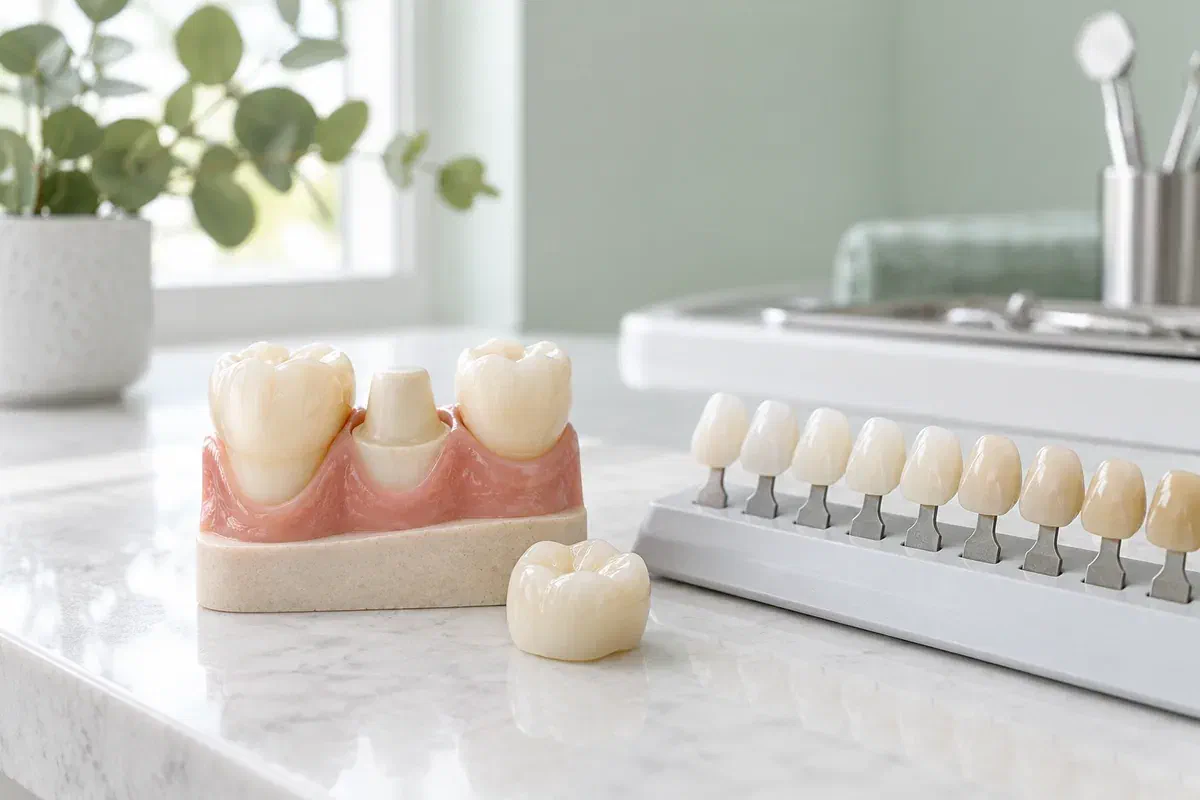
Prepared-tooth teaching model with a ceramic crown and shade guide
Where the pain may come from

Tracing the cause

A crown is not replaced because it has been there a certain number of years, or simply because a tooth hurts. Assessment narrows down the cause so that the treatment matches it.

A crack in the crown or the tooth

A fracture can cause pain on release after biting. If the crown itself is damaged or repeated repairs have failed, the dentist considers how much is sound and whether repair could still provide good shape and function.

Decay or leakage at the margin

Sensitivity near the gumline can point to decay or a fit problem at the edge of the crown. Examination helps establish what is happening there and whether removing the crown is necessary to treat it.

Discomfort plus an appearance concern

If the tooth is sore and you have also never liked how the crown looks, both can be discussed. Replacing a crown that might otherwise be adjusted still involves weighing benefits against drawbacks.

Swelling, a bad taste, throbbing pain or pain that wakes you at night needs prompt attention. Mention these when you call, as they affect how soon you should be seen.

When replacement relieves the problem

Relief that starts with the right diagnosis

If the crown is the cause, a new one can be planned around the tooth as it is now and around a bite that is checked carefully. Material, contour and appearance are considered with the remaining tooth structure and how comfortably you can clean the area.

A replacement is not a promise that the tooth will feel perfect forever. The nerve or any previous root canal, the amount of supporting tooth, the gum and other factors still shape the outlook. Ask which of these might apply to the discomfort you have.

Address the true source of pain

Treatment should connect to what is actually wrong. If decay, a crack or a nerve problem is found, ask how that will be managed before or alongside the new crown.

Pick a material suited to the bite

Teeth that take heavy chewing forces, or that meet a grinding habit, may suit certain materials better. The recommendation should be explained for your tooth rather than presented as a universal best.

Get the bite and contacts right

A crown that hits first or sits awkwardly against its neighbour can cause soreness. Describe what you feel when biting so the replacement can be shaped and checked with that in mind.

From diagnosis to new crown

What the visits involve

How many visits are needed depends on the cause of the pain and the treatment required. Ask beforehand about the temporary, comfort, cost and what would happen if root canal care or other treatment becomes necessary.

  1. Diagnose the discomfort

    The dentist examines the crown, gum and bite, and may use cold, biting or tapping tests along with X-rays. The goal is to find the cause and to explain what cannot be confirmed until the crown is off.

  2. Remove the crown if it is involved

    When removal is agreed and comfort measures are in place, the crown is taken off with a suitable technique. The tooth is examined directly, and new findings are discussed with you before the plan changes.

  3. Treat the tooth, then prepare it

    Decay, a crack or nerve problems are managed or referred as needed. The tooth is then shaped and recorded for its new crown, colour is chosen where relevant, and a temporary is fitted.

  4. Fit the crown and check the bite carefully

    The new crown’s fit, contacts and bite are checked, and you can say how it feels. Once it is placed, the team goes over early care, cleaning and follow-up for the tooth.

Comfort after the new crown

What to expect while it settles

Once you are home in Georgetown, some mild sensitivity can occur after crown work, but the tooth and gum still need everyday care. Ask how any extra treatment during the replacement affects the advice.

Go easy right after fitting

Depending on the cement and any numbness, you may be asked to wait before chewing. Check before leaving, and protect your lip, cheek and tongue until feeling is back.

Keep the gum around the crown healthy

Brush at the gumline and clean between teeth as recommended. Inflamed gum can feel sore, so if floss catches or the area is hard to reach, tell us so we can check and help.

Report pain that does not ease

Sensitivity that lingers, pain on biting or a feeling that the crown lands first should be assessed. These need attention rather than being tested on hard food or put down to normal settling.

Patient information: ADA MouthHealthy — dental crowns

Treatment choices

Adjust, replace, or treat more deeply

Which option fits depends on why the tooth hurts and on the state of the crown. Compare what each choice aims to do and where it has limits.

When a simpler fix addresses the pain

Adjust or repair the existing crown

A high spot may be smoothed, a small defect repaired or a loose crown recemented. Ask why that modest step does or does not suit the discomfort you are having.

When the crown is part of the problem

Replace the crown

A new crown may be appropriate once the tooth underneath is treated. Material, preparation, temporary care and the supporting tooth’s condition should be planned together.

When the tooth itself is the source

Consider nerve or broader treatment

If the nerve is involved or a crack extends deep into the tooth, another crown alone may not help. The dentist will discuss whether root canal care or other treatment could save it, and, if not, what replacing the tooth might involve.

Pain and crowns

Questions about a sore crowned tooth

These questions focus on discomfort and what it might mean. Bring your own about timing, appearance or the temporary stage.

(905) 876-4488
Why does a tooth with a crown still hurt?
The crown covers the outside, but the tooth inside is still living unless it has had root canal treatment. The nerve, the root, the gum and the bite can all cause discomfort under a crown.
Could my bite be the reason the crown is sore?
Yes. A crown that touches before the other teeth can make the tooth tender. Sometimes a small adjustment is enough, so the bite is checked before replacement is recommended.
Does pain mean I need a root canal?
Not necessarily. Some pain comes from the gum, a high bite or sensitivity at the margin. Tests help the dentist judge whether the nerve is involved, and you can ask what evidence supports any recommendation.
Can a cracked tooth under a crown be saved?
It depends on where the crack runs and how deep it goes. Some can be managed with a new crown and possibly root canal treatment, while others cannot be restored. The dentist will explain what was found.
Should I take pain relief before my appointment?
Over-the-counter pain relief may help in the meantime if it is suitable for you. Follow the package directions and any medical advice you have, and tell the team what you have taken when you arrive.
Should I call before driving in from Georgetown?
Yes, especially if the pain is severe, the gum is swollen or the crown feels loose. A quick call lets the team advise on how soon you should come in and whether you might need care closer to home first.
Georgetown crown care

Find out why that crowned tooth hurts

Arrange an assessment at our Bronte Street practice. We will examine the crown and the tooth beneath it, look at your bite, and explain whether an adjustment, a new crown or other treatment is most likely to help.

Throbbing pain, swelling or a loose crown should be mentioned when you get in touch so the team can arrange timely care.

Visit Milton Dental Clinic
Unit 1, 342 Bronte St. S, Milton, ON L9T 5B7
Get directions Clinic hours
Monday–Thursday
11am–7pm
Friday–Sunday
By appointment only

Areas we serve

  • Milton
  • Oakville
  • Mississauga
  • Georgetown
  • Halton Hills
  • Acton
  • Campbellville
  • Brampton
  • Burlington
  • Puslinch
  • Rockwood
  • Erin
  • Caledon
  • Etobicoke
  • Old Milton
  • Bronte Meadows
  • Timberlea
  • Dorset Park
  • Dempsey
  • Clarke
  • Beaty
  • Coates
  • Harrison
  • Scott
  • Willmott
  • Ford
  • Bowes
  • Cobden
  • Walker
  • Mountain View
  • Milton Heights
  • Hawthorne Village
  • Valley View
  • Fallingbrook
  • Nassagaweya
  • Trafalgar
  • Esquesing
  • Nelson
  • Brookville
  • Moffat
  • Glen Williams
  • Norval
  • Limehouse
  • Stewarttown
  • Ashgrove
  • Hornby
  • Silver Creek
  • Speyside
  • Scotch Block
  • North Oakville
  • River Oaks
  • Glen Abbey
  • West Oak Trails
  • Palermo
  • Bronte Creek
  • College Park
  • Joshua Creek
  • Uptown Core
  • Preserve
  • Iroquois Ridge
  • Lisgar
  • Meadowvale
  • Meadowvale Village
  • Churchill Meadows
  • Erin Mills
  • Central Erin Mills
  • Streetsville
  • East Credit
  • Creditview
  • Heartland
  • Sheridan
  • Mount Pleasant
  • Credit Valley
  • Huttonville
  • Churchville
  • Springbrook
  • Northwest Brampton
  • Bram West
  • Fletcher's Meadow
  • Fletcher's Creek South
  • Alton Village
  • Orchard
  • Millcroft
  • Headon Forest
  • Tansley
  • Brant Hills
  • Tyandaga
  • Kilbride
  • Lowville
  • Aberfoyle
  • Morriston
  • Arkell
  • Hillsburgh
  • Freelton
  • Carlisle
  • Waterdown
  • Flamborough
  • Mountsberg

How can we help?

Milton Dental Clinic

Have a question about your smile? Choose the option that works best for you.

For urgent dental concerns, please call.
Messages are reviewed during clinic hours.