

Illustrative patient and dentist discussion about replacing an older crown
Restorative Dentistry

Dental Crown Replacement in Milton

A grey line at the gum, a shade that stands out in photos, a crown that just feels wrong. Close to home in Milton, we look at the crown and the tooth beneath it before anyone suggests a new one.

Crowns that have been with you a while

Start with what you noticed in the mirror

Plenty of people first think about an old crown when they see it in a photo. The edge near the gum looks darker than it used to, or the shade no longer blends with the teeth beside it. Sometimes that is purely cosmetic. Sometimes it points to a change at the margin or in the gum, and that is worth knowing before deciding anything.

Replacing a crown means taking the existing one off and making a new restoration, but only when there is a sound reason to do so. The reason might be damage, a poor fit, decay that needs to be reached, or an appearance you have outgrown. Each one leads to a slightly different conversation about the tooth underneath.

Because the supporting tooth may have changed since the crown went on, the examination looks at its remaining structure, the surrounding gum, any symptoms and the treatment it has already had. Bring along what bothers you, from colour to comfort to repairs that keep failing, and our Milton team will separate what can realistically change from what the findings suggest.

Ask about an older crown
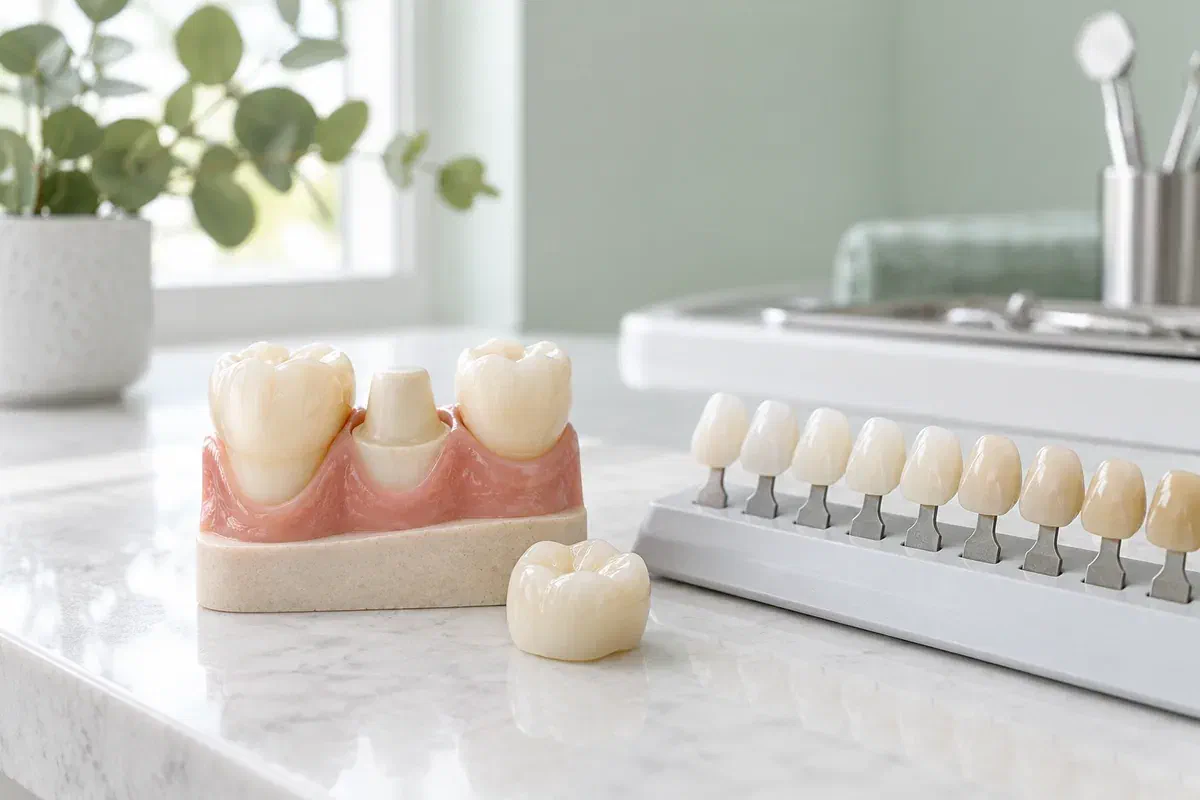
Prepared-tooth teaching model with a ceramic crown and shade guide
Reasons worth a closer look

Age alone is not a reason to replace a crown

Many crowns stay serviceable for a long time. What matters is a specific problem: a crack, an edge that no longer seals well, a symptom, or an appearance that now bothers you. The assessment sorts a crown that can stay from one that needs a new plan.

Fractures that a patch will not hold

A large break, or a crown that has been repaired more than once, may not benefit from another small fix. The dentist looks at how much of the restoration is still sound and whether a repair could give the tooth the shape and strength it needs.

Changes where the crown meets the tooth

A dark line, a catch under the floss or a suspected gap at the margin can mean several things. Examination helps work out whether there is decay or a fit problem there, and whether the crown has to come off to treat it properly.

A shade or shape that has stopped suiting you

Natural teeth can darken or brighten over the years while a crown stays the same. Replacing a crown that still works is a real choice with benefits and drawbacks, so your preferences are weighed against the condition of the restoration.

Mention pain, swelling or a crown that moves, even if your main question is about looks. Those details can change what we recommend and how soon.

What replacing it can offer

A fresh look at fit, bite and appearance

A new crown, when it is the right step, is planned around the tooth as it is now rather than as it was years ago. Its material, contour and shade are chosen together, taking into account how much supporting structure remains, how your teeth meet and how easily you can clean around it.

No crown can promise that a tooth will need nothing further. The amount of natural tooth left, the health of the pulp or an earlier root canal, the gum and other factors all shape its long-term outlook. It is reasonable to ask which of those apply to your tooth in particular.

Treat the problem that prompted the change

The plan should tie back to whatever made the old crown unsuitable. If decay or a weakened core build-up is found, ask how that will be handled before the final crown is placed over it.

Weigh materials for this particular tooth

Each crown material balances appearance and strength in its own way. A back molar and a front tooth face different demands, so the recommendation should be explained for your mouth instead of offered as a single best option.

Improve the small things you live with

Contour, contact with neighbouring teeth and room for cleaning all shape how a crown feels day to day. Tell us what annoyed you about the old one so those details can be planned into the replacement.

From first look to final fit

What each visit involves

Some replacements take two appointments and others need more, depending on what the tooth requires. Before work begins, talk through the temporary crown, comfort, fees and what happens if extra treatment turns out to be needed.

  1. Assess the crown you have now

    The dentist examines the existing crown, the gum around it and the rest of your mouth, listens to your symptoms and uses suitable records. Together you clarify why replacement is being considered and what cannot be confirmed until the old crown is off.

  2. Take it off and look directly

    With your consent and appropriate freezing or comfort measures, the old crown is removed. The tooth can then be seen directly, and anything unexpected is explained to you before work goes beyond what was agreed.

  3. Ready the tooth and record it

    Any supporting treatment is done or scheduled, and records are taken for the new crown. Shade and shape are discussed when they matter, and you are shown how to look after the temporary crown in the meantime.

  4. Fit, check and confirm

    The new crown is tried in so the dentist can check its fit, contacts and bite, and you can comment on its look and feel. After it is placed, you receive care instructions and any follow-up plan for the tooth.

After the new crown goes on

Look after the gumline, not only the crown

A crown cannot decay, but the tooth around its edge still can, and the gum next to it still needs care. Ask for instructions that reflect any extra treatment done along the way.

Go gently on the day it is fitted

When you can chew normally may depend on the cement and on how long the freezing lasts. Ask before you leave, and take care not to bite your cheek, lip or tongue while feeling returns.

Keep the edges clean

Brush along the gumline and clean between the teeth as recommended. If floss snags or shreds, or one spot is hard to reach, let us know so we can check the contour and suggest another cleaning aid.

Call if something stays uncomfortable

Lingering sensitivity, pain on biting or a crown that seems to hit before the other teeth should be checked. Testing it on hard food or assuming it will settle on its own is not the best approach.

Patient information: ADA MouthHealthy — dental crowns

More than one possible answer

Keep, replace or rethink

What is realistic depends on both the crown and the tooth holding it. Look at what each path is meant to achieve, and where it falls short, before deciding.

When the crown is still sound

Leave or repair the existing crown

A crown that is otherwise in good shape may be monitored, polished, repaired or recemented in some situations. Ask why that smaller step does or does not suit the concern you raised.

When the tooth can carry a new one

Replace it with a new crown

Once any problems underneath have been dealt with, a fresh crown can be a good choice. Material, preparation, the temporary stage and the health of the supporting tooth belong in one plan.

When the tooth’s prospects have changed

Look at the wider picture

A deep fracture or other poor finding can limit what a new crown could do. The dentist will explain whether further care could keep the tooth, or whether extraction and tooth-replacement options should be discussed.

Crown replacement questions

Clear answers before you commit

These are questions people often bring to a first visit. Use them as a starting point, and add your own about appearance, timing or how the temporary stage will fit into your week.

(905) 876-4488
Why does the gum around my old crown look grey?
Some older crowns have a metal layer that can show through thin gum or appear as a dark edge if the gum has receded. Staining or decay at the margin can look similar. An examination helps tell these apart, and not every dark line means the crown must be replaced.
Is it possible to keep my old crown as a spare?
Usually not. Crowns often have to be cut or altered to remove them safely, so the old one is rarely reusable. The dentist picks a removal method that suits the tooth, and you will know what the temporary arrangement will be before removal starts.
How long will I wear a temporary crown?
That depends on how the new crown is made and whether the tooth needs other treatment first. The team will give you an expected timeline at the preparation visit and explain how to protect the temporary until your fitting appointment.
Will the replacement feel different from the old crown?
It may, at least at first, because contour and contacts can be adjusted to address problems with the old one. Your tongue often notices small changes. If the bite feels high or something catches after the first few days, call so it can be checked.
What happens if the tooth under the crown is worse than expected?
The dentist will show or explain what was found and how it affects the plan, which may mean extra treatment before a final crown is suitable. Ask ahead of time how surprises, revised fees and temporary care would be handled.
Can I book around school and work schedules in Milton?
Weekday hours run Monday to Thursday from 11am to 7pm, with Friday to Sunday by appointment. Later appointments can suit people with daytime commitments. Mention your schedule when booking so the preparation and fitting visits can be spaced sensibly.
Crown replacement in Milton

Bring the crown that has been bothering you

Book a consultation at our Bronte Street practice and we will look at the old crown, check the tooth that supports it and talk through whether replacement makes sense. You will leave knowing the likely steps and the choices available.

If a crown is loose, the area is swollen or you have significant pain, say so when you contact us so the team can suggest suitable timing.

Visit Milton Dental Clinic
Unit 1, 342 Bronte St. S, Milton, ON L9T 5B7
Get directions Clinic hours
Monday–Thursday
11am–7pm
Friday–Sunday
By appointment only

Areas we serve

  • Milton
  • Oakville
  • Mississauga
  • Georgetown
  • Halton Hills
  • Acton
  • Campbellville
  • Brampton
  • Burlington
  • Puslinch
  • Rockwood
  • Erin
  • Caledon
  • Etobicoke
  • Old Milton
  • Bronte Meadows
  • Timberlea
  • Dorset Park
  • Dempsey
  • Clarke
  • Beaty
  • Coates
  • Harrison
  • Scott
  • Willmott
  • Ford
  • Bowes
  • Cobden
  • Walker
  • Mountain View
  • Milton Heights
  • Hawthorne Village
  • Valley View
  • Fallingbrook
  • Nassagaweya
  • Trafalgar
  • Esquesing
  • Nelson
  • Brookville
  • Moffat
  • Glen Williams
  • Norval
  • Limehouse
  • Stewarttown
  • Ashgrove
  • Hornby
  • Silver Creek
  • Speyside
  • Scotch Block
  • North Oakville
  • River Oaks
  • Glen Abbey
  • West Oak Trails
  • Palermo
  • Bronte Creek
  • College Park
  • Joshua Creek
  • Uptown Core
  • Preserve
  • Iroquois Ridge
  • Lisgar
  • Meadowvale
  • Meadowvale Village
  • Churchill Meadows
  • Erin Mills
  • Central Erin Mills
  • Streetsville
  • East Credit
  • Creditview
  • Heartland
  • Sheridan
  • Mount Pleasant
  • Credit Valley
  • Huttonville
  • Churchville
  • Springbrook
  • Northwest Brampton
  • Bram West
  • Fletcher's Meadow
  • Fletcher's Creek South
  • Alton Village
  • Orchard
  • Millcroft
  • Headon Forest
  • Tansley
  • Brant Hills
  • Tyandaga
  • Kilbride
  • Lowville
  • Aberfoyle
  • Morriston
  • Arkell
  • Hillsburgh
  • Freelton
  • Carlisle
  • Waterdown
  • Flamborough
  • Mountsberg

How can we help?

Milton Dental Clinic

Have a question about your smile? Choose the option that works best for you.

For urgent dental concerns, please call.
Messages are reviewed during clinic hours.