

Illustrative patient and dentist discussion about replacing an older crown
Restorative Dentistry

Dental Crown Replacement in Puslinch

Teeth that have had root canal treatment are often the ones wearing crowns, and they bring their own questions when the crown needs replacing. For rural households in Puslinch, we explain what changes and what does not.

Crowns on root-treated teeth

Does an old root canal change the plan?

A tooth with a root canal is often crowned because it has lost a good deal of its natural structure. Years later, when that crown chips, loosens or develops a problem at the edge, a common worry follows: does the root canal have to be done again too?

Not automatically. Replacing a crown involves removing the existing one and making a new restoration, and that is a separate decision from treatment inside the root. A new crown is reasonable when the old one is damaged, poorly fitting, hiding decay that needs treatment, or no longer looks right.

What is underneath still matters a great deal. With a root-treated tooth, the examination considers the remaining walls, any post or core, the gum, symptoms and the condition of the earlier root canal. Tell us about any history you remember, and we will explain which findings point toward a new crown alone and which suggest more.

Ask about a root-treated tooth
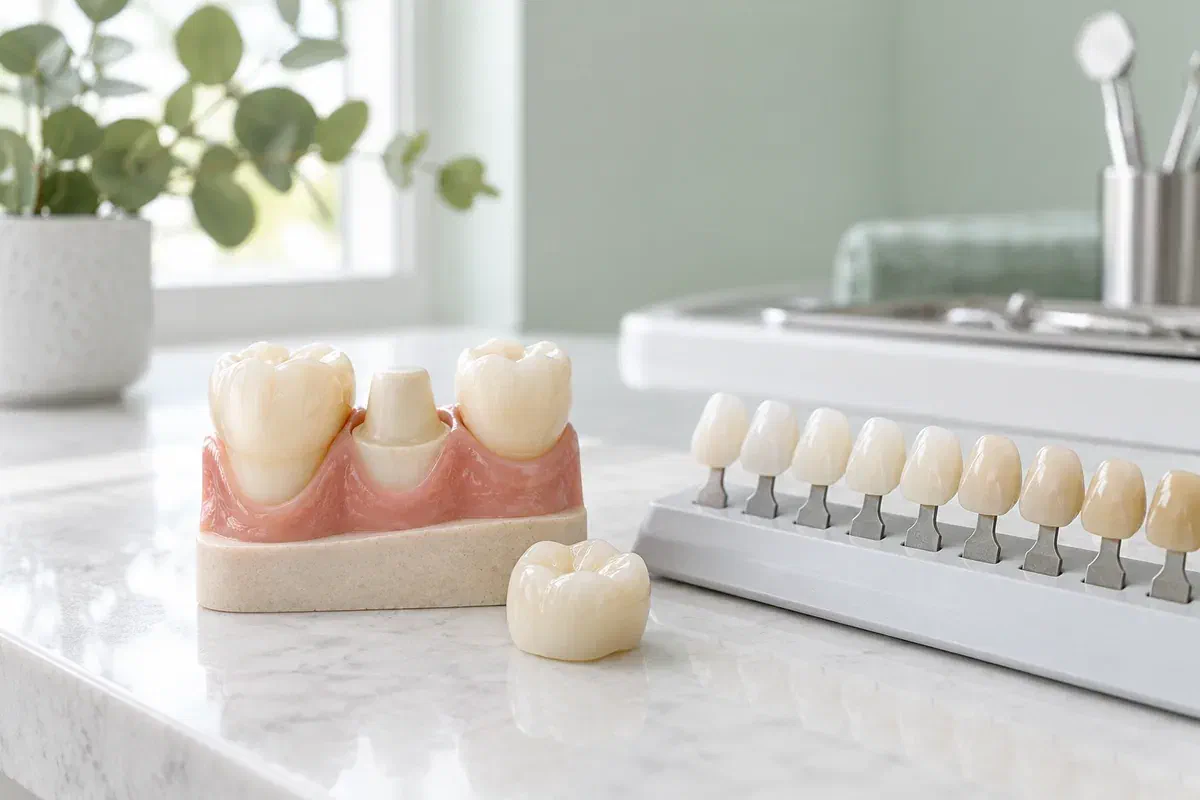
Prepared-tooth teaching model with a ceramic crown and shade guide
Reasons to look again

Signals that a crowned, root-treated tooth needs attention

Time by itself does not mean replacement. Assessment searches for a real concern, so a crown and root canal that are both doing well are not disturbed without reason.

A crown or core that has broken

Teeth with a past root canal can be more brittle. A large fracture in the crown or the build-up beneath it may not respond well to a small repair, and the dentist considers whether any fix could still restore stable shape and function.

Decay creeping in at the margin

A tooth without a living nerve may not warn you with pain when decay starts at the crown edge. Examination helps reveal what is happening there and whether removal is needed so the area can be treated.

A crown that looks out of place

Over time, the tooth itself may darken, which can affect how a crown looks near the gum. Your concerns about appearance are weighed with the crown’s condition and the trade-offs of replacing it.

Tell the team about swelling, a pimple on the gum, tenderness or a bad taste. These can point to a problem with the root canal and may change what is recommended.

Why the right replacement helps

A protective cap on a tooth that needs it

A root-treated tooth often relies on its crown for protection against fracture. When replacement is warranted, the new crown can be designed around the tooth’s current walls, any post and core and the way your bite loads it, with material and shape chosen alongside how you clean the area.

Still, a new crown cannot reverse past structural loss or guarantee the root canal will stay healthy. The amount of remaining tooth, the condition of the previous treatment, gum support and other factors all influence how long the tooth lasts. Ask which of these are most significant.

Deal with the core and the seal

If the build-up or post is loose, cracked or decayed, it may need replacing before a new crown. Ask how the foundation will be assessed and restored.

Choose a material for a vulnerable tooth

Heavy chewing forces often fall on root-treated back teeth. The material recommendation should account for that, along with appearance and space, and be explained for your bite.

Make cleaning and contacts easier

If food trapped near the old crown or floss shredded at its edge, mention it. Better contour and contacts can make the replacement easier to care for.

Stages of the replacement

Checking the root as well as the crown

The number of appointments depends on the crown, the core and the health of the previous root canal, which is worth knowing early when the trip starts in Puslinch. Ask in advance about the temporary, comfort, costs and what would happen if retreatment or a referral turns out to be needed.

  1. Examine crown, core and root

    The dentist checks the crown, the gum and your bite, asks about any tenderness or swelling and reviews X-rays of the root. Unknowns that only removal can resolve are explained at this stage.

  2. Remove the crown and inspect the foundation

    With your consent and comfort measures as needed, the crown is removed. The core, any post and the tooth walls are examined, and findings that would alter the plan are discussed before more work.

  3. Restore the base and record the tooth

    A new core is placed if required, retreatment or referral is arranged if indicated, and impressions or a scan are taken. You will discuss appearance where relevant and leave with a temporary crown.

  4. Seat the crown and confirm the bite

    Fit and the way the new crown meets opposing teeth are assessed, and you can comment on comfort and appearance. After placement, care, cleaning and follow-up are explained.

Caring for a crowned, root-treated tooth

Protect a tooth that cannot always warn you

Without a living nerve, a root-treated tooth may not signal early trouble with pain. Daily care and regular checks matter, so ask how any extra treatment affects your routine.

Follow the day-of-fitting advice

Eating guidance may depend on the cement and any freezing of the surrounding gum. Ask before leaving when ordinary chewing is appropriate and protect your cheek and tongue in the meantime.

Clean diligently at the gumline

Decay at the crown edge can progress quietly on a root-treated tooth. Brush and clean between teeth as shown, and say so if floss snags or the area is difficult to reach.

Report tenderness, swelling or a bad taste

These can signal a problem with the root or the gum. Pain on biting or a crown that lands first also warrants a check rather than repeated testing on hard food.

Patient information: ADA MouthHealthy — dental crowns

Possible routes

Crown only, crown plus more, or a new direction

The right option depends on the crown, the foundation and the health of the root canal. Compare what each choice is meant to achieve and its limits.

When crown and root are both sound

Monitor or repair the current crown

A crown in good condition may be watched, polished, repaired or recemented. Ask why a smaller step does or does not fit the concern that brought you in.

When the root canal is healthy

Replace the crown on a sound root

A new crown may be right once any core or decay issues are fixed. Material, preparation, temporary care and the tooth’s condition belong in one plan.

If the root or structure is compromised

Address the root or reconsider the tooth

Root canal problems or a fracture into the root may limit what another crown can achieve. The dentist will explain whether retreatment could help, or whether removing the tooth and replacing it should be discussed.

Root canal and crown questions

What to ask about a root-treated tooth

These questions often arise with crowns on root-treated teeth. Bring your own about appearance, timing and the temporary stage.

(905) 876-4488
Will my root canal need to be redone when the crown is replaced?
Not necessarily. If the root canal shows no signs of trouble on examination and X-rays, a new crown alone may be suitable. Retreatment is considered only when there is evidence that it is needed.
What is a post and core?
When a lot of tooth structure is missing, a post may be placed in the root canal space and a core built around it to support the crown. If either is damaged, it may need attention during replacement.
Why didn’t I feel any pain from decay under my crown?
Once root canal treatment is done, the tooth no longer has a living nerve, so decay at the margin may not cause pain. That is why regular checks and X-rays are important for these teeth.
Is a root-treated tooth more likely to crack?
It can be, because these teeth have often lost structure. A well-fitted crown helps protect against fracture, and grinding or heavy biting may also need to be considered.
What if the old root canal shows signs of infection?
The dentist will explain the findings and options, which may include retreatment, a referral or, in some cases, other approaches. The crown plan is usually adjusted around that decision.
Could a referral mean extra trips from Puslinch?
It might, if specialist root canal care is needed. Ask early whether a referral is likely so you can plan appointments in sensible order and group them where possible.
Puslinch crown replacement

Have the whole tooth reviewed, root and all

Book a visit at our Bronte Street practice. We will check the crown, the core and the earlier root canal, and explain whether a new crown alone is reasonable or whether the tooth needs more care first.

Swelling, a gum pimple, tenderness or a loose crown should be mentioned when you call so the team can suggest suitable timing.

Visit Milton Dental Clinic
Unit 1, 342 Bronte St. S, Milton, ON L9T 5B7
Get directions Clinic hours
Monday–Thursday
11am–7pm
Friday–Sunday
By appointment only

Areas we serve

  • Milton
  • Oakville
  • Mississauga
  • Georgetown
  • Halton Hills
  • Acton
  • Campbellville
  • Brampton
  • Burlington
  • Puslinch
  • Rockwood
  • Erin
  • Caledon
  • Etobicoke
  • Old Milton
  • Bronte Meadows
  • Timberlea
  • Dorset Park
  • Dempsey
  • Clarke
  • Beaty
  • Coates
  • Harrison
  • Scott
  • Willmott
  • Ford
  • Bowes
  • Cobden
  • Walker
  • Mountain View
  • Milton Heights
  • Hawthorne Village
  • Valley View
  • Fallingbrook
  • Nassagaweya
  • Trafalgar
  • Esquesing
  • Nelson
  • Brookville
  • Moffat
  • Glen Williams
  • Norval
  • Limehouse
  • Stewarttown
  • Ashgrove
  • Hornby
  • Silver Creek
  • Speyside
  • Scotch Block
  • North Oakville
  • River Oaks
  • Glen Abbey
  • West Oak Trails
  • Palermo
  • Bronte Creek
  • College Park
  • Joshua Creek
  • Uptown Core
  • Preserve
  • Iroquois Ridge
  • Lisgar
  • Meadowvale
  • Meadowvale Village
  • Churchill Meadows
  • Erin Mills
  • Central Erin Mills
  • Streetsville
  • East Credit
  • Creditview
  • Heartland
  • Sheridan
  • Mount Pleasant
  • Credit Valley
  • Huttonville
  • Churchville
  • Springbrook
  • Northwest Brampton
  • Bram West
  • Fletcher's Meadow
  • Fletcher's Creek South
  • Alton Village
  • Orchard
  • Millcroft
  • Headon Forest
  • Tansley
  • Brant Hills
  • Tyandaga
  • Kilbride
  • Lowville
  • Aberfoyle
  • Morriston
  • Arkell
  • Hillsburgh
  • Freelton
  • Carlisle
  • Waterdown
  • Flamborough
  • Mountsberg

How can we help?

Milton Dental Clinic

Have a question about your smile? Choose the option that works best for you.

For urgent dental concerns, please call.
Messages are reviewed during clinic hours.