What happened to the tooth
Was it lost to injury, decay or a failed root canal, or is removal only being discussed? If the natural tooth remains, it is worth asking honestly whether it can be kept before replacement is planned.


A missing tooth near the front changes how freely you smile, talk and laugh. If you are travelling from Acton, our implant assessment looks at the site, gum shape and your health, and explains what a natural-looking replacement could involve.
Losing a tooth at the back is often a chewing problem. Losing one near the front can feel more personal: you notice it in conversation, in photos, in the mirror. That makes it tempting to want a fix quickly. An implant assessment takes a careful look first at the space, the gum line, the teeth beside it and your health, so any plan rests on solid ground.
With front teeth especially, the final crown depends on what lies beneath it. An implant pathway involves a support placed in the jaw, time to heal, the restoration that you will see, and long-term cleaning and reviews. Gum shape and the bone at the site can influence how natural the result looks, which is why those details matter when you compare an implant with a bridge or a removable tooth.
Come in with your concerns about appearance and anything else on your mind. Nothing needs to be decided in advance. We will explain what we see, what may need more investigation, and the other ways the tooth could be replaced.
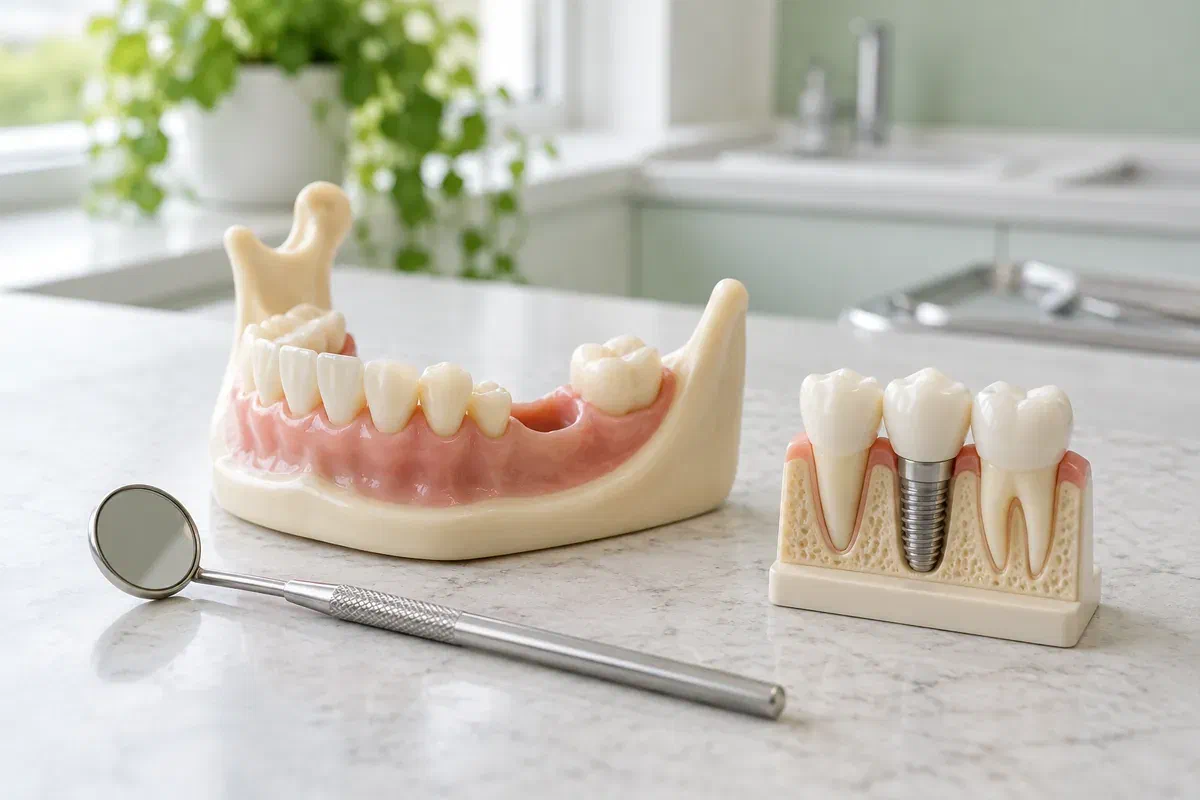
A front-tooth replacement has to look right, but it also has to be well supported, easy enough to clean, and placed in a sensible sequence. The assessment weighs all of these together.
Was it lost to injury, decay or a failed root canal, or is removal only being discussed? If the natural tooth remains, it is worth asking honestly whether it can be kept before replacement is planned.
Share every prescription, supplement and significant past treatment. These help the clinician think about healing around a visible site and whether to consult another health professional.
Describe what bothers you about how the gap looks and how you feel about temporary options. Talk about cleaning and how often you can visit, since even an attractive plan needs to be maintainable.
Before your consultation, carry on with prescribed medication as normal. If a medicine needs to be considered for dental treatment, that is a conversation for the clinicians who prescribe it.
A careful assessment reveals what must be understood before an implant is pursued at a front site. The gum contour, the bone, the teeth on each side and any medical concerns can all affect both function and appearance.
It is common for the next step to be more information. If imaging, a closer examination or a specialist opinion is suggested, ask what it will tell you and how that affects the choice of replacement.
You will hear what looks achievable at your site and what still depends on further findings. That is more reliable than a before-and-after photo of someone else.
Consider how an implant, a bridge or a removable tooth would each handle appearance, preparation, upkeep, visit count and limitations at the front of your mouth.
The person placing an implant and the person making the visible crown may differ. Find out early who handles each part and who you speak to about shade and shape.
You may leave with some questions still open. We will be clear about what was assessed, what records could help, and when a more detailed recommendation becomes realistic.
We talk about how and when the tooth was lost, any temporary replacement you have now, and what bothers you most. Your health history, medicines and past dental experiences are part of this too.
The dentist examines the site, the shape of the gums, the adjacent teeth and your bite. Any problems that should be treated first are explained in terms of how they affect the order of care.
Imaging, photographs or other records may be suggested to understand the bone, nearby structures and appearance. Ask what each is for and whether a second clinician’s input would help.
We go through findings, uncertainties and possible routes. Ask how the temporary stage would look, what the final restoration involves, the expected fees and how the area would be maintained.
Surgery is not booked simply because you were assessed. Leave with the decisions, the next visit and its purpose, and a plan for any current dental issue all clear in your mind.
If photos or shade notes were taken, ask for them to be explained along with your written outline and estimates. Review everything at home and ask about unfamiliar terms first.
Gum treatment or work on nearby teeth may come before implant decisions. Ask how the team will judge when the area is ready and what has to improve first.
Changes in your health, your medicines or how the area feels are worth reporting during planning. They may shift the sequence, and an older assessment can go out of date.
Questions about appearance are as valid as clinical ones. You can ask them all at the first visit, with no technical knowledge needed.
Visit our Bronte Street practice from Acton to talk about a visible gap or failing front tooth and the assessment needed to compare replacements. We will explain where you are starting, what is still unknown and how a suitable plan could unfold.
Medical and medication information is best discussed with the clinical team at your visit, not sent through a general online enquiry.
