

Illustrative consultation about suitability for a dental implant
Restorative Dentistry

Dental Implant Assessment in Oakville

The replacement you have heard most about is not always the right one for your tooth. Coming from Oakville, an assessment with us weighs the site, your health and the alternatives so the choice is genuinely yours.

An Oakville question we hear often

Is an implant the only answer?

Often it is not. Implants get a lot of attention, yet they are one of several ways to replace a tooth. The purpose of an assessment is to find out whether one could suit you specifically: the space, the gums and teeth around it, your health, and the steps that might come before any replacement.

Part of a fair comparison is understanding what an implant involves end to end. Support goes into the jaw, the area heals, and a crown or other restoration is attached later. After that come daily cleaning and regular reviews. A bridge or removable appliance has its own list of steps, and they deserve the same scrutiny.

Arrive with questions rather than a decision. Let us know what you would like to change and what worries you. We will describe the starting point, say what else may need to be checked, and lay out alternatives so you can choose in your own time.

Plan your assessment
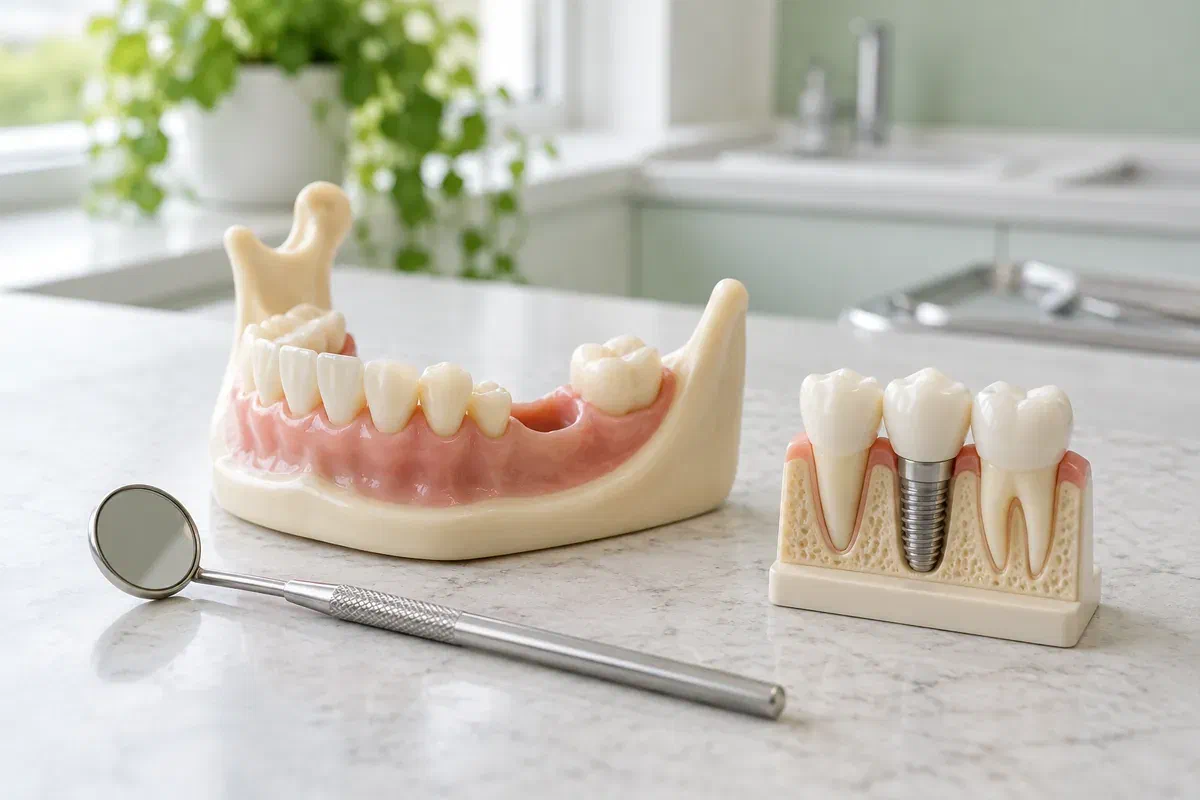
Dental teaching models showing a missing tooth and an implant-supported crown
Questions worth answering first

Which factors tip the balance?

Suitability is about more than an empty space. The replacement has to be well supported, realistic to keep clean, and placed in a sequence that makes sense for your health and calendar.

Whether the tooth is gone or still hanging on

A tooth that is already missing and one that has been flagged for removal raise different questions. If yours is still in place, ask whether keeping it is a reasonable option before replacement becomes the default.

What your medical history adds

Your current medications, supplements and any major past treatment all inform planning and healing. Sharing them in full helps the clinician decide whether a conversation with your physician or another provider would be wise.

What you can realistically maintain

Be candid about how you clean, how often you can attend, and whether chewing comfort or appearance is the bigger priority. If a plan is hard to keep up, it may not be the best plan for you.

There is no need to pause or alter a prescription ahead of a consultation. Questions about medicines and dental care should be settled with the clinicians who manage them.

Why compare before choosing

A decision built on your findings.

The assessment highlights what still has to be understood before implant care is considered further, whether that is gum health, the site itself, the teeth on either side, or a medical issue that affects timing.

You may leave with a plan to gather more information rather than a recommendation. When imaging, another examination or a referral is suggested, ask what it is meant to answer and how its result will change your options.

Feasible versus still unknown

The discussion separates what appears achievable from what needs more investigation, so an online timeline or someone else's treatment does not become your forecast.

Like-for-like comparisons

Ask the same questions of each option: an implant, a bridge, a removable appliance or another approach. How much preparation, how many visits, what maintenance and what limits apply?

A clear division of roles

Assessment, placement, the final restoration and ongoing care may involve more than one clinician. Agreeing on responsibilities early helps with referrals, fees and knowing whom to ask.

What happens at the appointment

Information first, recommendations after.

Expect honesty about what one visit can settle. The team should say what can be judged on the day, what records may be needed, and roughly when a fuller recommendation can follow.

  1. Explain the gap and what you want

    Tell us how long the space has been there, whether it was ever replaced, and what you hope will improve. We also review your health history, medications, past dental care and practical worries about treatment.

  2. Assess the mouth and the site

    The dentist examines teeth, gums, bite and available room. If something else in the mouth needs treating before implant planning continues, you will hear why and where it fits.

  3. Work out which records matter

    Imaging and other records may be suggested to understand the site and the structures near it. Ask what is justified for you, whether existing records can help, and whether another clinician should weigh in.

  4. Compare the routes forward

    We review what has been found, what is still uncertain and the possible next steps. Ask for a clear explanation of preparation, surgery, any temporary tooth, the restoration, fees and upkeep before you decide.

Following the assessment

From discussion to a clear next move.

Having an assessment does not mean surgery is scheduled. Before leaving, check what you have agreed to, which appointments or records follow, and how any existing dental concern will be managed in the meantime.

File the plan somewhere safe

Keep your treatment outline, estimates and referral notes together so you can review them calmly. Ask for a plain-language version of anything confusing before agreeing to the next stage.

Tackle any recommended preparation

Care for the gums or other teeth may come first. Find out how progress will be checked and what needs to be established before the site is judged ready for further decisions.

Report changes in your health

If medications, medical treatment or dental symptoms change during planning, let the clinic know. New information can reshape the sequence, and an earlier assessment does not stay current indefinitely.

The full set of choices

Three paths, weighed side by side.

Implants are one category among several. Your adjacent teeth, the gap, your health and your priorities will determine which other replacements are worth considering seriously.

Where your overall assessment supports it

Implant-supported tooth or appliance

An implant can hold a crown or another restoration in a suitable case. Look at the preparation, surgery, healing and long-term care involved rather than focusing only on the final tooth.

Fixed, with no implant placement

A bridge resting on healthy neighbours

When the teeth beside the gap and the space itself are suitable, a bridge may be an option. Ask how those teeth would need to be prepared and how the design changes cleaning.

When your priorities point elsewhere

A removable appliance or other approach

A removable replacement may suit you, especially if several teeth are missing. Where it is clinically sensible, the dentist can also talk through what monitoring a gap without immediate replacement would involve.

Implant questions from Oakville

What people ask before deciding.

You can ask about the basics as well as the specifics. There is no need to understand the technical side before booking a first conversation.

(905) 876-4488
How do I know whether a bridge or an implant suits me better?
That depends on the teeth beside the gap, the site, your health and what you value. A bridge involves preparing neighbouring teeth, while an implant involves surgery and healing. The assessment lets the dentist explain how each would apply to your mouth.
Am I obliged to go ahead once I have been assessed?
Not at all. The appointment exists to look at the situation and discuss choices. You can ask about alternatives, request clarification and review the proposed stages first. Ask which fees apply to the assessment and to any extra investigations before they are booked.
Can gum disease affect implant planning?
It can. Mainstream patient information notes that healthy gums are important around implants, so active gum problems are usually addressed before implant decisions move forward. The dentist will check your gums and explain whether any treatment is advised first.
Will I come away with a firm finish date?
You may get an outline, but timing often depends on records, preparation, healing and later findings. Ask which stages are predictable and which depend on results. Mention important dates without assuming treatment can be squeezed to fit them.
Can I get a second opinion on an implant plan from elsewhere?
Yes. If you have a plan from another clinic, you are welcome to bring it. We can examine your mouth and discuss the findings independently. Let us know where previous records are held so appropriate transfer can be discussed.
How can I keep visits manageable from Oakville?
Ask at the first visit which appointments are likely and whether any can be combined. Our Bronte Street practice is open Monday to Thursday, with Friday to Sunday by appointment only, so mention your schedule early when booking each stage.
Implant assessment for Oakville

See every option before you choose one.

Visit our Bronte Street practice from Oakville to talk about a missing tooth and what assessment would help you compare replacements fairly. We will help you understand where you are starting, what is still unknown and what a suitable plan might look like.

Rather than including sensitive records in an online form, please share medical and medication details with the clinical team during your appointment.

Visit Milton Dental Clinic
Unit 1, 342 Bronte St. S, Milton, ON L9T 5B7
Get directions Clinic hours
Monday–Thursday
11am–7pm
Friday–Sunday
By appointment only

Areas we serve

  • Milton
  • Oakville
  • Mississauga
  • Georgetown
  • Halton Hills
  • Acton
  • Campbellville
  • Brampton
  • Burlington
  • Puslinch
  • Rockwood
  • Erin
  • Caledon
  • Etobicoke
  • Old Milton
  • Bronte Meadows
  • Timberlea
  • Dorset Park
  • Dempsey
  • Clarke
  • Beaty
  • Coates
  • Harrison
  • Scott
  • Willmott
  • Ford
  • Bowes
  • Cobden
  • Walker
  • Mountain View
  • Milton Heights
  • Hawthorne Village
  • Valley View
  • Fallingbrook
  • Nassagaweya
  • Trafalgar
  • Esquesing
  • Nelson
  • Brookville
  • Moffat
  • Glen Williams
  • Norval
  • Limehouse
  • Stewarttown
  • Ashgrove
  • Hornby
  • Silver Creek
  • Speyside
  • Scotch Block
  • North Oakville
  • River Oaks
  • Glen Abbey
  • West Oak Trails
  • Palermo
  • Bronte Creek
  • College Park
  • Joshua Creek
  • Uptown Core
  • Preserve
  • Iroquois Ridge
  • Lisgar
  • Meadowvale
  • Meadowvale Village
  • Churchill Meadows
  • Erin Mills
  • Central Erin Mills
  • Streetsville
  • East Credit
  • Creditview
  • Heartland
  • Sheridan
  • Mount Pleasant
  • Credit Valley
  • Huttonville
  • Churchville
  • Springbrook
  • Northwest Brampton
  • Bram West
  • Fletcher's Meadow
  • Fletcher's Creek South
  • Alton Village
  • Orchard
  • Millcroft
  • Headon Forest
  • Tansley
  • Brant Hills
  • Tyandaga
  • Kilbride
  • Lowville
  • Aberfoyle
  • Morriston
  • Arkell
  • Hillsburgh
  • Freelton
  • Carlisle
  • Waterdown
  • Flamborough
  • Mountsberg

How can we help?

Milton Dental Clinic

Have a question about your smile? Choose the option that works best for you.

For urgent dental concerns, please call.
Messages are reviewed during clinic hours.