Bone loss around a failing tooth
Infection, long-term damage or the loss of a tooth can change the bone around it. Let the team know the tooth’s history and past treatment, while accepting that current examination and imaging describe the site best.


A tooth that has to come out soon raises a second question: what happens to the bone afterwards? Plan ahead from Burlington with a consultation about grafting, the materials involved, healing stages and your alternatives.
When a cracked or failing tooth has to be removed, people often focus on the extraction itself. Yet if an implant is the long-term goal, the bone around that tooth matters just as much. Grafting may be raised so that the future implant has a suitable position, depending on how the site looks and what the overall plan requires.
There is no single grafting procedure. Material might be placed at the time of extraction, added during implant placement, or used in a separate surgery that needs its own healing time. Ask which of these is being suggested and what it means for the number of visits and the length of treatment.
Coming from Burlington, you can use a consultation at our Bronte Street practice to understand the reasoning before the extraction is booked. We will cover the expected benefit, the alternatives, who would perform each step and how healing will be reviewed along the way.
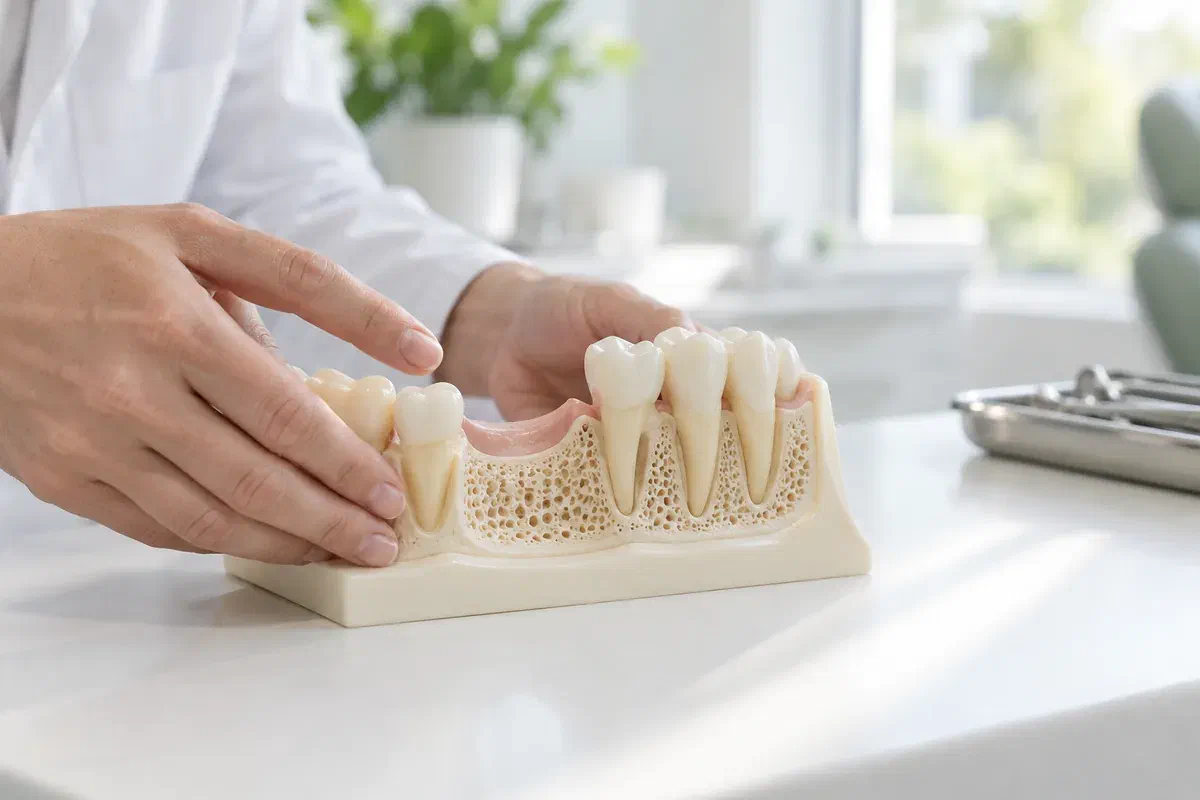
From the outside, a tooth or gap gives little sense of the bone beneath it. Implant planning looks at that bone and at how a replacement would eventually be supported and kept healthy.
Infection, long-term damage or the loss of a tooth can change the bone around it. Let the team know the tooth’s history and past treatment, while accepting that current examination and imaging describe the site best.
The available bone and the structures near it can shape what is realistic. Ask how the imaging informs the recommendation and whether more records or a specialist opinion would help before an approach is chosen.
When grafting is involved, ask how it fits with the extraction, the implant and the final tooth. Several steps depend on healing, which is why a single completion date may not be realistic at the beginning.
Grafting is not needed for every implant, and a completed graft does not guarantee that an implant will follow. The site is reassessed as treatment moves along.
In suitable cases, a graft aims to improve the bone available where an implant is planned. The recommendation should be connected to what was found at your site, rather than offered as something every patient automatically needs.
Any advantage has to be weighed against what it asks of you: an added procedure, healing time and cost, plus the risk that complications arise or the result is incomplete. Ask what the plan would become if the graft gives less support than expected and whether another path could still work for you.
Patient information: Cambridge University Hospitals — bone grafting for dental implants
The implant’s position should suit the restoration it will hold. Ask how the graft supports that goal and which limitations may still be present after healing.
Staged care can build in time for healing and reassessment before placement. If that is the plan, ask what will be checked and what needs to be true before the implant goes in.
Understanding the preparation helps you weigh an implant against other replacements. Take the graft procedure and its follow-up into account when deciding whether the whole plan fits your circumstances.
The details of the procedure and recovery depend on what kind of graft is planned and how extensive it is. Your clinician should explain the approach clearly, including any referral and how follow-up will be organised.
Your mouth, medical history, medications and suitable imaging are reviewed. The clinician explains what finding makes grafting worth discussing and whether other problems, such as gum disease, should be treated beforehand.
Talk through the source of the material, the extent of treatment and whether the graft happens at extraction, at placement or on its own. Cover risks, benefits, alternatives and comfort measures, and the chance of changes later.
The clinician carries out the agreed approach and gives you specific aftercare. Before leaving, confirm what is expected over the coming days, which medicines or care steps apply and who to call with a concern.
Follow-up looks at how the site is healing and what else needs to be known. The next stage begins when findings support it, rather than once a particular number of weeks has passed.
Every graft is a little different, so general advice only goes so far. Keep the instructions and contact details somewhere easy to find, and ask about anything that seems difficult to follow.
Ask what you can eat, how to keep the area clean, how active to be and how any temporary tooth or appliance should be worn. Leave stitches alone and avoid poking at the area. Call if it looks different from what was explained.
Follow the prescription and ask the clinician or a pharmacist about interactions or side effects. Do not add, stop or change a medicine on the basis of general information about recovering from a graft.
Go to each healing check even if things feel fine. Report unexpected or worsening symptoms according to your postoperative instructions, instead of waiting until the next implant appointment comes around.
Some questions are clinical and some are about planning around work and home. Ask them before the tooth is removed so the next steps are clear.
Book a consultation at our Bronte Street clinic to review the tooth or gap in question and any recommendation for added bone support. We can clarify the purpose, the sequence and the questions to settle before you commit to a pathway.
If you have already had grafting and are worried about recovery, contact the clinician who performed it through the postoperative arrangements you received.
