Bone that has changed shape
After an extraction, the ridge may shrink or alter in ways that do not suit the planned position. Say when the tooth came out and what was done there; a fresh examination is what confirms the current state.


Who actually performs a bone graft, and who looks after you afterwards? Households in Campbellville can talk with us about grafting before implants, specialist referrals, healing reviews and how every stage connects.
Implant care is sometimes shared. Your general dentist may plan the final tooth while a specialist performs the graft or places the implant, and that handover is where questions tend to pile up. The graft’s job is to add bone where the chosen implant position falls short, and whether it is needed depends on your particular site.
Who does the work often depends on what kind of graft is proposed. A minor addition at the implant appointment may stay with one clinician, while a more involved procedure with its own healing period might be referred out. Either way, the type of graft affects your number of visits, your recovery and the overall timeline.
For households around Campbellville, especially those already grouping errands and appointments, our Bronte Street team can explain the reasoning behind a grafting recommendation and map who handles each step, what the expected benefit is, which alternatives exist and how healing will be confirmed.
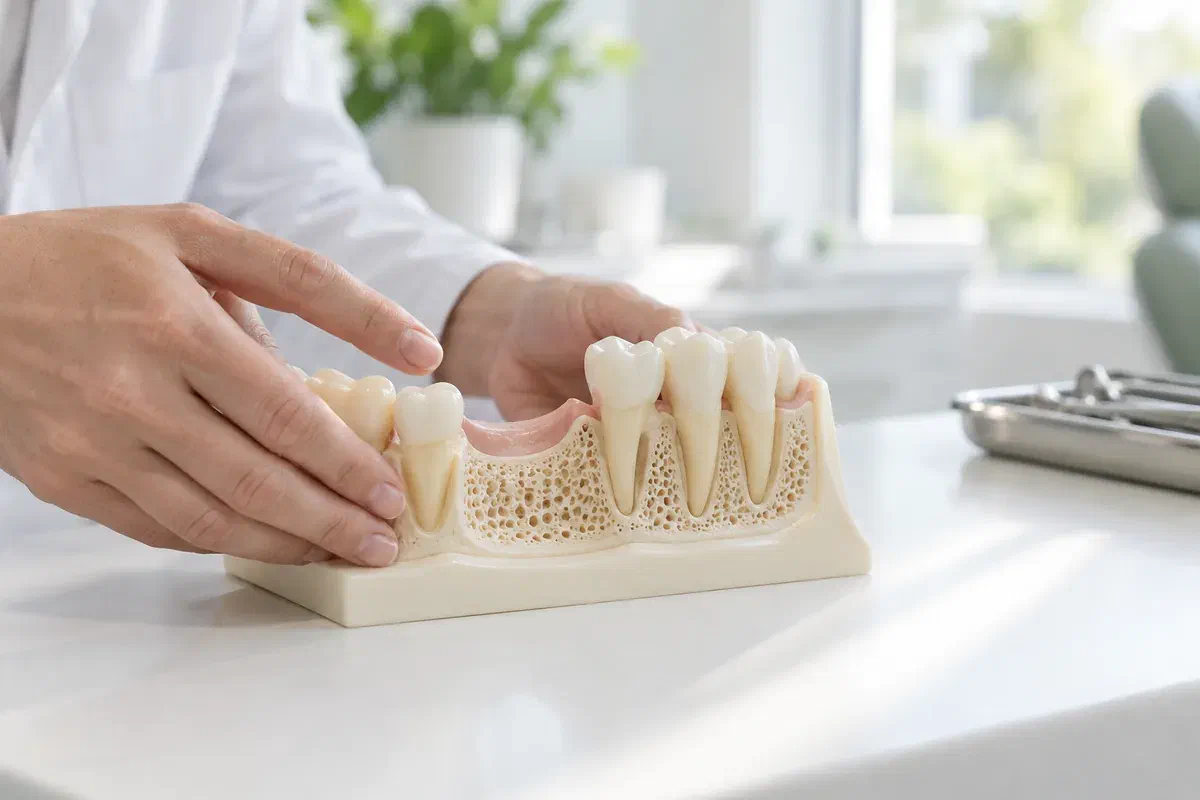
The gap you can see is only the surface. Whoever plans the implant needs to understand the bone below it and how the eventual tooth will be held steady and kept clean.
After an extraction, the ridge may shrink or alter in ways that do not suit the planned position. Say when the tooth came out and what was done there; a fresh examination is what confirms the current state.
Bone shape and nearby structures can complicate placement. Ask how the imaging supports the recommendation, and whether a specialist should assess the site before a grafting method is agreed.
When grafting is involved, ask how it links the extraction, implant and final crown, and who is responsible for each. Healing paces the steps, so the end date usually stays approximate.
Grafting is not part of every implant plan, and a completed graft does not guarantee the implant stage. The site is reassessed at each handover point.
In an appropriate site, the purpose of grafting is to add to the bone where the implant is planned. You should be told what was found in your own mouth to justify it, rather than hearing that it is just part of how implants are done.
That purpose sits alongside some real costs: an extra procedure, more healing, added expense and the possibility of complications or less support than expected. Ask who would decide the next step in that case, and whether another route would suit you just as well.
Patient information: Cambridge University Hospitals — bone grafting for dental implants
The implant needs to sit where the replacement tooth will work. Ask how the graft helps that, and what limits may remain after healing, regardless of who performs it.
Staged care allows the graft to heal and be checked before placement. Ask which clinician performs that review and what they will look for before giving the go-ahead.
When every step and provider is listed, you can compare implant care with alternatives more fairly. Include the graft and its follow-up visits in that comparison.
Procedures and recovery vary with the type and size of graft. Whoever performs yours should explain it plainly, and you should know in advance if a referral is planned and who will see you afterwards.
Your mouth, medical history, medicines and suitable imaging are reviewed. The clinician explains why grafting is being raised and whether any other treatment, such as for gum health, should be completed first.
If a specialist is involved, ask how your records will be shared. Discuss the graft material, the extent of treatment, any second site, risks, benefits, alternatives and comfort measures with whoever will perform it.
The responsible clinician completes the agreed procedure and gives you written aftercare. Before leaving, confirm what recovery should be like, which medicines to take and which office to call.
Follow-up checks the site and decides what further information is needed. Ask how the result will be passed to the dentist planning your crown, and remember that the next stage follows findings rather than a fixed date.
Every graft has its own recovery instructions, and they matter more than any general guide. Store them with the contact details of the clinician who did the procedure, and ask about anything unclear before you leave.
Ask about food, cleaning, activity and whether a temporary tooth or appliance can be worn over the area. Do not pull at stitches or explore the site. If something seems off compared with what was explained, call the treating office.
Take them as directed, and check any questions about interactions or side effects with the prescribing clinician or your pharmacist. Do not alter your medicines based on general recovery information.
Attend every review, even if the area feels fine. For unexpected or worsening symptoms, follow your postoperative instructions and contact the clinician responsible for the graft rather than waiting for a later implant visit.
When more than one clinician is involved, practical questions matter. Ask them before you agree to the graft.
Come and talk with our Bronte Street team about the implant site, any recommendation for added bone support and who would carry out each step. We can explain the purpose, the order of events and what to settle before choosing.
Recovering from a graft done by another clinician and unsure about how it is going? Reach that clinician first, through the postoperative contact details they provided, so the person who knows the procedure can advise you.
