Ridge changes over the years
Bone where a tooth was lost may thin or flatten. Tell us roughly when that happened and what has been done there since; the examination you have now is what determines the site’s current shape.


Much of a bone graft’s recovery happens at your own kitchen table and bathroom sink. From Erin or Hillsburgh, prepare with us for grafting before an implant: the procedure, home care, healing checks and other choices.
Most of what happens after a bone graft happens away from the dental chair, in the meals you choose, the way you brush and the rest you get. A graft is used to give a planned implant more bone to sit in, and it is only advised when your site and treatment plan need that extra support.
Home care looks different depending on what is done. A small graft placed with the implant may bring a short adjustment period, while a separate procedure followed by its own healing phase asks more of you over a longer stretch. Find out which is proposed so you can prepare the household and your calendar.
For anyone in Erin village, Hillsburgh or the surrounding area, our Bronte Street team can explain the finding behind a grafting recommendation and what living with recovery will be like. We will cover the intended benefit, the alternatives, who would carry out the graft and how its healing will be assessed.
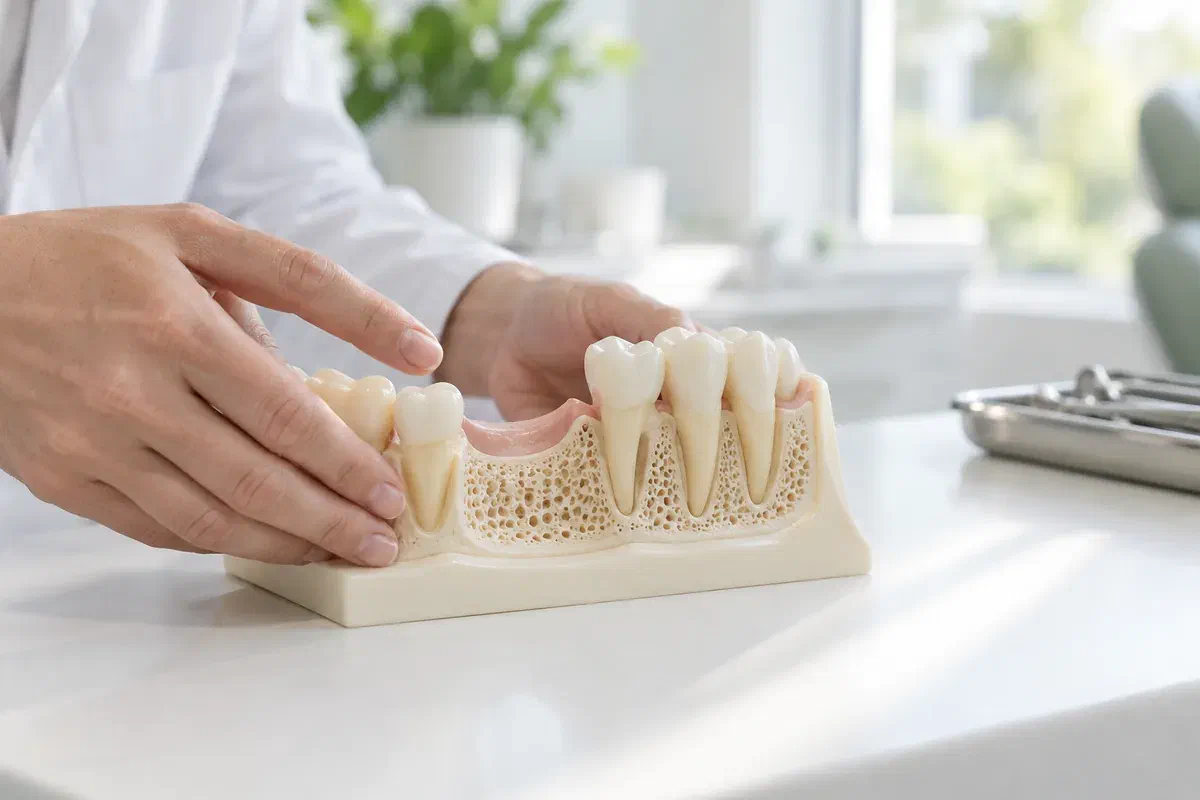
A gap gives no clear view of the bone an implant would need. The clinician evaluates it directly and thinks ahead to how the eventual tooth will be held securely and kept clean at home.
Bone where a tooth was lost may thin or flatten. Tell us roughly when that happened and what has been done there since; the examination you have now is what determines the site’s current shape.
The dimensions of the bone and what sits close by can limit implant placement. Ask how your imaging guided the recommendation and whether a specialist opinion or further records would add clarity.
Where a graft is proposed, ask how its healing fits with any extraction, the implant and the crown. Each phase needs home care and time, which is why the finishing point cannot be fixed in advance.
Not all implants need grafting, and a graft that has healed is not a guarantee that the implant can go ahead. The site is checked again at every stage.
When the site suits it, grafting is meant to build up bone where the implant will be placed. Ask the clinician to show you the specific finding that makes it relevant, so it is clear the recommendation is about your mouth and not implants in general.
Balanced against that are an extra procedure, a period of careful home care, added expense and the risk of complications or a result that delivers less than intended. Ask what would follow in that case and whether a different approach would ask less of you.
Patient information: Cambridge University Hospitals — bone grafting for dental implants
The implant position should suit the tooth above it and allow you to keep it clean. Ask how grafting helps and what limitations might remain once healing is finished.
Staged care gives the graft time to heal and be checked. Ask what the review will look at and what result means you are ready for placement.
Knowing the full preparation, including recovery at home, makes it easier to compare implants with other replacements and decide what suits your life.
What the procedure and recovery involve depends on the type and size of the graft. The clinician responsible should explain it clearly, tell you about any referral and let you know when to expect your next visit.
The team reviews your mouth, medical history, medicines and appropriate imaging. They explain what prompts the grafting discussion and whether other dental needs should come first, and you can mention any home or work demands.
Discuss the source of the material, how much grafting is planned and whether a second site is involved. Cover risks, benefits, alternatives and comfort, and ask what to have ready at home beforehand.
The agreed procedure is completed and you receive aftercare instructions for it. Before leaving, check what the next few days should look like, which medicines to take and who to ring with a question.
The clinician assesses how the site is healing and what further information is needed. The implant is planned from those findings, not from a fixed number of weeks.
General advice is no substitute for the instructions written for your graft. Keep them on the fridge or by the sink with the clinic’s phone number, and ask about any step that seems awkward to fit into the day.
Confirm which foods suit the first days, how to brush near the area and how much activity is wise. Leave stitches alone and do not explore the site. If something seems unlike the description you were given, call.
Set reminders if they help, and follow the prescribed directions. Your pharmacist or the treating clinician can tell you whether anything else you take might interact, and do not change medicines because of general recovery advice.
Go to each review even if the site feels fine. For unexpected or worsening symptoms, follow your postoperative instructions and phone right away instead of waiting for the next implant appointment.
Many questions are about the days after the procedure. Ask them beforehand so you can prepare.
Arrange a visit to our Bronte Street clinic to look at where the implant would go, why extra bone has been suggested and what recovery would mean at home. We can explain the purpose, the steps and the questions to settle before you choose.
Recovering from a graft and unsure if healing is on track? Contact the clinician who performed it, using the postoperative contact information you received.
