

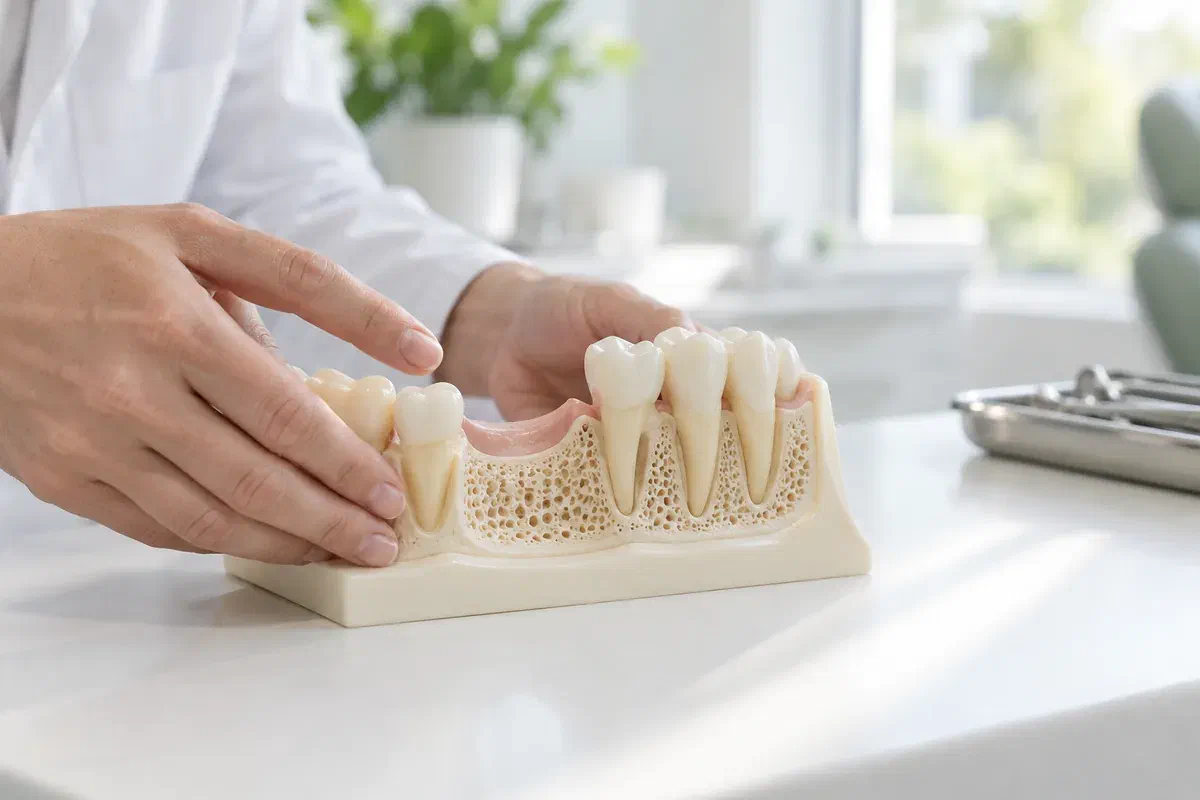
Illustrative consultation using a jaw model to discuss implant bone support
Restorative Dentistry

Dental Implant Bone Grafting in Etobicoke

Staged implant care with a bone graft can mean several trips. If you are coming from Etobicoke, we can help you understand the proposed site, the material, each healing check and how to plan visits sensibly.

Planning grafting visits from Etobicoke

A longer trip deserves a clearer plan.

When each appointment means a drive across the west end and beyond, you want to know how many there will be before you start. Bone grafting matters here because it can add steps. It is suggested when the spot chosen for an implant has too little bone, and the need for it rests on your site and your overall plan.

Grafts are not all alike. Adding a little bone at the implant visit keeps things compact, whereas a standalone procedure brings a healing interval and at least one review before the implant can be scheduled. Ask early which type is proposed, so you can picture the shape of the next several months.

Coming from Etobicoke, a first consultation at our Bronte Street practice is a chance to gather everything you need in one sitting: why grafting is being raised, what it should achieve, what else you could do instead, who would perform it and how its healing will be confirmed.

Plan a grafting pathway with us
Educational jawbone model showing the contour beneath a missing tooth
What prompts the conversation

The gap looks simple. The bone may not be.

A visible space reveals very little about the support beneath it. To plan an implant, the clinician studies that support and thinks ahead to how the eventual tooth will be held in place and kept clean.

Bone that receded after an extraction

It is common for the ridge to change once a tooth has gone, and the result may not suit the intended implant. Tell us roughly when it was removed and what happened at that spot since; fresh assessment still decides the picture.

Neighbouring anatomy in the way

The dimensions of the bone and what lies near it can rule some positions out. Ask how the X-rays or scan led to the suggestion, and whether more imaging or a specialist’s input is advisable before deciding.

Steps chained to healing

With grafting in the picture, ask where it sits relative to any extraction, the implant and the crown. Because healing governs the gaps between steps, nobody can honestly fix the final date on day one.

Many implants go ahead without grafting, and a graft that has been done is not a guarantee that an implant can follow. Each stage begins with a fresh look at the site.

Why it may be worth the extra trips

Better footing for the implant you are planning.

Where the site is suitable, grafting sets out to give the implant more bone to sit in. The clinician should tie that goal to something specific found in your mouth, rather than treating the graft as a box ticked for everyone.

Set against that are the extra procedure, the waiting time for healing, the added cost and the chance of complications or an outcome that delivers less than planned. Ask what the backup plan looks like and whether another option could serve you with fewer appointments.

Patient information: Cambridge University Hospitals — bone grafting for dental implants

An implant placed for the tooth above it

Position matters because the crown has to look and function sensibly. Ask how the graft contributes to that, and which limits may linger even when healing is complete.

A natural pause before committing further

Staging lets the graft settle and be inspected before more surgery. Ask what the review will check and what result would clear the way for placement.

A fair count of visits for every option

Listing the preparation makes it easier to compare implants with alternatives that may involve fewer trips. Include the graft, its follow-up and the travel when you weigh your decision.

Visit by visit

Four appointments, each with a purpose.

What the procedure and recovery look like depends on the type and amount of grafting. Your clinician should spell out the approach in plain terms, including any referral and when follow-up is expected.

  1. An assessment you can prepare for

    Bring your medication list and any previous records. The team examines your mouth, reviews your health history and takes suitable imaging, then explains what is behind the grafting question and whether other dental issues come first.

  2. A planning discussion

    Go through the possible sources of material, the size of the graft and whether a second site is involved. Talk about risks, benefits, alternatives and comfort, and about how later discoveries could rearrange the order of steps.

  3. The procedure day

    The agreed graft is completed and written aftercare is handed over. Before setting off home, confirm what normal recovery looks like, which medicines and care steps apply, and the number to call with worries.

  4. A review of the healing

    This visit shows how the site is responding and what information is still missing. Implant work goes ahead when findings support it, not simply after a set interval has run out.

Recovering at a distance

Know what to do before you are back home.

General tips cannot replace the instructions written for your particular graft. Keep them, along with the right phone numbers, somewhere easy to reach, and ask before leaving about anything that seems hard to manage.

Protect the site on the trip home and after

Ask about eating, cleaning, activity and how any temporary tooth or appliance should be worn. Do not disturb stitches or explore the area. If something does not match the description you were given, call.

Follow the medicine plan exactly

Take prescriptions as directed, and check side effects or interactions with the clinician or a pharmacist near you. Do not change your medicines because of general recovery advice from elsewhere.

Phone first, then decide about travelling

Keep every review, but do not wait for one if symptoms are unexpected or worsening. Call according to your postoperative instructions, and ask in advance when closer urgent care would be the sensible choice.

Weighing the routes

Fewer steps, more steps, or another approach.

Any grafting recommendation should be explained alongside the other reasonable choices. Compare the end result, the treatment load including travel, and how much uncertainty each one involves.

Compact, when the site permits

Graft and implant together

Some sites can be grafted during implant placement, which avoids a separate surgery. Ask what qualifies yours, what could change on the day and how the area will be followed up.

More visits, more healing time

A graft that heals on its own first

A standalone graft may be advised before placement. Ask about the expected healing interval, how readiness will be checked and what happens if the site needs further work.

Avoiding the graft altogether

Choosing a non-implant replacement

Fixed bridgework, a removable partial or another suitable approach may not require grafting. Ask what each would involve, how many visits it would take and whether it meets your goals.

Travel and recovery questions

Before you commit to the drive.

Practical planning matters as much as clinical detail when appointments are a longer trip. Bring these questions to your first visit.

(905) 876-4488
Can my assessment and planning be done in one visit?
Often a good deal can be covered at the first appointment, though some cases need extra imaging or a specialist opinion first. Ask what records to bring so the visit is as productive as possible.
What should I do if something feels wrong after the graft and I am far away?
Call the clinician who performed the graft using your aftercare contacts. They can tell you whether to come in, wait, or seek urgent care closer to home. Do not wait for a scheduled review if symptoms worsen.
Should someone come with me on the day of the procedure?
Ask your clinician what the procedure involves and what they advise about getting home. Their recommendation depends on the type of graft and any comfort measures used, so confirm it before the day.
Is a combined graft and implant always possible to reduce trips?
No. Combining steps suits some sites but not others. The extent of the bone shortfall and the plan matter more than convenience, so ask why a staged or combined approach is advised for you.
What happens if the graft does not provide enough support?
The clinician reviews why and explains the options, which may include more preparation, a revised schedule or a different replacement. Discuss this before treatment so you know where the plan’s limits are.
How many appointments should I plan for from Etobicoke?
Ask for a written outline covering assessment, procedure, reviews and the later implant stages. Counts can change with healing, so treat the outline as a guide and leave some room in your schedule.
Implant bone grafting for Etobicoke

Make the first visit count.

Arrange an appointment at our Bronte Street clinic to go over the implant site and any recommendation for extra bone support. We can explain why it is suggested, how the stages are likely to unfold and what questions to answer before you choose.

Already had a graft and concerned about recovery? Contact the clinician responsible for it using the postoperative arrangements you were given, especially before making the trip.

Visit Milton Dental Clinic
Unit 1, 342 Bronte St. S, Milton, ON L9T 5B7
Get directions Clinic hours
Monday–Thursday
11am–7pm
Friday–Sunday
By appointment only

Areas we serve

  • Milton
  • Oakville
  • Mississauga
  • Georgetown
  • Halton Hills
  • Acton
  • Campbellville
  • Brampton
  • Burlington
  • Puslinch
  • Rockwood
  • Erin
  • Caledon
  • Etobicoke
  • Old Milton
  • Bronte Meadows
  • Timberlea
  • Dorset Park
  • Dempsey
  • Clarke
  • Beaty
  • Coates
  • Harrison
  • Scott
  • Willmott
  • Ford
  • Bowes
  • Cobden
  • Walker
  • Mountain View
  • Milton Heights
  • Hawthorne Village
  • Valley View
  • Fallingbrook
  • Nassagaweya
  • Trafalgar
  • Esquesing
  • Nelson
  • Brookville
  • Moffat
  • Glen Williams
  • Norval
  • Limehouse
  • Stewarttown
  • Ashgrove
  • Hornby
  • Silver Creek
  • Speyside
  • Scotch Block
  • North Oakville
  • River Oaks
  • Glen Abbey
  • West Oak Trails
  • Palermo
  • Bronte Creek
  • College Park
  • Joshua Creek
  • Uptown Core
  • Preserve
  • Iroquois Ridge
  • Lisgar
  • Meadowvale
  • Meadowvale Village
  • Churchill Meadows
  • Erin Mills
  • Central Erin Mills
  • Streetsville
  • East Credit
  • Creditview
  • Heartland
  • Sheridan
  • Mount Pleasant
  • Credit Valley
  • Huttonville
  • Churchville
  • Springbrook
  • Northwest Brampton
  • Bram West
  • Fletcher's Meadow
  • Fletcher's Creek South
  • Alton Village
  • Orchard
  • Millcroft
  • Headon Forest
  • Tansley
  • Brant Hills
  • Tyandaga
  • Kilbride
  • Lowville
  • Aberfoyle
  • Morriston
  • Arkell
  • Hillsburgh
  • Freelton
  • Carlisle
  • Waterdown
  • Flamborough
  • Mountsberg

How can we help?

Milton Dental Clinic

Have a question about your smile? Choose the option that works best for you.

For urgent dental concerns, please call.
Messages are reviewed during clinic hours.