Has the bone kept its shape?
Once a tooth is removed, the ridge beneath it may lose height or width. Mention the tooth’s history and anything done there since. Current imaging and examination are still what show how the site looks today.


Is an implant still the right choice once a bone graft is added to the plan? From Georgetown, talk with us about what the graft involves, how it changes the stages and how it compares with a bridge or partial.
Learning that an implant would need a bone graft first often changes how a person feels about the whole idea. Suddenly there is an extra procedure to weigh. Grafting is proposed when the intended implant spot lacks enough bone, and whether it is truly needed depends on what your site shows and what the plan aims for.
It helps to know the size of what is being proposed. Topping up bone during implant placement adds relatively little to the journey, while a dedicated grafting surgery brings its own recovery and a review before placement. That difference can tip the balance between an implant and a different replacement, so ask which one you are facing.
If you are making this decision from Georgetown, a consultation at our Bronte Street practice can set the options side by side. We will explain the finding behind the recommendation, what a graft should achieve, the alternatives, who would perform each step and how healing would be judged.
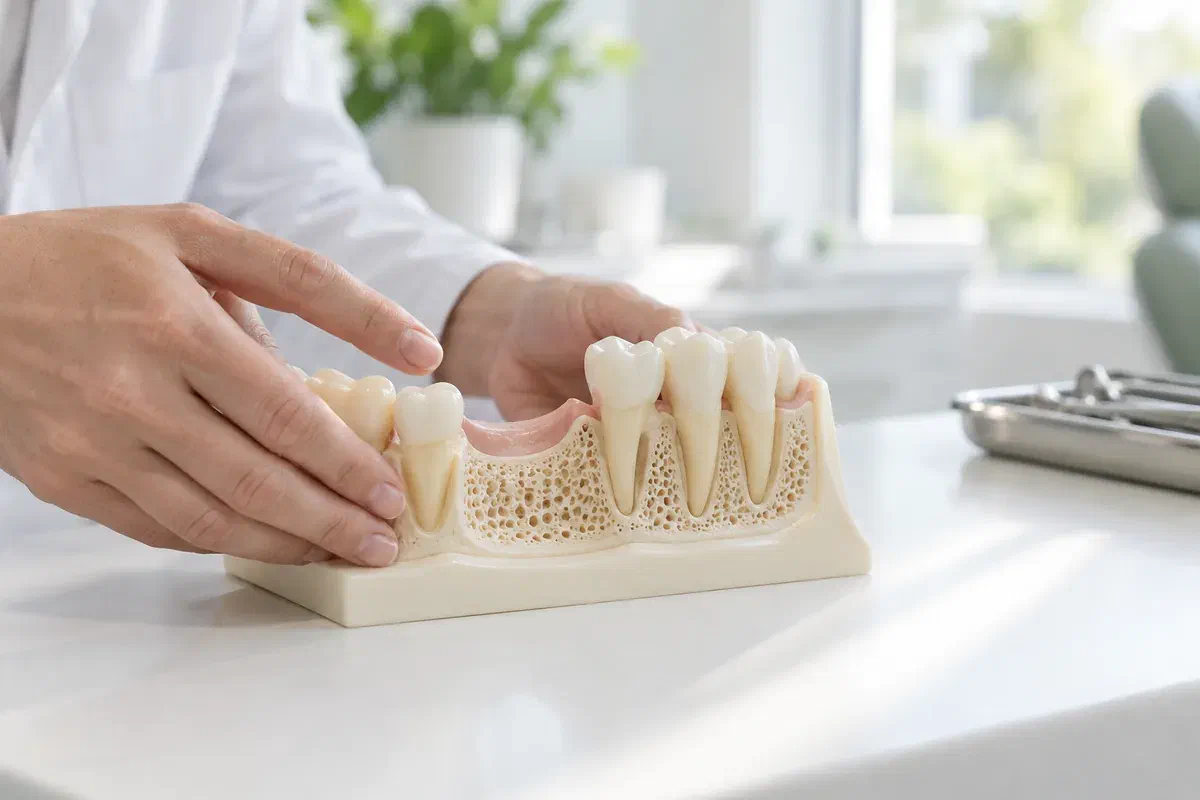
Looking at a missing tooth from the outside tells you little about the bone an implant would need. The clinician evaluates that bone and the long-term support, cleaning and upkeep of whatever replacement you choose.
Once a tooth is removed, the ridge beneath it may lose height or width. Mention the tooth’s history and anything done there since. Current imaging and examination are still what show how the site looks today.
Bone shape and surrounding structures can make some positions unsuitable. Ask how your records support the recommendation and whether a specialist opinion or additional imaging would be sensible first.
A graft has to fit with any extraction, the implant itself and the crown on top. Because several of those depend on healing, the finish line is an estimate, not a fixed date, and that may matter to your choice.
Plenty of implant plans need no graft. Equally, a graft does not promise that an implant can be placed afterwards, and the site is reassessed at each point.
When a site is suitable, grafting aims to add enough bone for the implant to be placed where it belongs. The recommendation should point to a specific finding at your site, so you can judge whether it applies to you rather than to implants in general.
On the other side of the scale are another procedure, a longer healing period, added cost, and the risk of complications or a result that falls short. Ask plainly what you would do then, and whether a bridge or partial denture could meet your priorities with less preparation.
Patient information: Cambridge University Hospitals — bone grafting for dental implants
Implant position needs to match the replacement tooth. Ask how the graft serves that goal and what compromises, if any, would remain after healing.
Staged care means the graft heals and is reviewed before placement. That review is also a natural point to reconsider. Ask what it will assess and what readiness means.
Once the preparation is clear, you can compare an implant pathway with alternatives on equal terms. Weigh the graft and its follow-up as part of the implant option.
Each type of graft has its own procedure and recovery. The clinician performing it should explain things in terms you can follow, and tell you whether a referral is involved and when you will be seen again.
Your teeth, gums, medical history, medicines and suitable imaging are reviewed. You learn what has raised the grafting question and whether any other dental care should be completed before planning goes further.
Discuss where the graft material would come from, how extensive the work is and whether a second site is needed. Go through risks, benefits, alternatives and comfort measures, accepting that later findings may reshape the sequence.
The planned procedure is carried out and you leave with instructions written for it. Confirm what recovery should be like, which medicines and care steps to follow and whom to phone with a concern.
Follow-up shows how the site has healed and what further information is needed. Moving to the implant depends on those findings, rather than on a fixed number of weeks.
Since procedures vary, no general guide can replace your clinician’s directions. Keep your written instructions and contact numbers close, and ask about anything that seems difficult to carry out at home.
Check what to eat, how to clean, what activity is fine and whether a temporary tooth or partial can touch the site. Leave stitches alone and avoid prodding the area. If it looks different from what you were told, phone.
Follow prescription instructions, and ask the clinician or a pharmacist about interactions or side effects. Do not change your medicines because of general descriptions of graft recovery.
Go to each scheduled check even when the area feels comfortable. Unexpected or worsening symptoms need a call according to your postoperative instructions, not a wait until the next implant visit.
These questions help you compare an implant with grafting against other options. Bring them to your consultation.
Arrange a visit to our Bronte Street clinic to review the gap, the reasons a graft has been put forward and the alternatives that suit you. We can explain the purpose, the stages and the questions to settle before you choose a replacement.
If you have had a graft already and are concerned about how it is healing, contact the clinician who carried it out through the postoperative arrangements you were given.
