A ridge that narrowed over time
After a tooth is lost, the bone may slim down or flatten. Share when the tooth came out and whether a denture has been worn over the area; the current examination will show what the site offers now.


What will you wear in the gap while a bone graft heals? For households across Halton Hills, we talk through grafting before implants, temporary teeth, healing stages and the alternatives worth comparing.
Ask most people about an upcoming graft and their first worry is not surgery but everyday life: will there be a visible space, and can they still wear the partial they rely on? Those are good questions. A graft adds bone where a planned implant needs more, and only some sites need one.
The answer to the everyday questions depends on the grafting approach. A small amount placed alongside the implant is one thing; a separate surgery with its own stretch of healing before the implant stage is quite another. Find out which applies, because it shapes your temporary arrangements, your visits and your recovery.
For anyone in Georgetown, Acton, Glen Williams or elsewhere in Halton Hills, our Bronte Street team can explain the reason for a grafting recommendation and what still needs answering, including the benefit you can expect, the alternatives, who would carry out the graft and how healing will be reviewed.
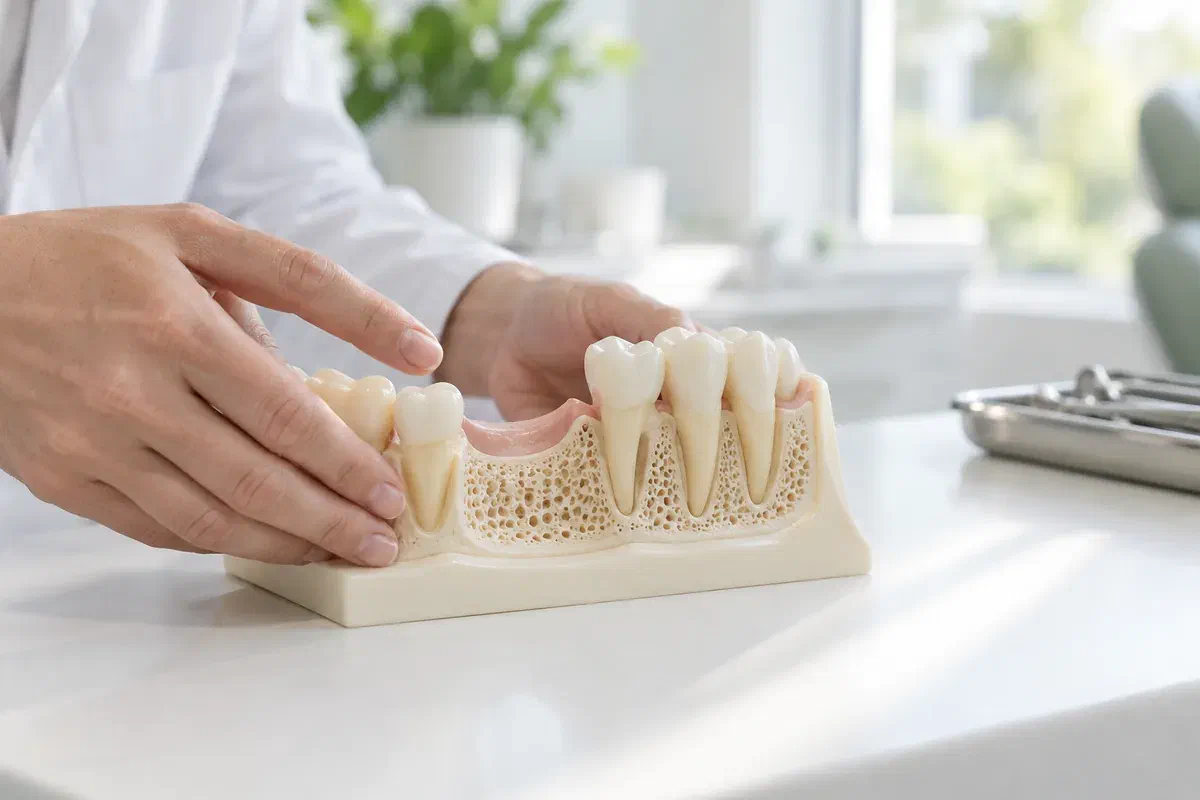
You can see the gap, but not the bone that would hold an implant. The clinician looks at that bone and at how a replacement tooth, and any temporary one, would sit and be cleaned.
After a tooth is lost, the bone may slim down or flatten. Share when the tooth came out and whether a denture has been worn over the area; the current examination will show what the site offers now.
Bone dimensions and nearby anatomy can limit where an implant could go. Ask how your imaging shaped the suggestion, and whether more records or a specialist’s view would help settle the approach.
If a graft is proposed, ask how your temporary tooth or partial fits around it, the implant and the final crown. Healing determines the gaps between steps, so the finishing point stays flexible.
Not every implant site needs grafting. A graft also does not guarantee that the implant stage can go ahead, since the area is assessed again before each next step.
Where it fits the case, grafting seeks to add bone at the site of the planned implant. Expect the clinician to explain what they found in your mouth that makes it relevant, instead of presenting the graft as something everybody receives.
That potential gain comes with a further procedure, a period of healing, extra cost and the chance of complications or less support than intended. Ask what the plan would turn into in that case, and whether keeping or upgrading a partial denture might meet your needs.
Patient information: Cambridge University Hospitals — bone grafting for dental implants
The implant should be placed where the eventual tooth will make sense. Ask how grafting helps that and which limitations might remain once everything has settled.
A staged plan builds in time for the graft to mature and be reviewed. Ask what the review looks for and what would signal readiness for the implant.
Knowing the preparation, including how you would manage the gap meanwhile, helps you compare implants with other replacements. Count the graft and its follow-up when making the call.
The details depend on the kind of graft and its size. The clinician responsible should explain the approach in everyday language, including any referral and how follow-up visits will be arranged.
Your mouth, health history, medications and appropriate imaging are reviewed. The clinician points out what prompts the grafting discussion and whether other treatment, such as for gum health, should come first.
Discuss the material source, how extensive the graft will be and whether another site is involved. Cover risks, benefits, alternatives, comfort measures and what you will wear in the gap, knowing later findings can alter the order.
The agreed graft is carried out and you receive aftercare written for it. Before going, confirm what recovery is expected to involve, which medicines to take and who answers the phone if you have concerns.
The clinician checks how the area is progressing and what information is still needed. Implant placement follows the findings, not a predetermined number of weeks on the calendar.
Generic recovery tips cannot replace your clinician’s directions, because grafts vary. Keep the written instructions and phone numbers handy, and ask about anything that seems difficult to follow day to day.
Ask whether a partial denture or temporary tooth can be worn, how it may need adjusting and what to eat while the site heals. Leave stitches undisturbed and avoid touching the area. Call if it changes unexpectedly.
Take medicines as prescribed, and talk to the clinician or a pharmacist about side effects or interactions. Do not add or stop anything on the strength of general advice about graft recovery.
Attend reviews even when the site feels comfortable. For unexpected or worsening symptoms, follow your postoperative instructions and call, rather than holding the question for the next implant appointment.
Many questions about grafting are about daily routines rather than surgery. Raise them before agreeing to treatment.
Visit our Bronte Street practice to look at the proposed implant site, any recommendation for extra bone and how you would manage the space while healing. We can explain the purpose, the sequence and what to settle before you decide.
If you have already had a graft and are worried about recovery, contact the clinician who performed it using the aftercare contact details you received.
