The shape the site has taken
Once a tooth is gone, the bone beneath may change and fall short of what the implant needs. Tell the team when the tooth was lost and what was done there; current findings will still guide the plan.


Wondering why nobody can promise a finish date for your implant once a graft is involved? From Mississauga, book a consultation to map the milestones, the material, the healing checks and your other choices.
A common frustration with implant care is the calendar. You may want the new tooth in place before a wedding, a trip or a busy season at work, and then learn that bone grafting could be part of the plan. A graft adds bone where the implant position needs more of it, and whether one is needed depends on your site.
How much it affects your schedule depends on the type. A small addition made during implant placement barely changes the number of visits, while a separate procedure brings its own healing period before the implant stage can be planned. Knowing which one is proposed is the first step toward a realistic timeline.
Our Bronte Street team can lay out the milestones for anyone coming from Mississauga, including what each step depends on. Ask about the expected benefit, the alternatives, who would carry out the graft and how its healing will be judged before the next appointment is booked.
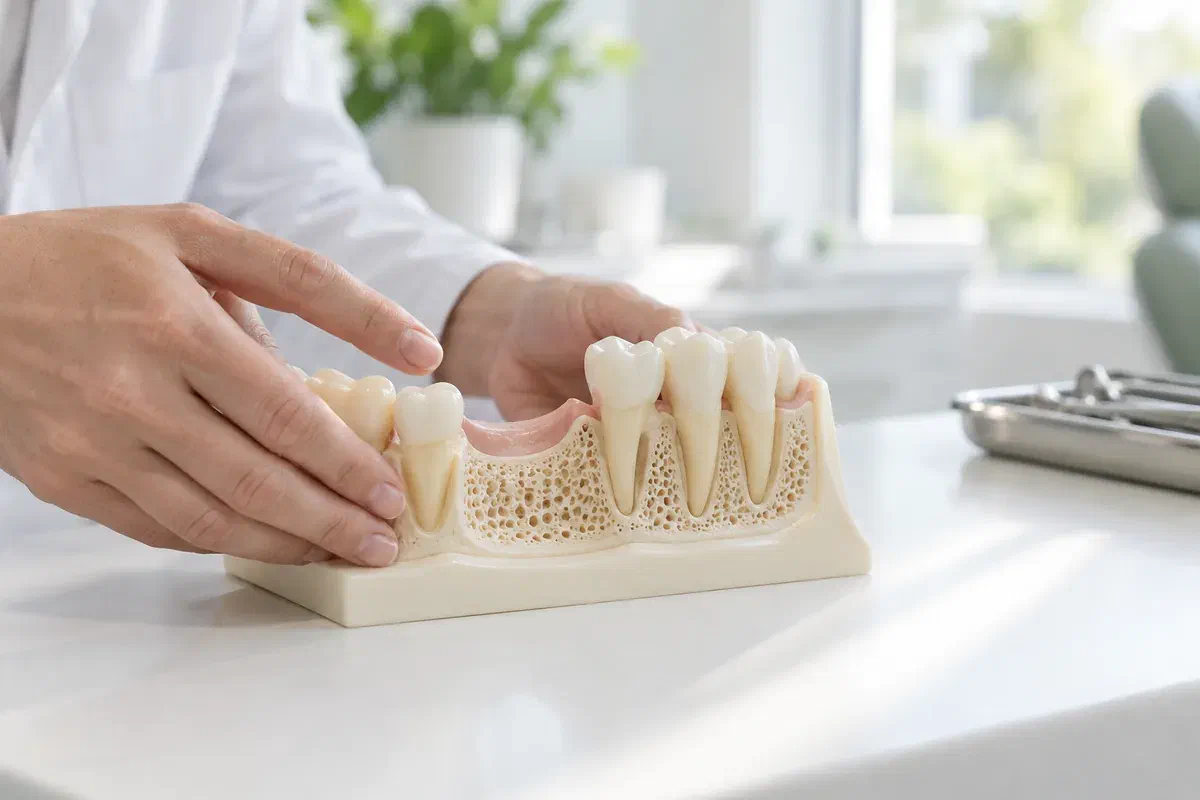
Several factors decide whether grafting is needed and how long the preparation takes. Most of them sit beneath the gum, and the clinician weighs them alongside how the future tooth will be supported and looked after.
Once a tooth is gone, the bone beneath may change and fall short of what the implant needs. Tell the team when the tooth was lost and what was done there; current findings will still guide the plan.
The amount of bone and the structures around it can restrict placement. Ask how your scans inform the recommendation and whether more detailed records or a specialist’s view are sensible before a method is settled.
If grafting is part of the plan, ask where it falls between any extraction, implant placement and the final tooth. Steps that depend on healing are the reason a precise end date is hard to give in advance.
Plenty of implant plans proceed without a graft. When one is done, it does not guarantee the implant stage, because the site is re-examined before each decision.
In a suitable site, a graft is intended to increase the bone available for the planned implant. Your clinician should link that aim to a particular finding at your site, so you can see why the extra stage is being proposed for you.
The trade-off includes another procedure, a longer overall timeline, added cost and the possibility of complications or a less complete result. Ask how the schedule would change if the graft falls short and whether a different route could suit your priorities better.
Patient information: Cambridge University Hospitals — bone grafting for dental implants
The implant needs to sit where the replacement tooth will look and work sensibly. Ask how grafting helps achieve that and which limits may still apply after healing.
Planning in stages allows healing to be checked before placement. Ask what the review will look at and what result would mean the site is ready to move ahead.
Seeing every stage helps you weigh implant care against options with fewer steps. Include the graft, its recovery and extra visits when deciding what fits your schedule.
Grafting procedures and their recovery differ with the type and extent of treatment. The clinician responsible should describe the approach clearly, including any referral and when follow-up is likely.
The team reviews your mouth, medical history, medicines and appropriate imaging, then explains which finding prompts the grafting question and whether other dental needs should come first.
You discuss where the material would come from, how extensive the graft is and whether another site is involved. Risks, benefits, alternatives and comfort measures are covered, along with how later findings could shift the order.
The agreed procedure is completed and written aftercare is provided. Before heading home, check what recovery should feel like, which medicines apply and how to reach the team if something concerns you.
A review shows whether the site is progressing as hoped and what else needs to be known. The implant stage is scheduled from those findings, not from a fixed count of weeks.
Your written instructions are specific to the procedure you had, so treat them as the main guide. Keep them with the contact numbers, and ask about any step that is hard to fit into daily life.
Confirm food choices, cleaning, activity and how any temporary tooth or appliance should be worn. Leave stitches and the site itself alone, and call the team if the area looks different from what was described.
Take what was prescribed as directed, and ask the clinician or pharmacist about any side effects or interactions. Avoid adjusting medicines because of general information you have come across online.
A skipped review can delay the next stage. Attend even when comfortable, and report unexpected or worsening symptoms according to your aftercare instructions rather than saving them for the next booking.
Schedules, milestones and uncertainty come up often. Ask about them before agreeing to the procedure so the bigger plan makes sense.
Arrange a consultation at our Bronte Street clinic to talk through the planned implant site and any recommendation for extra bone support. We can explain the purpose, the order of milestones and the questions to settle before you choose a pathway.
If you have already had a graft and are concerned about how it is healing, contact the clinician who carried it out using the aftercare arrangements provided.
